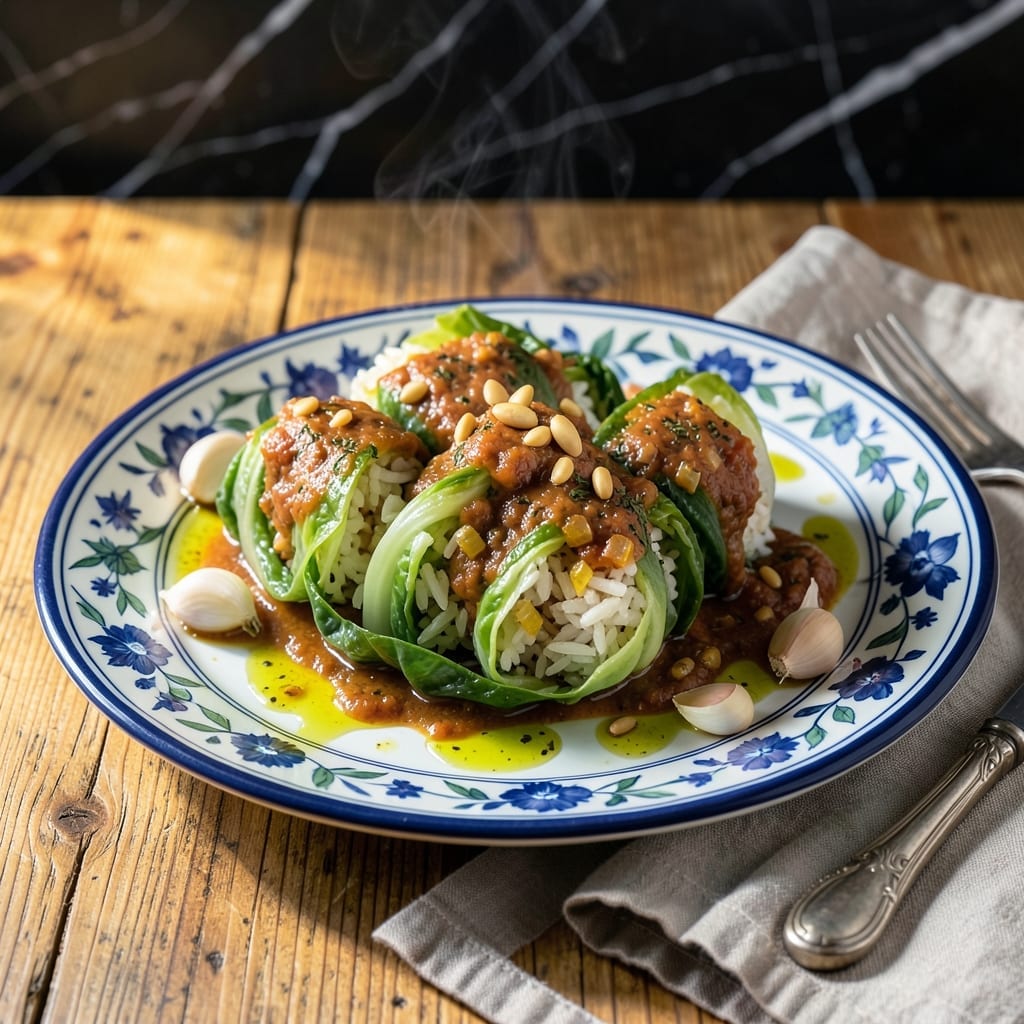
This traditional dish transforms humble cabbage leaves into a sweet and sour masterpiece that’s been passed down through generations. The tender leaves wrap around a fragrant filling, creating a balance of textures and flavors that’s both comforting and complex.
I’ve refined this method to ensure the cabbage stays tender without falling apart, while the filling absorbs the tangy sauce perfectly. Each bite delivers the warmth of spices and the brightness of lemon, making it a standout side dish.
The slow cooking process allows the flavors to meld beautifully, resulting in a dish that’s rich yet light. It pairs well with grilled meats or can shine on its own as a vegetarian centerpiece.
This recipe stays true to its roots while being simple enough for any home cook to master. Here’s how to make it right.
Ingredients for Turkish Cabbage
Pantry staples and fresh produce create this vibrant stuffed cabbage dish with bold flavors.
| Ingredient | Amount | Notes |
|---|---|---|
| Green Cabbage 🥬 | 1 whole | Large head, leaves separated |
| Long-Grain White Rice 🌾 | 1 cup | Uncooked, for filling |
| Yellow Onion 🧅 | 1 whole | Finely chopped for filling |
| Garlic Cloves 🧄 | 4 cloves | Minced for sauce |
| Tomato Paste 🍅 | 2 tbsp | For tangy depth |
| Olive Oil 🫒 | ½ cup | Extra-virgin preferred |
| Lemon Juice 🍋 | ¼ cup | Freshly squeezed for brightness |
| Dried Mint 🌿 | 1 tbsp | Key Turkish flavor |
| Ground Cumin 🌿 | 1 tsp | Toasted for aroma |
| Red Pepper Flakes 🌶️ | ½ tsp | Adjust for heat preference |
| Raisins 🍇 | ½ cup | Golden or dark for sweetness |
| Pine Nuts 🥜 | ¼ cup | Toasted for crunch |
| Vegetable Broth 💧 | 2 cups | Low-sodium preferred |
| Salt 🧂 | 1 tsp | Sea salt for seasoning |
| Black Pepper 🌶️ | ½ tsp | Freshly ground |
[recipe_ingredient_scaler]
The cabbage is everything here. Choose a firm, heavy head—loose leaves mean it’s past its prime. Most grocery stores carry green cabbage year-round, but farmers markets often have better quality in season. For the rice, long-grain white holds up best to the long cooking time (brown can get mushy). The pine nuts add authentic crunch, but they’re pricey—Trader Joe’s has the best deal I’ve found.
No pine nuts? Slivered almonds or walnuts work in a pinch. Out of dried mint? Fresh mint at triple the amount brings a brighter note. The raisins add the signature sweetness, but chopped dates or currants can substitute. For the broth, homemade is ideal, but good quality store-bought (like Imagine or Pacific Foods) works too. The tomato paste can come from those handy squeeze tubes if you’re not using a whole can.
Stuffed cabbage tastes even better the next day once flavors meld. Stores in the fridge for 4-5 days or freezes for 3 months (thaw overnight before reheating). Leftovers reheat gently in a skillet with a splash of water to prevent drying out.
Why You’ll Love This Recipe
- I’ll be real: the ingredients are humble and budget-friendly, but the result feels like a restaurant dish.
- One-Pot Wonder: I love how everything cooks together—cabbage, rice, and that rich tomato paste—with barely any cleanup.
- Garlic-Kissed Comfort: The garlic and onion mingle with the cabbage until it’s tender and packed with deep, savory flavor.
- Feeds a Crowd: Between us, this stretches easily for family dinners or meal prep—leftovers taste even better the next day.
Step-by-Step Instructions for Sweet and Sour Stuffed Cabbage
These traditional techniques ensure tender cabbage and perfectly balanced filling in every bite.
Step 1: Prepare the Cabbage Leaves
Start by coring the green cabbage carefully, leaving the head intact. Bring a large pot of water to a boil and submerge the whole head for 5-7 minutes until the outer leaves soften and begin to separate.
Using tongs, gently peel away the softened leaves, taking care not to tear them. Return the remaining head to the boiling water to soften more leaves. You’ll need about 12-16 leaves for this recipe. Trim the thick center rib from each leaf with a sharp knife, creating a flat surface for rolling.
Step 2: Make the Filling and Toast the Nuts
In a dry skillet over medium heat, toast the pine nuts for 2-3 minutes until golden brown and fragrant. Remove from pan immediately to prevent burning.
In a bowl, combine the long-grain white rice, finely chopped yellow onion, raisins, toasted pine nuts, 1 tsp salt, and 0.5 tsp black pepper. The rice should remain uncooked at this stage as it will cook during the simmering process.
Step 3: Assemble the Stuffed Cabbage Rolls
Place about 2 tablespoons of the rice mixture near the stem end of each cabbage leaf. Fold the sides inward, then roll tightly from the stem end up, similar to a burrito. The rolls should be snug but not overstuffed.
Arrange the rolls seam-side down in a large, heavy-bottomed pot. Pack them closely together to prevent unrolling during cooking. This tight arrangement helps maintain their shape as they cook.
Step 4: Create the Sauce and Cook
In a bowl, whisk together the 2 cups vegetable broth, 0.25 cup lemon juice, 2 tbsp tomato paste, minced garlic cloves, 1 tbsp dried mint, 1 tsp ground cumin, and 0.5 tsp red pepper flakes.
Pour this mixture over the cabbage rolls in the pot. Drizzle with 0.5 cup olive oil, ensuring some reaches the bottom of the pot. Bring to a gentle simmer over medium heat, then reduce to low heat.
Cover and cook for 45-50 minutes, until the rice is tender and the cabbage leaves are silky. Avoid boiling, as this can cause the rolls to burst.
Step 5: Rest and Serve
Remove from heat and let the stuffed cabbage rest, covered, for 10 minutes. This allows the flavors to meld and the sauce to thicken slightly.
Serve warm, spooning the tangy sauce over the rolls. The cabbage should be tender but still hold its shape, with the rice filling fully cooked and infused with the bright, sweet-and-sour flavors of the sauce.
Pro Tips For Making Turkish Cabbage
- Core the Cabbage First: Remove the tough inner core in a V-shape before shredding—it prevents chewy bites in the final dish and makes the leaves easier to work with.
- Rinse the Rice: Soak the long-grain white rice in cold water for 5 minutes, then drain. I learned this the hard way—it removes excess starch so your dolma filling stays light, not gummy.
- Bloom the Paste: Cook the tomato paste with the onions and garlic for 2-3 minutes until it darkens slightly—sounds weird, but it kills the raw taste and deepens the flavor.
- Pack Tightly: When stuffing the cabbage leaves, press the rice filling firmly but don’t overfill. Loose rolls burst during cooking, and nobody wants a pot of rice soup instead of dolma.
Pro Cooking Tips for Great turkish cabbage
Cabbage Prep Perfection
Core the green cabbage carefully, keeping the head intact. Boil the whole head for 5-7 minutes until outer leaves soften. I use a slotted spoon to gently peel leaves without tearing them. 💡
Rice Cooking Control
Keep the rice uncooked in the filling—it absorbs the tangy sauce during simmering. I use long-grain white rice which holds its shape better than brown. The 45-50 minute cook time ensures perfect texture.
Tight Rolling Technique
Place 2 tablespoons of filling near the stem end, fold sides inward, then roll tightly. Pack rolls snugly in the pot to prevent unrolling. I find a heavy-bottomed Dutch oven works best for even heat distribution.
Sauce Distribution
Whisk the sauce thoroughly before pouring over rolls. Drizzle 0.5 cup olive oil evenly, ensuring some reaches the pot bottom. This prevents sticking and adds richness to the final dish.
Gentle Simmering
Maintain a gentle simmer—never boil—as this can burst the rolls. I check the heat every 10 minutes to maintain consistency. The low, steady heat is key to tender cabbage.
Let rest 10 minutes before serving to allow flavors to meld and sauce to thicken. 🌟
Nutrition Facts
Frequently Asked Questions
Can I use savoy cabbage instead of green?
Yes, savoy works well! Its tender, crinkled leaves may require 1-2 minutes less blanching. The flavor is slightly sweeter, which pairs beautifully with the tangy sauce.
Why do my rolls keep unraveling during cooking?
This usually happens if the rolls aren’t packed tightly in the pot or if they’re overstuffed. Use 2 tablespoons of filling max per leaf and press rolls firmly together before adding sauce.
Can I make this in a slow cooker?
Arrange rolls in the slow cooker, pour sauce over them, and cook on low for 4-5 hours. Add a splash of water if the sauce seems too thick.
What can I substitute for pine nuts?
Slivered almonds or walnuts work perfectly. Toast them for 2-3 minutes until golden. For a nut-free option, try toasted breadcrumbs for crunch.

Trained in classic French technique but raised on slow-cooked ribs and spicy rubs, she blends culinary skill with smoke and soul.
- Recipe for Curried Tofu: Aromatic Spices With Crispy Edges - October 3, 2026
- Recipe for Dumplings in Crock Pot: Fluffy Pillows with Minimal Effort - October 3, 2026
- Recipe For Diced Pork In Slow Cooker: Melt-In-Your-Mouth Tenderness All Day - October 3, 2026