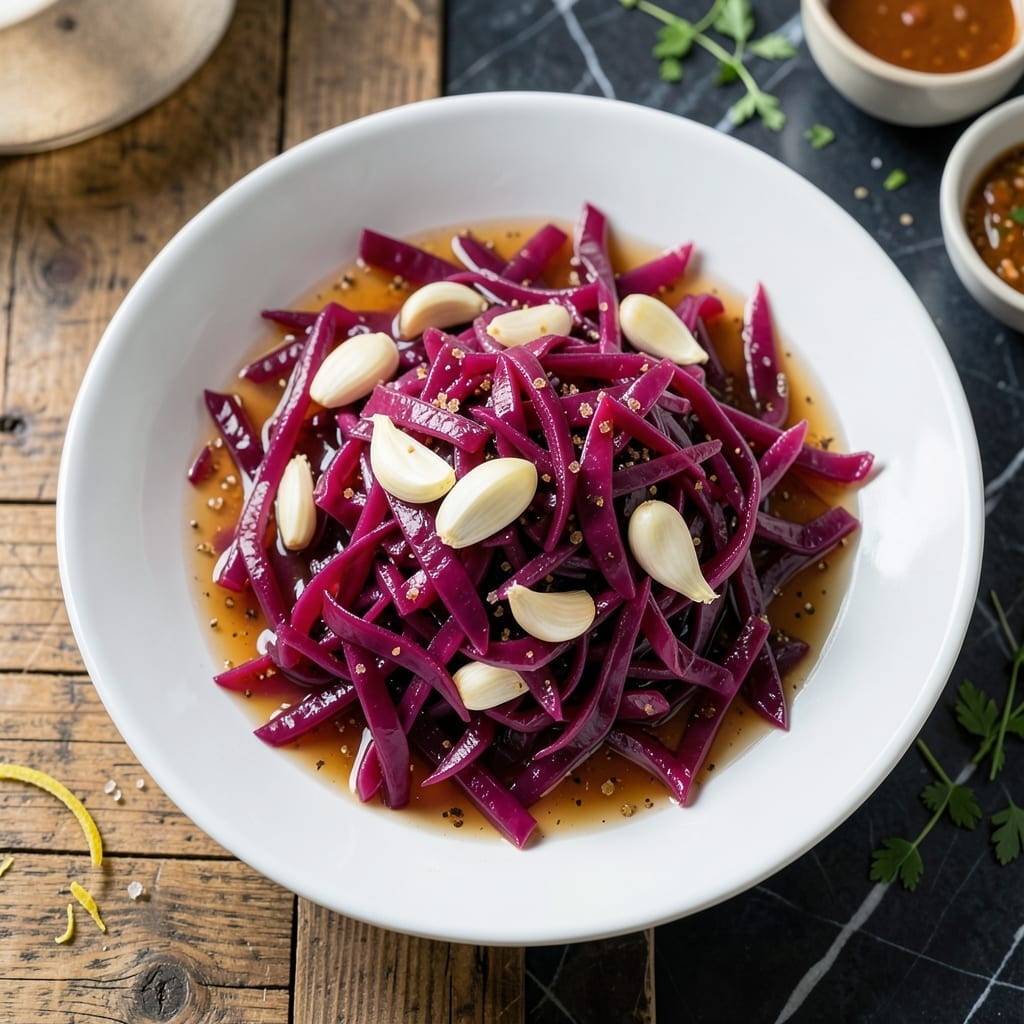
This Turkish pickling method transforms red cabbage into a vibrant, tangy side dish with deep Middle Eastern roots. The process relies on a simple brine of salt, sugar, and vinegar to preserve the cabbage’s natural crunch and color.
I’ve adapted traditional techniques to ensure consistent results at home, with a fermentation time that balances flavor development and texture. The spice blend—often including garlic and red pepper flakes—adds layers of complexity without overpowering the cabbage.
What emerges is a crisp, tangy condiment that brightens any meal, from grilled meats to simple bread and cheese. The longer it ferments, the more the flavors deepen, but even a short rest yields impressive results.
Store in a cool, dark place for up to a month, though it rarely lasts that long. Here’s how to make it.
Ingredients for Turkish Pickled Red Cabbage
A vibrant purple cabbage transformed by a simple brine and warm Middle Eastern spices.
| Ingredient | Amount | Notes |
|---|---|---|
| Red Cabbage 🥬 | 2 lb | Thinly sliced, core removed |
| Water 💧 | 4 cups | Filtered for best results |
| Apple Cider Vinegar 🍏 | 2 cups | Raw, unfiltered preferred |
| Diamond Crystal Kosher Salt 🧂 | 3 tbsp | Non-iodized for clarity |
| Granulated Sugar 🍚 | 2 tbsp | Organic if available |
| Garlic Cloves 🧄 | 6 cloves | Peeled, lightly crushed |
| Red Pepper Flakes 🌶️ | 1 tsp | Adjust for heat preference |
| Black Peppercorns 🌶️ | 1 tsp | Lightly crushed |
| Bay Leaves 🍃 | 2 pieces | Dried Turkish variety preferred |
| Mustard Seeds 🌿 | 1 tsp | Yellow or brown variety |
| Coriander Seeds 🌿 | 1 tsp | Lightly toasted optional |
[recipe_ingredient_scaler]
The cabbage quality is paramount. Select firm, unblemished heads with deep purple coloring—avoid any with soft spots or wilting outer leaves. Whole Foods or Middle Eastern markets often carry the best produce. The vinegar should be raw and unfiltered for optimal fermentation. Bragg is a reliable brand for apple cider vinegar if you want consistent results.
No apple cider vinegar? White vinegar plus a splash of apple juice works in a pinch, though the flavor profile will differ. Red wine vinegar can substitute but may darken the cabbage. For the spices, whole seeds toasted and crushed release more flavor than pre-ground. If you can’t find Turkish bay leaves, regular bay leaves are acceptable at the same quantity.
This ferments beautifully at room temperature for 3-5 days, then moves to cold storage. Once opened, it keeps in the refrigerator for up to 1 month. The flavor continues to develop over time—taste after 48 hours for a milder version, or wait the full week for maximum tang.
Why You’ll Love This Recipe
- Five-Minute Prep: I just slice the cabbage, mix the brine, and let time do the rest—no cooking required.
- Tangy Crunch: The apple cider vinegar gives it that bright, zippy kick I crave with every bite.
- Meal Prep Hero: It keeps in the fridge for weeks, so I always have a crisp, pickled side ready to go.
- Pantry Staples: I already have all the ingredients on hand—red cabbage, salt, sugar, vinegar—nothing extra to buy.
Step-by-Step Instructions for Turkish Pickled Red Cabbage
This traditional method ensures vibrant color, crisp texture, and balanced tangy flavors.
Step 1: Prepare and Salt the Cabbage
Thinly slice the 2 lb red cabbage using a sharp knife, removing the core as you go. I prefer ribbons about ⅛-inch thick for the right balance of crunch and flavor absorption. Transfer the sliced cabbage to a large, clean bowl.
Sprinkle the 3 tbsp Diamond Crystal kosher salt evenly over the cabbage. Using your hands, massage the salt into the leaves for 2-3 minutes until the cabbage begins to soften and release its purple liquid. This step draws out excess water, ensuring the final pickles remain crisp.
Step 2: Create the Pickling Brine
In a medium saucepan, combine the 4 cups water, 2 cups apple cider vinegar, and 2 tbsp granulated sugar. Heat over medium-high heat until the sugar fully dissolves and the mixture just begins to simmer—you’ll see small bubbles forming at the edges.
Remove from heat and add the 6 cloves garlic, 1 tsp red pepper flakes, 1 tsp black peppercorns, 2 pieces bay leaves, 1 tsp mustard seeds, and 1 tsp coriander seeds. Stir gently and let the brine steep for 10 minutes to infuse the flavors.
Step 3: Combine Cabbage and Brine
Drain any excess liquid from the salted cabbage, reserving about ¼ cup of the purple cabbage juice. Pack the cabbage tightly into clean, sterilized jars, pressing down firmly to eliminate air pockets. This ensures the cabbage stays submerged in the brine.
Strain the warm brine through a fine-mesh sieve to remove the whole spices, then pour it over the cabbage in the jars. Add the reserved cabbage juice for extra color and flavor. Leave ½ inch of headspace at the top of each jar to allow for fermentation.
Step 4: Ferment and Store
Seal the jars loosely to allow gases to escape during the initial fermentation. Let them cool to room temperature, then refrigerate. The pickles will be ready to eat after 48 hours, but develop deeper flavor after 1 week.
Tighten the lids once fully cooled and store in the refrigerator for up to 3 months. The cabbage will maintain its vibrant purple hue and crisp texture throughout. Always use a clean utensil when removing pickles to prevent contamination.
Pro Tips For Making Turkish Pickled Red Cabbage
- Slice Thin and Even: Use a sharp knife or mandoline to cut the cabbage into thin, even strips—this helps the brine penetrate faster and gives a consistent texture. I learned this the hard way after ending up with half-crunchy, half-soggy batches.
- Weigh the Cabbage: After slicing, salt the cabbage and let it sit for 30 minutes, then weigh it down with a plate and something heavy (like a jar of water) to draw out excess moisture before adding the vinegar brine.
- Warm the Brine: Dissolve the sugar and salt in warm water and vinegar first—this prevents undissolved crystals from settling at the bottom of your jar and ensures even flavor distribution.
- Skip the Metal: Use glass, ceramic, or plastic containers for fermenting and storing—metal can react with the vinegar and give your pickled cabbage an off taste. My first batch had a weird tang until I figured this out.
Serving Suggestions for This Dish
Grilled Meat Pairing
This vibrant cabbage cuts through rich, fatty meats beautifully. Serve alongside lamb kebabs or beef köfte for a traditional Turkish meal. The tangy crunch balances the charred, spiced flavors perfectly. I love the contrast it adds to smoky grilled dishes. 🔥
Meze Platter Addition
Create an authentic spread with hummus, olives, and feta cheese. The pickled cabbage adds a refreshing, crisp element that cleanses the palate between bites. Serve with warm pita bread for scooping.
Cheese Board Enhancer
Elevate your next board with this tangy cabbage. Pair with aged cheddar, blue cheese, and smoked gouda. The acidity cuts through creamy textures, while the color makes the board pop visually.
Sandwich Game Changer
Add a handful to pulled pork sandwiches or Reuben-style deli creations. The crunch and tang transform ordinary lunch fare into something special. I always keep a jar in my fridge for this exact purpose.
Salad Topper
Chop the pickled cabbage and sprinkle over kale salads or grain bowls. The vinegar-based dressing doubles as a flavor boost. A ¼ cup addition provides the perfect tangy kick without overpowering. ✨
Breakfast Surprise
Try it with fried eggs and crusty bread for a Turkish-inspired breakfast. The vinegar’s acidity pairs wonderfully with runny yolks. I discovered this combo during my coastal morning rides—simple but unforgettable.
Nutrition Facts
Frequently Asked Questions
How long does it need to ferment?
You can eat it after 48 hours, but for best flavor, wait 1 week. The cabbage will stay crisp and tangy for up to 3 months refrigerated.
Can I use green cabbage instead?
Yes, but red cabbage has a sweeter flavor and better color. Green cabbage will work in a pinch but may produce a milder, less visually striking result.
Why did my cabbage turn blue?
This happens when the natural pigments react with acidic brine. It’s harmless and doesn’t affect taste. To minimize this, use stainless steel or glass containers.
Do I need special jars?
Clean, airtight jars work perfectly. Mason jars are ideal, but any food-safe glass container with a tight seal will do. Sterilize them first for best results.

Trained in classic French technique but raised on slow-cooked ribs and spicy rubs, she blends culinary skill with smoke and soul.
- Recipe for Boneless Pork Chops in Cast Iron Skillet: Sear and Baste to Juicy Perfection - October 3, 2026
- Recipe for Boneless Cross Rib Roast: Slow-Roasted Beef with Herb Crust - October 3, 2026
- Hamburgers in Sauce Recipe Crock Pot: Slow-Cooked Savory Delight - October 3, 2026