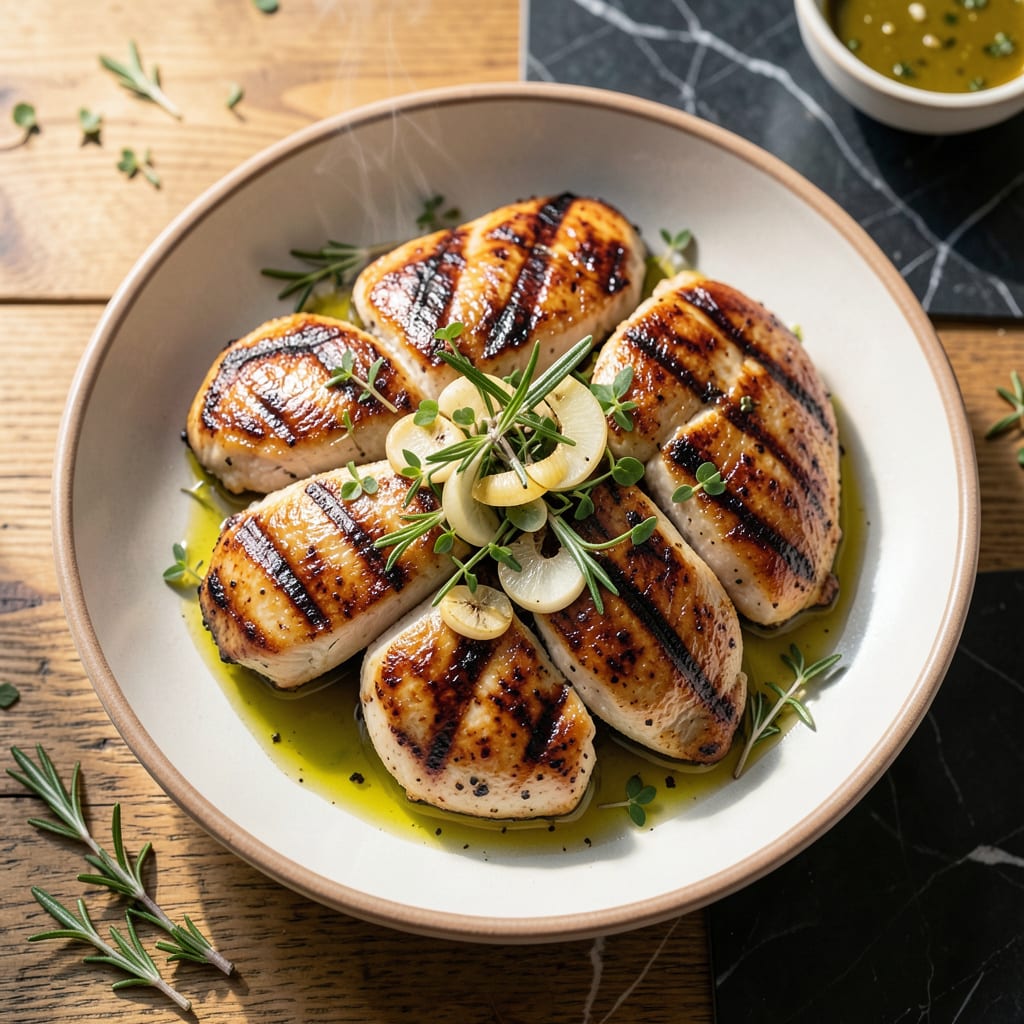
This grilled chicken brings Mediterranean flavors straight to your table. I developed this recipe after foraging wild rosemary near the coast.
The herb marinade infuses every bite with Tuscan character. Simple ingredients, professional results every time.
Ingredients for Tuscan Grilled Chicken
Fresh Mediterranean herbs and bright citrus elevate this simple protein to restaurant quality.
| Ingredient | Amount | Notes |
|---|---|---|
| Boneless, Skinless Chicken Breasts 🍗 | 1 ½ lb | Pounded to even thickness |
| Fresh Rosemary 🌿 | 3 tbsp | Finely chopped, stems discarded |
| Fresh Thyme Leaves 🍃 | 2 tbsp | Stems removed, loosely packed |
| Garlic Cloves 🧄 | 4 cloves | Minced to fine paste |
| Extra-Virgin Olive Oil 🫒 | ½ cup | Divided for marinade and grilling |
| Lemon Zest 🍋 | 1 tbsp | From 1 large lemon |
| Lemon Juice 🍋 | 3 tbsp | Freshly squeezed from same lemon |
| Sea Salt 🧂 | 1 ½ tsp | Divided for marinade and finishing |
| Freshly Ground Black Pepper 🌶️ | 1 tsp | Coarse grind preferred |
| Dijon Mustard 🟡 | 1 tbsp | Smooth, not whole grain |
| Red Wine Vinegar 💧 | 1 tbsp | For acidity balance |
| Crushed Red Pepper Flakes 🔥 | ¼ tsp | Adjust to heat preference |
[recipeingredientscaler]
The herbs are non-negotiable for authentic Tuscan character. Fresh rosemary and thyme from a specialty grocer like Whole Foods or your local farmers market deliver superior aroma compared to supermarket options. For the olive oil, California Olive Ranch or Filippo Berio offer reliable quality. Select chicken breasts with uniform thickness to ensure even cooking on the grill.
No fresh herbs? Dried rosemary and thyme at one-third the amount work in a pinch, though fresh is strongly preferred. Apple cider vinegar can substitute for red wine vinegar without noticeable difference. For a milder flavor, replace Dijon with whole grain mustard. The lemon can be bottled in emergencies, but fresh provides essential brightness.
Marinate the chicken for at least 2 hours but no more than 12 hours for optimal texture. Cooked chicken keeps refrigerated for 3-4 days or frozen for 3 months. Always bring meat to room temperature before grilling for even cooking (worth the extra minute).
Why You’ll Love This Recipe
- Minimal Chopping Required: I just toss whole rosemary sprigs and thyme with the chicken—no finicky mincing.
- That Garlic-Kissed Aroma: The sizzle of garlic cloves in olive oil on the grill? It smells like a Tuscan vacation in my backyard.
- Meal Prep Magic: I make a double batch and it tastes just as good cold in salads or wrapped in a pita the next day.
- Budget-Friendly Protein: Chicken breasts stretch far, and fresh herbs go a long way here. Honestly, it’s my most reliable dinner for under $10.
Step-by-Step Instructions for Tuscan Grilled Chicken
This method ensures maximum flavor penetration and perfectly juicy, herb-infused results.
Step 1: Prepare the Herb Marinade
In a medium bowl, whisk together 0.5 cup Extra-Virgin Olive Oil, 3 tbsp Lemon Juice, 1 tbsp Lemon Zest, 1 tbsp Dijon Mustard, 1 tbsp Red Wine Vinegar, 1.5 tsp Sea Salt, 1 tsp Freshly Ground Black Pepper, and 0.25 tsp Crushed Red Pepper Flakes until fully emulsified.
Add the 3 tbsp Fresh Rosemary and 2 tbsp Fresh Thyme Leaves, pressing them into the liquid to release their essential oils. Stir in the 4 cloves Garlic Cloves minced to a fine paste. This aromatic base will infuse the chicken with authentic Mediterranean character.
Step 2: Marinate the Chicken
Place the 1.5 lb Boneless, Skinless Chicken Breasts in a resealable plastic bag or shallow dish. Pour the marinade over the chicken, ensuring all pieces are thoroughly coated. Press out excess air if using a bag, then seal tightly.
Refrigerate for at least 2 hours, but ideally 4–6 hours for optimal flavor development. Turn the chicken occasionally to redistribute the marinade. The acids in the lemon juice and vinegar will begin tenderizing the meat while the herbs infuse their essence.
Step 3: Grill to Perfection
Remove the chicken from the marinade and let excess drip off. Preheat your grill to medium-high heat (about 400°F). Lightly oil the grates to prevent sticking. Grill the chicken for 6–7 minutes per side, or until internal temperature reaches 165°F.
Avoid moving the chicken too soon—let it sear undisturbed to develop those characteristic grill marks. The sugar in the marinade will caramelize slightly, creating a beautiful golden crust while keeping the interior moist and flavorful.
Step 4: Rest and Serve
Transfer the grilled chicken to a clean platter and tent loosely with foil. Allow it to rest for 5–10 minutes before serving. This crucial step lets the juices redistribute throughout the meat, ensuring each bite is succulent and infused with the Tuscan herbs.
Slice against the grain if desired, and serve with any remaining marinade drizzled lightly over the top. The chicken should be tender with a pronounced herbal aroma and a subtle citrus brightness from the lemon components.
Pro Tips For Making Tuscan Grilled Chicken
- Pound the Breasts: Even out those chicken breasts to ¾-inch thickness with a rolling pin or pan—I learned this the hard way after too many dry, overcooked ends and raw centers.
- Bloom the Herbs: Finely chop the rosemary and thyme, then heat them in 2 tablespoons of olive oil for 30 seconds before adding garlic. Sounds weird, but it works: the oil pulls out way more flavor.
- Skip the Cold Grill: Let your grill preheat for a full 10 minutes on medium-high. After burning three batches, I finally figured out that chicken sticks and tears if the grates aren’t screaming hot.
- Rest Before Serving: Tent the chicken with foil and give it a solid 5-10 minutes off the heat—yes, even if you’re impatient like me. It keeps all those Tuscan herbs and juices from running straight onto the plate.
Essential Equipment for Great tuscan grilled chicken
Grill Essentials
For this, I swear by my Weber Genesis EX-335 gas grill—it maintains even 400°F heat across the entire surface. A good grill is non-negotiable for those perfect char marks. Look for models with at least 3 burners for temperature control zones. 🔥
Precision Thermometers
Never guess internal temperature. I use a ThermoWorks Instant Read for chicken—it gives accurate readings in 2-3 seconds. The difference between 165°F and overcooked is just moments.
Marinating Tools
I prefer large zip-top bags for marinating—they save space in my fridge and ensure every surface gets coated. For the herbs, a sharp chef’s knife (I use Wüsthof) makes quick work of rosemary and thyme.
Grill Accessories
Tongs with a long handle (at least 12 inches) keep your hands safe from the heat. I also keep a grill brush nearby to clean between batches. A cast iron grill press helps flatten chicken for even cooking.
Serving Style
A large wooden board makes for beautiful presentation—it absorbs juices without making a mess. I found mine at a local farmers market, and it adds that rustic touch to the meal.

Trained in classic French technique but raised on slow-cooked ribs and spicy rubs, she blends culinary skill with smoke and soul.
- Recipe for Boneless Pork Chops in Cast Iron Skillet: Sear and Baste to Juicy Perfection - October 3, 2026
- Recipe for Boneless Cross Rib Roast: Slow-Roasted Beef with Herb Crust - October 3, 2026
- Hamburgers in Sauce Recipe Crock Pot: Slow-Cooked Savory Delight - October 3, 2026