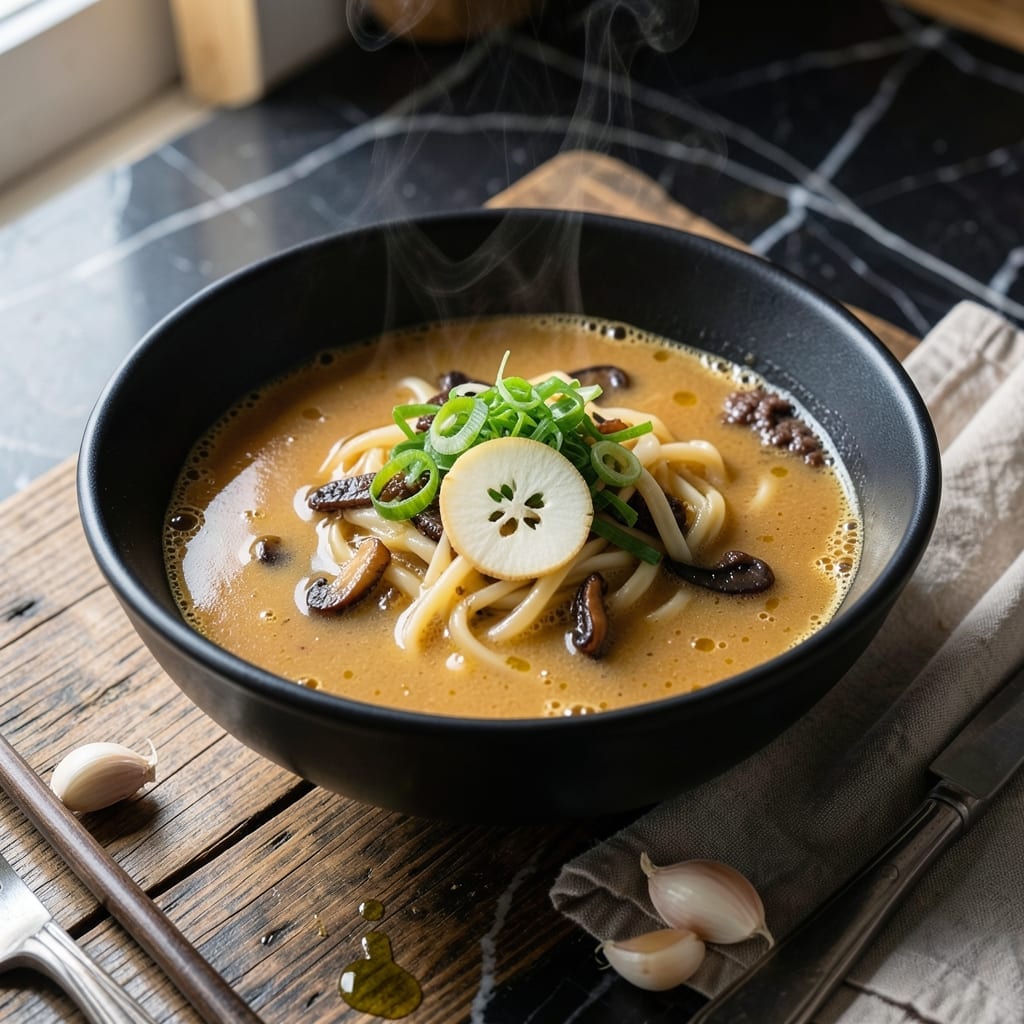
Creating a rich udon broth without dashi is simpler than you think. This vegan base relies on layered umami from mushrooms, seaweed, and soy to build depth.
I developed this method after years of experimenting with plant-based alternatives. The result is a savory, aromatic broth that holds its own against traditional versions.
Ingredients for Udon Broth Recipe Without Dashi
Ten plant-based ingredients layer umami without a single fish flake in sight.
| Ingredient | Amount | Notes |
|---|---|---|
| Dried Shiitake Mushrooms 🍄 | 1 oz | For deep umami base |
| Kombu Seaweed 🌊 | ½ oz | Rinsed, cut into strips |
| Soy Sauce 🥢 | ½ cup | Low-sodium preferred for control |
| Miso Paste 🥣 | 2 tbsp | White or red variety |
| Garlic Cloves 🧄 | 6 cloves | Smashed, not minced |
| Fresh Ginger 🌿 | 2 tbsp | Peeled, sliced thick |
| Sesame Oil 🫒 | 1 tbsp | Toasted for nutty aroma |
| Rice Vinegar 💧 | 1 tbsp | Balances richness with acidity |
| Agave Nectar 🍯 | 1 tbsp | Subtle sweetness enhancer |
| Water 💦 | 8 cups | Filter if tap has strong taste |
[recipe_ingredient_scaler]
The mushrooms and kombu are non-negotiable here. Dried shiitakes from Asian markets (or Whole Foods bulk section) pack more umami punch than fresh. Look for thick, meaty caps—they rehydrate into flavor bombs. Kombu should be dark green and slightly dusty, not shiny. I grab mine from H Mart when I’m stocking up on other Japanese staples. Skip the pre-cut strips; whole sheets let you control the intensity better.
No shiitakes? Dried porcini or cremini work in a pinch (soak and strain through coffee filter to remove grit). Out of kombu? Nori sheets toasted and crumbled add a briny note. Soy sauce can be tamari for gluten-free, or coconut aminos for lower sodium. The miso is doing heavy lifting—Miso Master or South River brands are my go-tos. If you’re sensitive to salt, start with 1 tbsp and adjust.
Broth keeps 5 days refrigerated in an airtight container. Freeze for 3 months in portions (ice cube trays work for small batches). The flavor deepens overnight—make it a day ahead if possible. Strain before using, but save those mushrooms for another dish (they’re packed with flavor).
Why You’ll Love This Recipe
- No Fuss Base: No simmering for hours—just kombu and shiitake steeped in hot water while I prep the rest.
- Umami Bomb: The miso and soy sauce combo hits that deep, savory note I usually need dashi for.
- Weeknight Hero: I toss in whatever veggies are wilting in the fridge, and it’s dinner in 20. (Yes, even on a Tuesday night)
- Budget Stretch: One batch makes enough broth for three meals, and dried shiitake last forever in my pantry.
Step-by-Step Instructions for Udon Broth Without Dashi
This umami-packed broth comes together faster than you think—no dashi required.
Step 1: Bloom the Mushrooms and Kombu
In a large pot, combine the 8 cups water with the 1 oz Dried Shiitake Mushrooms and 0.5 oz Kombu Seaweed. I like to add them to cold water first—this slow start coaxes out maximum umami without bitterness.
Bring the mixture to a gentle simmer over medium heat, then reduce to low and let it steep for 20 minutes. You’ll see the water transform into a rich amber color—that’s the visual cue that the flavors are fully extracting.
Step 2: Build the Umami Base
After steeping, remove and discard the kombu (it’s done its job). Strain the liquid through a fine-mesh sieve to remove the mushrooms, but reserve them for another use if you’d like. Return the broth to the pot and add the 0.5 cup Soy Sauce and 2 tbsp Miso Paste.
Whisk vigorously until the miso dissolves completely—you don’t want any lumps. Here’s the thing: miso can clump if added directly to hot liquid, so stirring well ensures a smooth, velvety broth. The aroma at this stage should be deep, savory, and slightly earthy.
Step 3: Infuse with Aromatics
Add the 6 cloves Garlic Cloves (smashed) and 2 tbsp Fresh Ginger (sliced thick). Simmer for 10 minutes on low heat—just enough to soften the garlic and mellow the ginger’s bite. Don’t let it boil hard, or the flavors will turn harsh.
You’ll notice the broth becoming more complex, with a subtle warmth from the ginger and a gentle garlic sweetness. Real talk: this is where the magic happens. The aromatics should perfume your kitchen, but not overpower the delicate umami base.
Step 4: Finish and Balance the Flavors
Turn off the heat and stir in the 1 tbsp Sesame Oil, 1 tbsp Rice Vinegar, and 1 tbsp Agave Nectar. The sesame oil adds a nutty depth, while the vinegar brightens the richness. The agave rounds everything out with a touch of sweetness.
Taste and adjust—this is your moment to fine-tune. If it needs more saltiness, a splash more soy sauce will do. If it’s too intense, a little extra water can mellow it out. The broth should be balanced: savory, slightly sweet, with a hint of tang.
Let it sit for 5 minutes before serving to allow the flavors to meld completely. Strain out the garlic and ginger if you prefer a smooth broth, or leave them in for a rustic touch.
Pro Tips For Making Udon Broth Recipe Without Dashi
- Cold Start Kombu: Add kombu to cold water and slowly bring to a simmer—this extracts maximum umami without bitterness. I learned this the hard way after boiling it once and wondering why my broth tasted harsh.
- Rehydrate Shiitakes First: Soak dried shiitakes in warm water for 20 minutes before using, and reserve the soaking liquid—it’s packed with flavor and stretches your broth base.
- Skip Boiling Miso: Stir in miso paste off the heat to preserve its probiotics and delicate flavor. After ruining a batch by boiling it, I now add it last.
- Sauté the Garlic: Lightly toast the garlic cloves in oil before adding liquids—it deepens the aroma and removes any raw bite. Sounds simple, but it actually changes the outcome.
Make-Ahead Tips for This Dish
Overnight Flavor Boost
This broth actually improves with time. I always make it a day ahead when possible—the umami deepens as the flavors meld. Store it in the fridge in an airtight container for up to 5 days. 💡
Batch Prep Strategy
Double or triple the recipe and freeze in portions. I use quart-sized mason jars (leave 1 inch headspace) for perfect single-meal servings. The broth freezes beautifully for up to 3 months without quality loss.
Reheating Methods
Gentle heat preserves the delicate flavors. Warm on the stovetop over medium-low heat for 5-7 minutes, stirring occasionally. Avoid boiling, which can make the broth cloudy and mute the aromatics.
Mushroom Reuse Tip
Don’t discard those hydrated shiitakes! I chop them fine and add to stir-fries or use as a topping for udon. They’re packed with concentrated flavor after steeping. Store in the fridge for up to 3 days.
Make-Ahead Shortcut
Prepare the base (mushrooms, kombu, water) 2 days ahead and refrigerate. On serving day, add aromatics and finish. This splits the work while maintaining maximum freshness. Honestly, it’s my go-to for busy weeks.
For coastal rides to clear my head, I’ll prep this before hitting the road—comes home to a ready-to-finish base. ⚡
Frequently Asked Questions
Can I use fresh mushrooms instead of dried?
Fresh shiitakes work, but they won’t deliver the same intense umami. Use 8 oz fresh for every 1 oz dried and simmer 30 minutes to extract maximum flavor. Dried are preferred for their concentrated taste.
Why add vinegar to the broth?
The 1 tbsp rice vinegar brightens the rich flavors and balances the saltiness. It’s a small addition that makes a big difference in the final taste. Without it, the broth can taste flat.
How do I fix a broth that’s too salty?
Add 1 cup water and 1 tsp agave, then taste. Repeat until balanced. Avoid adding more vinegar or soy sauce, as these will only increase the saltiness further.
Can I use a different sweetener?
Yes! Swap the agave for 1 tbsp maple syrup or 2 tsp sugar. Each brings a slightly different note, but all will work to round out the savory flavors.
Nutrition Facts

Trained in classic French technique but raised on slow-cooked ribs and spicy rubs, she blends culinary skill with smoke and soul.
- Recipe for Crock Pot Swiss Steak: Slow-Cooked Beef With Mushroom Gravy - October 3, 2026
- Recipe for Kabsa Rice: Spiced Middle Eastern Feast in One Pot - October 3, 2026
- Hamburger Stir Fry Recipe Healthy: Lean Protein and Veggie-Packed Dinner - October 3, 2026