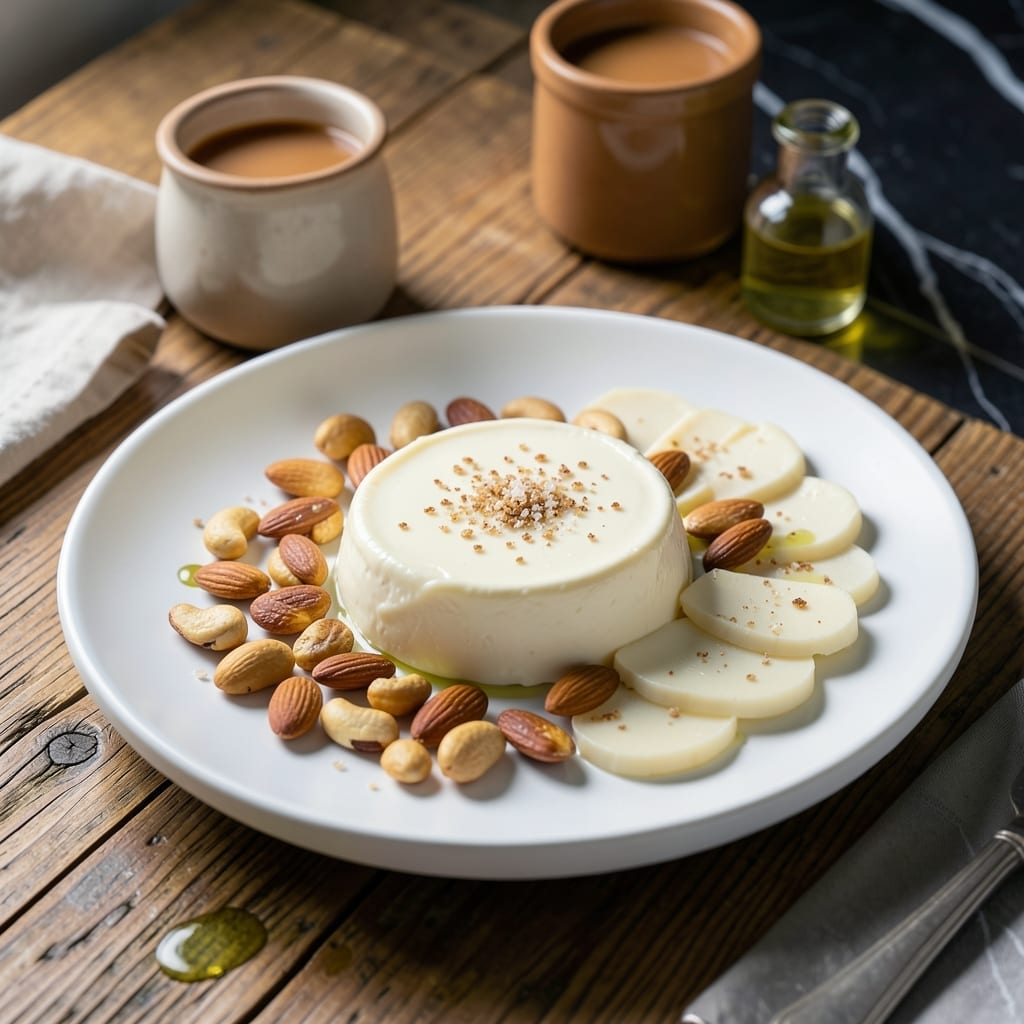
I’ve perfected this plant-based spread to deliver the creamy richness of traditional butter without coconut oil. Cashews and almonds create a smooth, spreadable texture that works beautifully for baking or topping.
This vegan alternative holds up in recipes and on toast, with a neutral flavor that lets other ingredients shine. Whip it up in minutes and store it for weeks in the fridge.
Ingredients for Vegan Butter Recipe No Coconut Oil
A few simple plant-based ingredients create a rich, spreadable butter alternative without coconut oil dominance.
| Ingredient | Amount | Notes |
|---|---|---|
| Raw Cashews 🌰 | 1 cup | Soaked in hot water for 15 minutes |
| Raw Almonds 🌰 | ½ cup | Blanched and slivered preferred |
| Refined Coconut Oil 🫒 | ¼ cup | Melted, or substitute sunflower oil |
| Neutral-Flavored Oil 🫒 | 2 tbsp | Avocado or sunflower oil |
| Unsweetened Almond Milk 🥛 | ¼ cup | Or any plant-based milk |
| Apple Cider Vinegar 🍏 | 1 tsp | For tangy flavor balance |
| Lemon Juice 🍋 | 1 tbsp | Freshly squeezed preferred |
| Nutritional Yeast 🧀 | 1 tbsp | For buttery depth of flavor |
| Sea Salt 🧂 | ½ tsp | Fine grain for even distribution |
| Turmeric Powder 🌿 | 0.125 tsp | For natural yellow color |
[recipe_ingredient_scaler]
The cashews are non-negotiable for that creamy texture. Raw and unsalted is key—roasted or salted throws off the flavor balance. Trader Joe’s has consistently good quality at a fair price, but bulk bins at Whole Foods work too. For almonds, blanched and slivered skip the skin-peeling step. The oil needs to be completely neutral—avoid anything with a strong aroma.
No cashews? Macadamia nuts at a 1:1 ratio work, but they’re pricey. Almonds can replace cashews entirely, though the texture softens slightly. If avoiding all coconut, sunflower oil makes an excellent substitute for the refined coconut oil. Need more tang? Add an extra teaspoon of vinegar. The turmeric is purely for color—skip it if you prefer a white spread.
Store in an airtight container in the fridge for up to 3 weeks. For longer storage, freeze in portions for 6 months. Bring to room temperature before using for best spreadability. The mixture may separate slightly—just stir before using.
Why You’ll Love This Recipe
- 5-Minute Blend: I just toss the soaked cashews and almonds in the blender with a splash of almond milk, and it’s done before my coffee’s cold.
- Rich and creamy: The combo of raw nuts and neutral oil gives that buttery richness without a hint of coconut aftertaste.
- Bakes like a dream: I’ve used it in cookies, frosting, and even sautéed veggies—no one believes it’s dairy-free.
- Stays fresh: One batch fills a jar and keeps for weeks in the fridge, so I’m never scrambling for a last-minute spread.
Step-by-Step Instructions for Creamy Vegan Butter
Master the technique to create a smooth, spreadable plant-based butter with rich nutty depth.
Step 1: Soak and Prepare the Nuts
Begin by soaking the 1 cup Raw Cashews in hot water for 15 minutes. This softens them significantly, ensuring a silky texture in the final product. Meanwhile, blanch the 0.5 cup Raw Almonds if they aren’t already slivered, then drain both nuts thoroughly.
Pat them completely dry with a clean kitchen towel. Any residual moisture will interfere with emulsification, leading to a separated or grainy spread. I always double-check for dampness before proceeding.
Step 2: Blend the Liquid Base
In a high-speed blender, combine the 0.25 cup Refined Coconut Oil (melted), 2 tbsp Neutral-Flavored Oil, 0.25 cup Unsweetened Almond Milk, 1 tsp Apple Cider Vinegar, and 1 tbsp Lemon Juice. Blend on high for 20-30 seconds until fully homogenized.
The mixture should appear creamy and slightly frothy. The vinegar and lemon juice add a subtle tang that balances the richness, while the oils create the necessary fat base for a butter-like consistency.
Step 3: Incorporate Nuts and Flavorings
Add the soaked Raw Cashews, Raw Almonds, 1 tbsp Nutritional Yeast, 0.5 tsp Sea Salt, and 0.125 tsp Turmeric Powder to the blender. Start on low speed, then gradually increase to high, blending for 1-2 minutes until ultra-smooth.
Stop to scrape down the sides as needed. The turmeric provides a natural golden hue, while the nutritional yeast delivers a buttery, umami depth. The texture should be completely uniform, with no visible nut pieces remaining.
Step 4: Chill and Solidify
Transfer the mixture to a clean jar or container with a lid. Refrigerate for at least 4 hours or until fully firm. This step is critical—the mixture will thicken as the oils solidify, transforming into a spreadable consistency.
For best results, avoid disturbing it during chilling. Once set, the spread should hold its shape when scooped but remain easy to spread. If it’s too soft, return it to the fridge for an additional 30 minutes.
Pro Tips For Making Vegan Butter Recipe No Coconut Oil
- Soak the Nuts: Cover cashews and almonds in hot water for at least 15 minutes—this softens them for a silkier blend. I learned this the hard way after my first batch turned out grainy.
- Chill the Oil: Pop your neutral-flavored oil in the fridge for 20 minutes before blending to help the butter solidify faster. Sounds weird, but it works.
- Skip the Overfill: Don’t pack your blender past the halfway mark—this stuff expands. After burning out my first blender, I finally figured out the hard way.
- Add Milk Slowly: Drizzle in the almond milk a tablespoon at a time while blending to control the texture. My grandmother swore by this, and she was right.
Dietary Considerations for This Recipe
Keto-Friendly Options
For a keto-friendly version, replace high-carb ingredients with avocado oil or macadamia nut oil. These provide healthy fats without added carbs. Ensure other add-ins like nutritional yeast or apple cider vinegar are carb-conscious.
Gluten-Free
This recipe is naturally gluten-free if you use certified gluten-free ingredients. Double-check labels on items like nutritional yeast or lecithin to avoid hidden gluten. Oats, if used, should be certified gluten-free to prevent cross-contamination.
Allergens
Common allergens in vegan butter include nuts (e.g., cashews or almonds). For nut-free options, use sunflower seeds or soy-based alternatives. Always verify that all ingredients are processed in allergen-free facilities if sensitivities are severe.
Vegetarian Modifications
Since this recipe is already plant-based, no modifications are needed for vegetarians. However, those avoiding dairy substitutes can explore olive oil or tahini as alternative bases for a different flavor profile.
Low-Sodium
To reduce sodium, omit added salt or use a low-sodium salt substitute. Check labels on ingredients like nutritional yeast, which can contain sodium. Fresh lemon juice can also enhance flavor without increasing salt content.
Nutrition Facts

Trained in classic French technique but raised on slow-cooked ribs and spicy rubs, she blends culinary skill with smoke and soul.
- Recipe for Boneless Pork Chops in Cast Iron Skillet: Sear and Baste to Juicy Perfection - October 3, 2026
- Recipe for Boneless Cross Rib Roast: Slow-Roasted Beef with Herb Crust - October 3, 2026
- Hamburgers in Sauce Recipe Crock Pot: Slow-Cooked Savory Delight - October 3, 2026