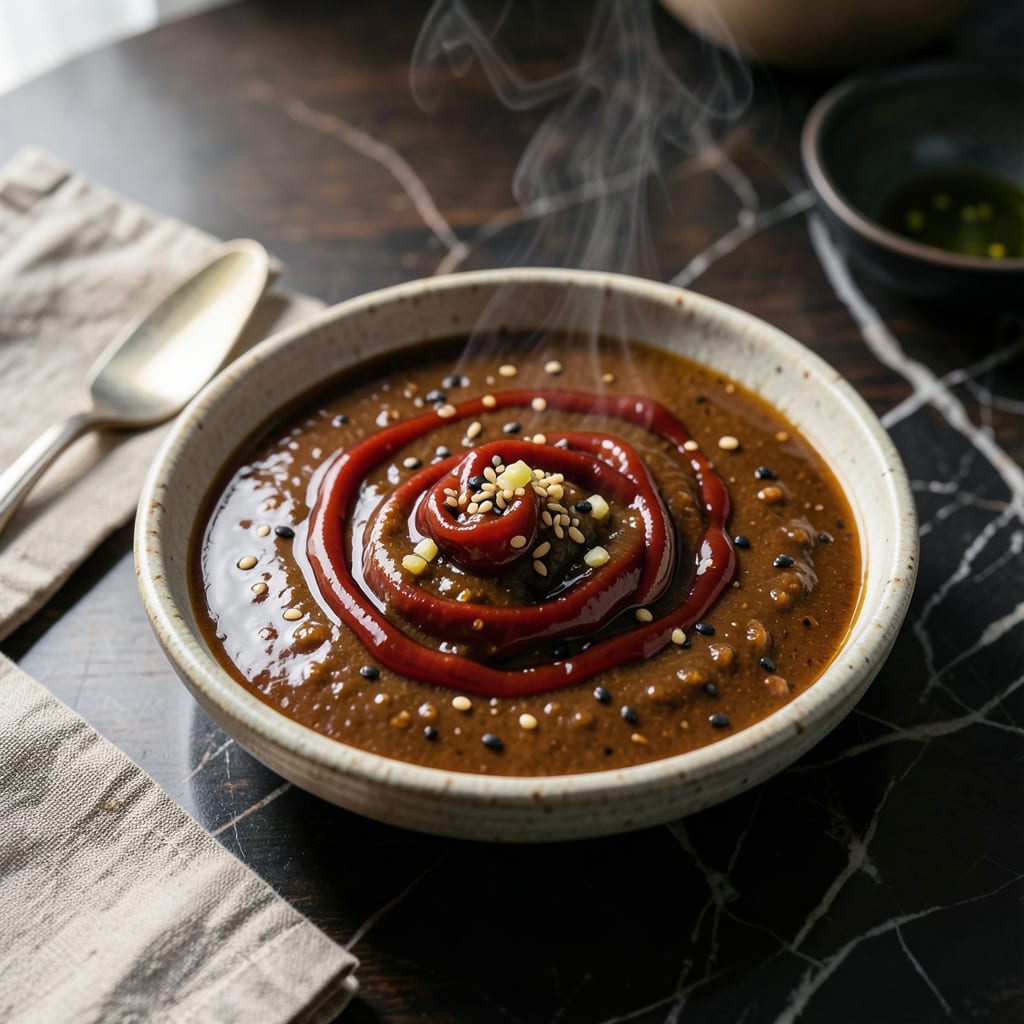
This vegan version captures all the bold, umami-rich flavors of traditional Korean BBQ sauce without any animal products. The secret lies in balancing smoky, sweet, and spicy elements through carefully selected plant-based ingredients.
With 5 ingredients and 10 minutes of prep, you can create a sauce that’s perfect for marinating, glazing, or dipping. It delivers deep, complex flavors that work beautifully with tofu, tempeh, or vegetables.
Ingredients for Vegan Korean Bbq Sauce
Seven plant-based ingredients deliver authentic Korean BBQ flavor in a vegan sauce.
| Ingredient | Amount | Notes |
|---|---|---|
| Soy Sauce 🥢 | ½ cup | Low-sodium preferred for balance |
| Gochujang 🌶️ | ¼ cup | Korean red pepper paste essential |
| Maple Syrup 🍁 | ¼ cup | Grade A for consistent sweetness |
| Rice Vinegar 🍚 | 2 tbsp | Adds necessary tang and brightness |
| Toasted Sesame Oil 🫒 | 1 tbsp | Deep nutty aroma required |
| Garlic Cloves 🧄 | 4 cloves | Minced for even distribution |
| Fresh Ginger 🌿 | 1 tbsp | Grated for maximum flavor extraction |
[recipe_ingredient_scaler]
The gochujang is non-negotiable—look for Sempio or Chung Jung One brands at H Mart or the international aisle. Soy sauce should be vegan-certified (some brands use fish in fermentation). Kikkoman is a safe bet. For the maple syrup, dark grade A has more depth, but any will work. Don’t skip the toasted sesame oil; regular sesame oil lacks the depth this recipe needs.
No gochujang? Sriracha plus 1 tsp smoked paprika gets you close but won’t be the same. Out of maple syrup? Agave nectar at equal parts works. Rice vinegar can be swapped for apple cider vinegar, though the flavor profile shifts slightly. For garlic and ginger, pre-minced in jars saves time but fresh is noticeably better.
Sauce keeps in the fridge for 2 weeks in an airtight container. The flavors deepen after 24 hours, so make it ahead if possible. Freeze for up to 3 months—portion into ice cube trays for easy use.
Why You’ll Love This Recipe
- Five Minute Mix: I just dump everything in a bowl—soy sauce, gochujang, maple syrup, rice vinegar, sesame oil—and stir. Honestly, it’s ready before the grill heats up.
- Sweet Heat Balance: That maple syrup mellows the gochujang’s fiery kick while the rice vinegar keeps it bright. I’ll be real: I’ve caught myself licking the spoon more than once.
- Endless Pairings: It’s my secret weapon for tofu, veggie skewers, or even drizzled over rice bowls. Between us, it’s the reason my meal prep never gets boring.
- Stays Fresh: One batch lasts me two weeks in the fridge, and the flavors just deepen. I save a jar for lazy nights when I need a quick flavor boost.
Step-by-Step Instructions for Vegan Korean BBQ Sauce
This method ensures maximum flavor extraction and perfect texture for your plant-based glaze.
Step 1: Prepare the Aromatics
Finely mince the 4 cloves Garlic Cloves until they resemble a fine paste. I prefer pressing them through a garlic press for the most uniform texture and even distribution throughout the sauce. Properly minced garlic integrates better than roughly chopped pieces.
Grate the 1 tbsp Fresh Ginger using a microplane. This releases more of its pungent oils than chopping, giving your sauce that essential zing that defines Korean flavors. The ginger should be reduced to a near-liquid consistency to prevent fibrous bits in the final product.
Step 2: Combine the Liquid Base
In a medium saucepan, whisk together the 0.5 cup Soy Sauce, 0.25 cup Gochujang, and 0.25 cup Maple Syrup. The gochujang will be thick and sticky—keep whisking until it dissolves completely into the other liquids, creating a smooth, dark reddish-brown mixture.
Add the 2 tbsp Rice Vinegar and 1 tbsp Toasted Sesame Oil to the saucepan. The vinegar will brighten the deeper flavors while the sesame oil adds its characteristic nutty aroma that’s essential for authentic Korean BBQ profiles.
Step 3: Incorporate Aromatics and Simmer
Add the prepared garlic and ginger to the saucepan with the liquid mixture. Stir well to combine completely. The fresh aromatics should be fully submerged in the liquid to prevent burning during the cooking process.
Place the saucepan over medium heat and bring to a gentle simmer. You’ll notice small bubbles forming at the edges and the sauce taking on a glossy sheen. This is when the flavors begin to meld and intensify.
Step 4: Reduce to Desired Consistency
Once simmering, reduce the heat to medium-low and let the sauce cook for 5-7 minutes. Stir frequently with a silicone spatula to prevent sticking to the bottom of the pan. The sauce will begin to thicken as the excess liquid evaporates.
You’re aiming for a syrup-like consistency that coats the back of a spoon without being watery. Watch for the sauce to reduce by about 20-25% in volume. The color will deepen to a rich, glossy mahogany as it concentrates.
Step 5: Cool and Store
Remove the saucepan from heat and let the sauce cool to room temperature. It will thicken slightly more as it cools. This rest period allows the flavors to fully marry and the sauce to reach its optimal texture.
Transfer to an airtight container once completely cooled. The sauce can be stored in the refrigerator for up to 2 weeks. For best results, let it sit for at least 1 hour before using to allow the flavors to develop fully.
Pro Tips For Making Vegan Korean Bbq Sauce
- Bloom the Gochujang: Cook the gochujang in the sesame oil for 1-2 minutes over medium-low heat before adding liquids. I learned this the hard way—raw gochujang can taste harsh, but this step deepens its flavor.
- Balance the Sweetness: Taste before adding all the maple syrup—some gochujang brands are sweeter than others. I now start with half the syrup, adjust, and rarely need the full amount.
- Skip the Boil: Resist the urge to simmer this sauce hard. High heat can make the maple syrup caramelize too fast, giving a bitter edge. Gentle warmth is all it needs to come together.
- Rest the Sauce: Let it sit for at least 10 minutes after mixing. Sounds weird, but it works—the flavors meld and the vinegar’s sharpness softens, making the sauce taste more balanced.
Best Sauces and Condiments for This Recipe
Dipping Sauces
This sauce works beautifully as a dip for crispy tofu bites or tempura vegetables. I love serving it with steamed dumplings—I use Nasoya brand vegan potstickers. The sweet-spicy balance complements the savory filling perfectly. 💛
Marinade Magic
Use it to marinate portobello mushrooms before grilling—let them soak for at least 30 minutes. The mushrooms absorb the umami flavors beautifully. For extra depth, brush on more sauce during the last 2 minutes of cooking.
Burger Topping
Drizzle over vegan burgers for an instant flavor upgrade. I particularly love it with Beyond Meat patties. Add quick-pickled cucumbers for a refreshing contrast to the rich, smoky sauce.
Stir-Fry Finish
Toss 1-2 tbsp into stir-fried vegetables or noodles at the end of cooking. The heat helps the sauce cling to every bite. I always add a sprinkle of toasted sesame seeds for texture.
Grilled Goodness
Brush onto grilled eggplant slices or zucchini during the last minute of cooking. The sauce caramelizes slightly, creating a glossy glaze. For extra shine, add 1 tsp cornstarch to thicken it further. 🔥
Nutrition Facts

Trained in classic French technique but raised on slow-cooked ribs and spicy rubs, she blends culinary skill with smoke and soul.
- Recipe for Boneless Pork Chops in Cast Iron Skillet: Sear and Baste to Juicy Perfection - October 3, 2026
- Recipe for Boneless Cross Rib Roast: Slow-Roasted Beef with Herb Crust - October 3, 2026
- Hamburgers in Sauce Recipe Crock Pot: Slow-Cooked Savory Delight - October 3, 2026