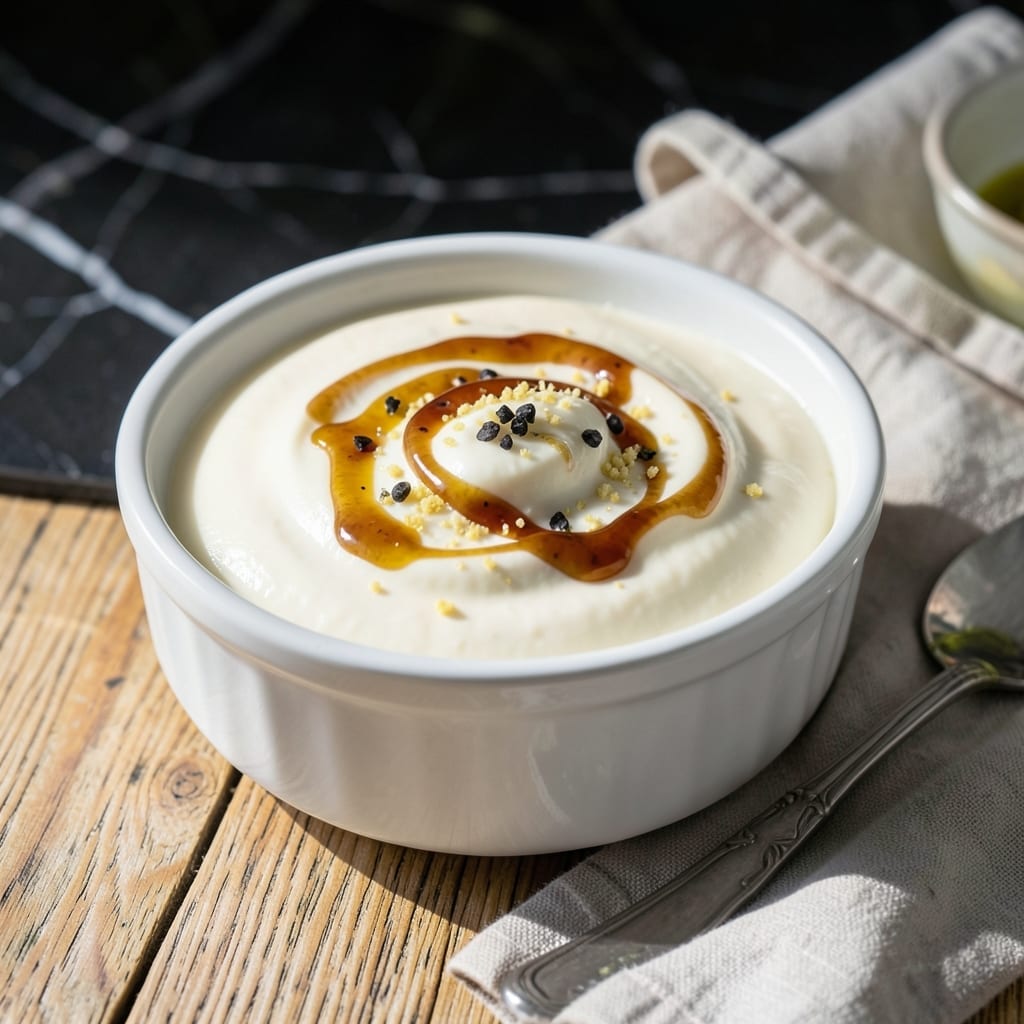
This oil-free vegan mayonnaise delivers creamy richness through aquafaba, the liquid from canned chickpeas. It’s the plant-based answer to traditional mayo without compromising texture or flavor.
With just a few simple ingredients and a blender, you can whip up a batch in minutes. The result is smooth, velvety, and perfect for sandwiches, dips, or dressings.
Ingredients for Vegan Mayonnaise Recipe No Oil
Eight simple ingredients transform into creamy vegan mayo without a drop of oil.
| Ingredient | Amount | Notes |
|---|---|---|
| Aquafaba 🥫 | ½ cup | Liquid from canned chickpeas, unsalted |
| Dijon Mustard 🟡 | 2 tsp | Smooth, high-quality preferred |
| Apple Cider Vinegar 🍏 | 1 tbsp | Or white vinegar for tang |
| Lemon Juice 🍋 | 1 tbsp | Freshly squeezed for brightness |
| Garlic Powder 🧄 | ½ tsp | Not garlic salt |
| Sea Salt 🧂 | ½ tsp | Fine grain for even distribution |
| White Sugar 🍚 | 1 tsp | Optional, balances acidity |
| Black Pepper 🌶️ | ¼ tsp | Freshly ground for best flavor |
[recipe_ingredient_scaler]
Aquafaba is the magic ingredient here. Use the liquid from unsalted chickpeas—salted can throw off the balance. Organic canned chickpeas often yield cleaner-tasting aquafaba. I usually grab mine from Whole Foods or Trader Joe’s for consistent quality. The Dijon mustard is non-negotiable—it emulsifies and adds depth. Look for brands like Maille or Grey Poupon for reliable results.
No aquafaba? Cooked chickpea liquid works in a pinch (simmer dried chickpeas, reserve the water). Out of Dijon? Yellow mustard at the same ratio but expect a milder flavor. Apple cider vinegar can be swapped for white wine vinegar. The sugar is optional but recommended—it softens the acidity. For a sweeter mayo, increase to 1.5 teaspoons.
This keeps 1 week in the fridge in an airtight jar. The texture thickens over time—give it a good whisk before using. Freezing isn’t recommended (it separates). Best used fresh for that perfect velvety consistency.
Why You’ll Love This Recipe
- No Fuss Blending: I just dump everything in the blender and let it do the work—no whisking, no waiting.
- Tangy Kick: The apple cider vinegar and Dijon give it that sharp, zingy bite I crave in mayo.
- Spreads Everywhere: Honestly, it’s my go-to for sandwiches, dips, even salad dressing in a pinch.
- Pantry Staples: Aquafaba and spices I already have mean no extra grocery trips—just mix and go.
Step-by-Step Instructions for Vegan Mayonnaise No Oil
This method transforms aquafaba into a rich, velvety emulsion without any added fat.
Step 1: Whip the Aquafaba to Stiff Peaks
Pour the 0.5 cup Aquafaba into the bowl of a stand mixer fitted with the whisk attachment. Begin whipping on medium speed until the liquid turns foamy, then gradually increase to high speed.
After 2-3 minutes, the aquafaba will develop soft peaks. Continue whipping for another 3-5 minutes until you achieve stiff, glossy peaks that hold their shape when the whisk is lifted. This is critical—under-whipped aquafaba won’t properly emulsify.
Step 2: Incorporate the Acidic Components
With the mixer running on medium-low speed, slowly drizzle in the 1 tbsp Apple Cider Vinegar and 1 tbsp Lemon Juice. Add them gradually over 30 seconds to prevent deflating the foam.
Next, add the 2 tsp Dijon Mustard and mix for another 15-20 seconds until fully combined. The mustard acts as an emulsifier, helping to stabilize the mixture and create that signature mayonnaise consistency.
Step 3: Balance Flavors with Seasonings
Reduce the mixer speed to low and add the 0.5 tsp Sea Salt, 0.5 tsp Garlic Powder, 1 tsp White Sugar, and 0.25 tsp Black Pepper. Mix for 10-15 seconds just until the seasonings are evenly distributed.
Taste and adjust if needed, though the flavors will deepen as the mixture rests. The sugar balances the acidity from the vinegar and lemon, while the garlic powder adds subtle depth without overpowering.
Step 4: Rest and Achieve the Perfect Texture
Transfer the mixture to an airtight container and let it rest in the refrigerator for at least 30 minutes. This chilling period allows the emulsion to fully set and develop its characteristic creamy texture.
After resting, the mayonnaise should be thick, glossy, and spreadable. If it seems too thin, give it another 10-15 minutes in the fridge. The final product will have a smooth, velvety mouthfeel identical to traditional mayo.
Pro Tips For Making Vegan Mayonnaise Recipe No Oil
- Chill the Aquafaba: I learned this the hard way—using room-temperature aquafaba makes the mayo thin and slow to emulsify. Straight from the fridge, it whips up thicker and holds better.
- Stream the Vinegar: Add the apple cider vinegar and lemon juice in a slow, steady drizzle while blending, not all at once. Sounds tedious, but it keeps the emulsion stable.
- Skip the Salt: Resist the urge to add salt upfront—Dijon mustard and garlic powder already bring enough flavor, and extra salt can break the emulsion.
- Use Fresh Lemon: Bottled lemon juice works in a pinch, but fresh makes a real difference in brightness and thickness. I was skeptical until I tried it side by side.
Serving Suggestions for vegan mayonnaise recipe no oil
Plating Styles 🥘
This oil-free vegan mayo shines in both casual and elegant settings. For a casual presentation, serve it in small ramekins or squeeze bottles for easy drizzling over burgers, fries, or sandwiches. For a formal touch, pipe it onto plates using a pastry bag for a refined look, pairing it with upscale appetizers like crudité platters or gourmet sliders. At a buffet, keep it in a large bowl with a serving spoon for guests to help themselves.
Garnishing Techniques 🌿
Enhance the visual appeal with simple yet effective garnishes. Sprinkle fresh herbs like dill, chives, or parsley on top for a pop of color and freshness. For a bold flavor twist, drizzle with smoked paprika-infused olive oil or a dash of hot sauce. Edible flowers or a sprinkle of black pepper can add a touch of sophistication to a formal dish.
Portion Sizes
For individual servings, offer 1-2 tablespoons per person, especially when pairing with dips or as a condiment. For family-style meals, a larger bowl (about ½ cup per 4-6 people) works well, allowing everyone to serve themselves. Adjust based on the dish—sandwiches and wraps may need more, while a light drizzle suffices for salads.
Serving Temperature ⏰
This mayo tastes best when served chilled, straight from the fridge. If it’s been sitting out, give it a quick stir to restore its creamy texture. For dishes requiring warm ingredients (like loaded fries), let the mayo sit at room temperature for 10-15 minutes to soften slightly before serving.
Nutrition Facts

Trained in classic French technique but raised on slow-cooked ribs and spicy rubs, she blends culinary skill with smoke and soul.
- Recipe for Boneless Pork Chops in Cast Iron Skillet: Sear and Baste to Juicy Perfection - October 3, 2026
- Recipe for Boneless Cross Rib Roast: Slow-Roasted Beef with Herb Crust - October 3, 2026
- Hamburgers in Sauce Recipe Crock Pot: Slow-Cooked Savory Delight - October 3, 2026