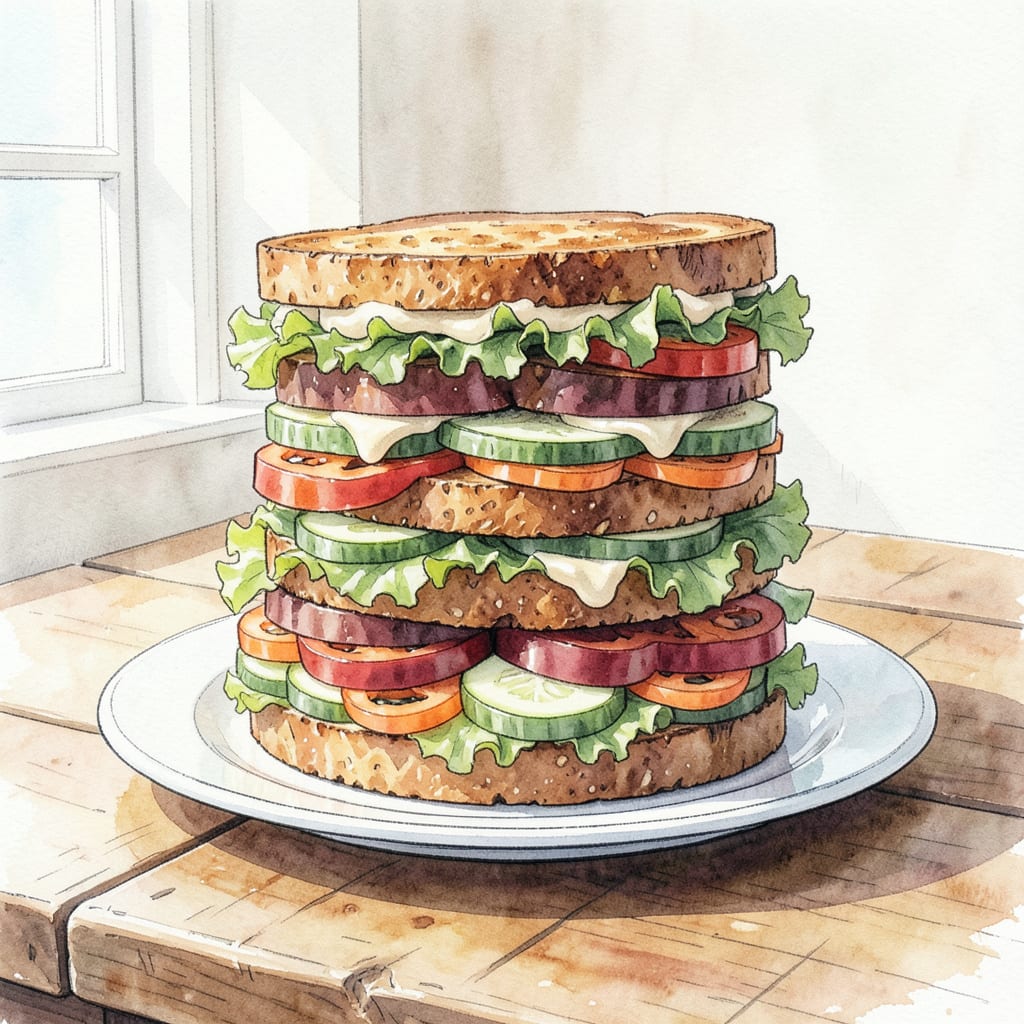
I’ve perfected the ultimate vegetable sandwich recipe that brings together crunchy textures and fresh flavors. This creation is a game-changer for quick lunches or light dinners, combining the best of garden-fresh ingredients.
What makes this sandwich special is the layering of crisp vegetables, creamy spreads, and perfectly toasted bread. With simple ingredients and straightforward assembly, you’ll have a delicious meal ready in minutes. Let’s build this fresh masterpiece!
Ingredients for Vegetable Sandwich
Build your perfect veggie sandwich with these fresh, crunchy ingredients and simple assembly.
| Ingredient | Amount | Notes |
|---|---|---|
| Whole Wheat Bread 🍞 | 4 slices | Slightly toasted for crispiness |
| Unsalted Butter or Vegan Spread 🧈 | 2 tbsp | Softened for easy spreading |
| Crisp Lettuce Leaves 🥗 | 4 whole | Romaine or butter lettuce preferred |
| Thinly Sliced Cucumber 🥒 | ½ cup | English cucumber works best |
| Thinly Sliced Carrots 🥕 | ½ cup | Use julienne for best texture |
| Sliced Bell Peppers 🌶️ | ½ cup | Any color bell pepper works |
| Sliced Avocado 🥑 | 1 whole | Ripe but firm, sliced thinly |
| Sprouts or Microgreens 🌱 | ¼ cup | Alfalfa or broccoli sprouts |
| Hummus or Cream Cheese Spread 🥗 | 2 tbsp | For added creaminess |
| Fresh Herbs 🌿 | 2 tbsp | Chopped fresh parsley or basil |
| Salt and Pepper 🧂 | 1 tsp | To taste, freshly ground |
[recipe_ingredient_scaler]
The bread matters here. Whole wheat or sourdough gives great texture. For the crispiest results, toast it lightly—about 2-3 minutes in a toaster or toaster oven. If you’re feeling fancy, try Ciabatta or Multigrain for different flavor profiles.
No avocado? Guacamole or mashed edamame make great substitutes. The sprouts can be skipped if you don’t have them—they add crunch but aren’t essential. For an extra kick, try adding a spread with roasted red peppers or sun-dried tomato tapenade. The hummus or cream cheese helps everything stick together—don’t skip it.
Assemble just before serving for maximum freshness. Store leftover veggies separately in airtight containers—they’ll keep for 3-4 days in the fridge. The hummus or spread will keep for 5-7 days. You can prep components ahead, but wait to build until you’re ready to eat.
Step-by-Step Instructions for Vegetable Sandwich
Here’s the method for creating a delicious vegetable sandwich with crunchy layers of freshness.
Step 1: Prepare the Bread and Spread
Start by toasting the 4 slices Whole Wheat Bread until they reach a light golden brown color and crisp texture. This enhances the flavor and provides a satisfying crunch. While the bread is toasting, soften the 2 tbsp Unsalted Butter or Vegan Spread to a spreadable consistency. I prefer using room temperature spread for easier application.
Once the bread is ready, let it cool for a minute or two. Then, apply a thin, even layer of the softened butter or vegan spread on each slice. This acts as a barrier, preventing the bread from getting soggy when you add the vegetables.
Step 2: Layer the Vegetables
Begin by adding a crisp Crisp Lettuce Leaf to each slice of bread. I like to use Romaine or butter lettuce for their crunchy texture and mild flavor. Next, add 0.5 cup Thinly Sliced Cucumber and 0.5 cup Thinly Sliced Carrots on top of the lettuce. The thin slices ensure that the vegetables distribute evenly and add a nice crunch.
Follow this with 0.5 cup Sliced Bell Peppers, which add a sweet and slightly crunchy texture. At this point, your sandwich is starting to take shape with multiple layers of flavor and texture.
Step 3: Add the Avocado and Sprouts
Slice the 1 whole Sliced Avocado into thin pieces and layer them on top of the vegetables. The avocado adds a creamy texture that complements the crunch of the other vegetables. Finally, sprinkle 0.25 cup Sprouts or Microgreens over the avocado. These add a burst of freshness and a bit of peppery flavor.
At this stage, your sandwich is almost complete. The layers are stacked with a variety of textures and flavors, making each bite interesting and satisfying.
Step 4: Finish with Spread and Herbs
On the top slice of bread (before placing it on the sandwich), spread a layer of 2 tbsp Hummus or Cream Cheese Spread. This adds an extra layer of creaminess and flavor. Sprinkle 2 tbsp Fresh Herbs like chopped parsley or basil over the spread. These herbs add a fresh and aromatic flavor that ties the sandwich together.
Season with 1 tsp Salt and Pepper to taste. The salt enhances the flavors, while the pepper adds a subtle kick. With this final touch, your vegetable sandwich is ready to be served and enjoyed.
Essential Equipment for Perfect Results
Essential Tools for Assembly
To build the perfect vegetable sandwich, you’ll need a few key tools. I always start with a sharp chef’s knife for slicing vegetables thinly and evenly. A cutting board provides a stable surface for prepping all your ingredients. For toasting bread, I recommend using a toaster or toaster oven for consistent results. 🔥
Spreading and Layering Tools
A butter knife or offset spatula is essential for spreading your chosen spread evenly on the bread. For layering ingredients, a pair of tongs or salad servers helps handle delicate lettuce leaves and sprouts without bruising them. If you’re using avocado, a spoon or avocado slicer makes portioning easier.
Storage Containers
For storing leftover ingredients or prepping components ahead, I rely on airtight containers. Glass containers with snap-on lids work particularly well for keeping vegetables fresh. If you’re prepping hummus or spread, a small glass jar with a tight-fitting lid keeps it fresh for several days. ❄️
Specialty Items for Enhanced Experience
While not essential, a mandoline can help achieve perfectly uniform vegetable slices. For enthusiasts, a panini press can add a nice grilled touch to your sandwich. Some cooks also appreciate a spice grinder for freshly grinding pepper directly onto their sandwich.
Equipment Care Tips
To maintain your equipment, always wash cutting boards and knives immediately after use to prevent cross-contamination. Store sharp knives in a knife block or magnetic strip to keep them safe and organized. For toasters and toaster ovens, regular cleaning prevents crumb buildup and maintains performance.
Budget-Friendly Alternatives
If you’re just starting out, don’t worry about investing in expensive equipment. A basic serrated knife can substitute for a chef’s knife, and a regular oven can toast bread effectively. For spreading, even a regular table knife will work in a pinch. The key is to have the right tools for the job, not necessarily the fanciest ones.

Trained in classic French technique but raised on slow-cooked ribs and spicy rubs, she blends culinary skill with smoke and soul.
- Recipe for Boneless Pork Chops in Cast Iron Skillet: Sear and Baste to Juicy Perfection - October 3, 2026
- Recipe for Boneless Cross Rib Roast: Slow-Roasted Beef with Herb Crust - October 3, 2026
- Hamburgers in Sauce Recipe Crock Pot: Slow-Cooked Savory Delight - October 3, 2026