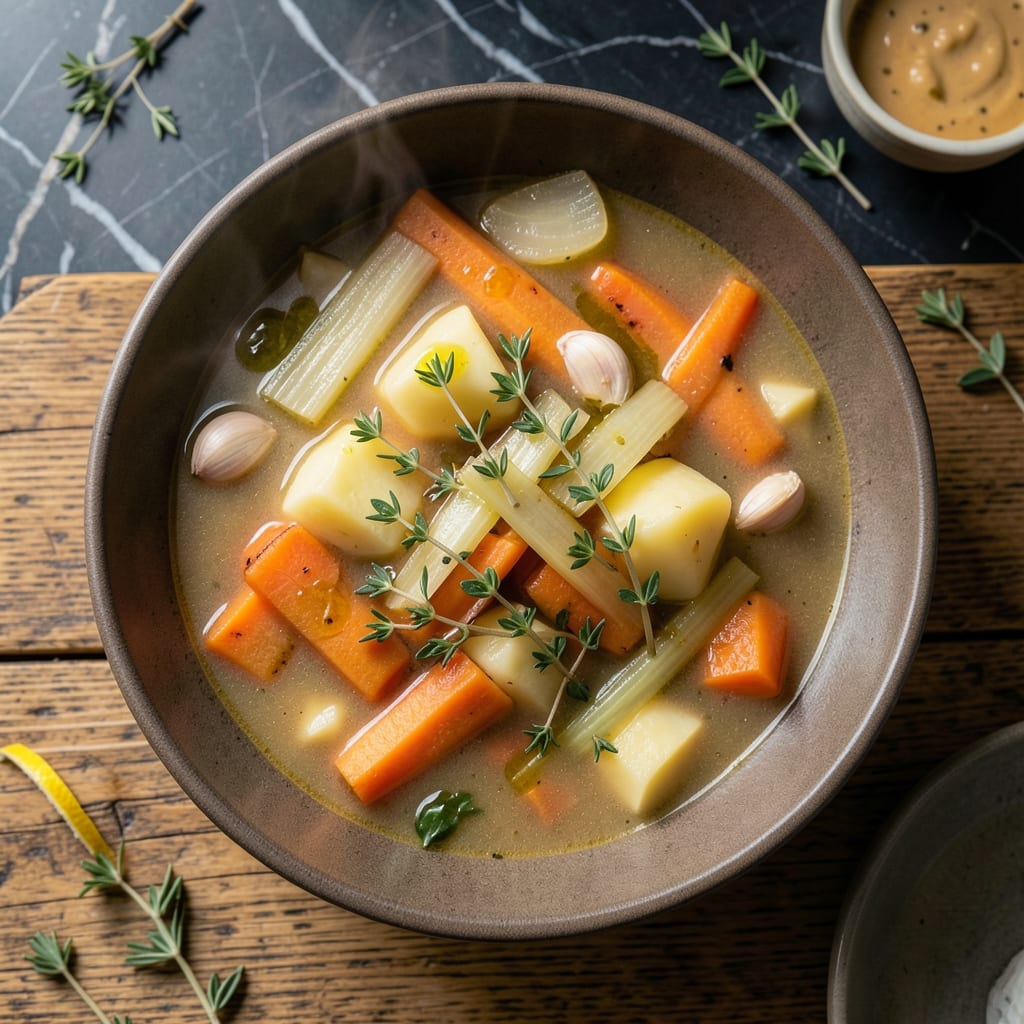
This light and savory vegetable soup proves that garden-fresh flavors don’t need tomatoes to shine. A carefully balanced broth allows each ingredient to maintain its natural taste while creating a harmonious whole.
The secret lies in layering flavors through proper sautéing and simmering. Carrots, celery, and onions form the base, while seasonal vegetables add color and texture. The result is a clean, savory broth that lets the vegetables take center stage.
Unlike heavier soups, this version stays bright and light without sacrificing depth. The cooking time is just long enough to develop flavor without turning the vegetables mushy. Every spoonful delivers distinct yet complementary tastes.
Perfect for a nourishing meal that feels as good as it tastes. The simplicity of preparation makes it ideal for weeknight cooking or meal prep.
Ingredients for Vegetable Soup Recipe No Tomato
Fresh vegetables and aromatic herbs create this light, savory soup with garden-fresh depth.
| Ingredient | Amount | Notes |
|---|---|---|
| Olive Oil 🫒 | 2 tbsp | Extra-virgin for sautéing |
| Yellow Onion 🧅 | 1 whole | Medium, finely diced |
| Carrots 🥕 | 2 whole | Peeled, diced into 1/4-inch pieces |
| Celery Stalks 🌿 | 2 whole | Diced, leaves included for flavor |
| Garlic Cloves 🧄 | 4 cloves | Minced for aromatic depth |
| Fresh Thyme Sprigs 🌿 | 3 whole | Leaves stripped, stems discarded |
| Bay Leaf 🍃 | 1 whole | Dried, for broth infusion |
| Vegetable Broth 💧 | 6 cups | Low-sodium for controlled seasoning |
| Zucchini 🥒 | 1 whole | Medium, cut into half-moons |
| Green Beans 🌱 | 1 cup | Trimmed, cut into 1-inch pieces |
| Potatoes 🥔 | 2 whole | Yukon Gold, diced into 1/2-inch cubes |
| Kale Leaves 🥬 | 2 cups | Stems removed, roughly chopped |
| Salt 🧂 | 1 ½ tsp | Kosher or sea salt, to taste |
| Black Pepper 🌶️ | ½ tsp | Freshly ground for best flavor |
| Lemon Juice 🍋 | 1 tbsp | Freshly squeezed for brightness |
[recipe_ingredient_scaler]
The vegetable broth forms the foundation, so opt for a high-quality brand like Imagine Foods or Pacific Foods for clean, rich flavor. Fresh thyme and bay leaf are non-negotiable for aromatic depth—skip the dried versions if possible. For the potatoes, Yukon Gold offers the perfect creamy texture without falling apart. Most Whole Foods or Trader Joe’s locations carry these staples year-round.
No Yukon Golds? Red potatoes work well, but avoid waxy varieties like new potatoes (they stay too firm). Fresh thyme can be replaced with half the amount of dried, though the flavor won’t be as vibrant. For the kale, spinach or Swiss chard can substitute—add them at the end to prevent overcooking. Vegetable broth can be homemade, but store-bought works if you’re short on time.
This soup keeps beautifully in the fridge for 4-5 days and freezes for up to 3 months. Store in airtight containers, and reheat gently to preserve the vegetables’ texture. The flavors deepen overnight, making it ideal for meal prep (worth the extra minute to let it rest before serving).
Why You’ll Love This Recipe
- One Pot Wonder: I love that it all simmers together in a single pot—olive oil, onions, carrots, celery, and garlic doing the heavy lifting.
- Deep Aromatic Base: The garlic and onions caramelize in olive oil, creating a rich, savory backbone without a single tomato in sight.
- Meal Prep Hero: Honestly, it tastes even better the next day, so I double the batch for lunches all week.
- Pantry Friendly: Between us, I’ve made this with just the basics—no fancy ingredients, just hearty, budget-friendly comfort.
Step-by-Step Instructions for Vegetable Soup No Tomato
Precision and timing create depth of flavor in this light yet satisfying broth.
Step 1: Build the Aromatic Foundation
Heat the 2 tbsp Olive Oil in a large pot over medium heat until it shimmers. Add the 1 whole Yellow Onion, 2 whole Carrots, and 2 whole Celery Stalks and sauté for 6-8 minutes until the onions become translucent and the carrots begin to soften.
This trio, known as mirepoix, forms the flavor base. Stir frequently to prevent browning. The vegetables should glisten with oil but not take on color—pale gold at most. Add the 4 cloves Garlic Cloves during the last 30 seconds to bloom the aroma without burning.
Step 2: Infuse the Broth with Herbs
Pour in the 6 cups Vegetable Broth and add the 3 whole Fresh Thyme Sprigs (leaves stripped) and 1 whole Bay Leaf. Increase heat to high and bring to a boil. Once boiling, reduce heat to maintain a gentle simmer—you should see small bubbles breaking the surface occasionally.
Simmer uncovered for 10 minutes to allow the herbs to infuse the broth. The thyme will release its earthy, slightly minty notes while the bay leaf contributes subtle floral depth. Skim off any foam that rises to the surface during this time for a cleaner broth.
Step 3: Incorporate the Hearty Vegetables
Add the 2 whole Potatoes (diced) to the simmering broth. These will take the longest to cook, so they go in first. Return to a simmer and cook for 8 minutes before adding the 1 whole Zucchini and 1 cup Green Beans.
The potatoes should be just beginning to soften at the edges when the zucchini and green beans join them. The zucchini will turn bright green and the green beans will become tender-crisp after another 5-7 minutes of simmering.
Step 4: Finish with Kale and Seasonings
Stir in the 2 cups Kale Leaves, 1.5 tsp Salt, and 0.5 tsp Black Pepper. The kale will wilt dramatically within 2-3 minutes, turning the broth a deeper green. Taste and adjust salt if needed—remember the broth was low-sodium to begin with.
Simmer for an additional 2 minutes to allow the kale to become tender and the flavors to meld. The kale should be vibrant green and silky, not tough or bitter. Remove the bay leaf before serving.
Step 5: Brighten and Serve
Remove the pot from heat and stir in the 1 tbsp Lemon Juice. This final addition brightens all the flavors and balances the richness of the vegetables. The soup should have a clean, fresh aroma with visible flecks of all the vegetables.
Ladle into bowls while hot. Each serving should contain a generous portion of all the vegetables in the clear, fragrant broth. The potatoes will be tender but still hold their shape, and the green beans should offer a slight bite.
Pro Tips For Making Vegetable Soup Recipe No Tomato
- Sauté the Aromatics: Cook the onion, carrots, and celery in olive oil over medium heat until soft—about 8-10 minutes. I learned this the hard way: rushing this step leaves the soup tasting raw and underdeveloped.
- Uniform Dice: Cut the onion, carrots, and celery into even, bite-sized pieces so they cook at the same rate. Sounds fussy, but it actually changes the outcome—no more crunchy carrots in an otherwise tender soup.
- Skip the Browned Garlic: Add the garlic cloves only after the other vegetables have softened, and keep the heat low. Burnt garlic turns bitter, and I’ve ruined more than one pot of soup by getting impatient.
- Use the Stock Early: Deglaze the pot with a splash of stock after sautéing the vegetables to lift all the flavorful browned bits. My grandmother swore by this, and she was right: it builds a richer base without extra effort.
Essential Equipment for Perfect Results
Large Stock Pot
A 5-6 quart stock pot with a heavy bottom is essential for even heat distribution. I use my Le Creuset Dutch oven—it’s perfect for sautéing the mirepoix and simmering the broth without hot spots. The wide surface area helps vegetables cook evenly. 🔥
Chef’s Knife
A sharp 8-inch chef’s knife makes quick work of dicing all those vegetables. I’ve had my Wüsthof Classic for years and it still glides through carrots and celery like butter. Keep it honed for safety and precision.
Cutting Board
Use a large wooden or plastic cutting board with plenty of space for prepping all your vegetables. I prefer bamboo for its knife-friendly surface and sustainability. A damp towel underneath prevents slipping while you chop.
Wooden Spoon
A sturdy wooden spoon is ideal for stirring without scratching your pot. I keep mine by the stove at all times. It’s perfect for scraping up browned bits from the bottom and stirring without damaging non-stick surfaces.
Ladle
For serving, a 1-cup stainless steel ladle gives you perfect portions every time. I like the OXO Good Grips version with its comfortable handle. The deep bowl shape makes it easy to scoop up both broth and vegetables together. 🥄
Fine Mesh Strainer
If you want to strain your broth for a clearer presentation, a fine mesh strainer is invaluable. I use mine to remove the bay leaf and thyme stems if I’m serving this soup for special occasions. Rinse with hot water immediately after use.
Nutrition Facts
Frequently Asked Questions
Can I use frozen vegetables instead of fresh?
Yes, but add them directly to the simmering broth without thawing first. Frozen veggies release more water, so reduce broth by 1 cup to compensate. They’ll soften in 5-7 minutes.
Why skip tomatoes in this version?
Omitting tomatoes lets the natural sweetness of carrots, celery, and potatoes shine. The broth stays light and clean, allowing each vegetable’s flavor to stand out distinctly.
How can I make this soup creamier without dairy?
Blend 1 cup of cooked potatoes with 1 cup broth until smooth, then stir back into the pot. This adds richness while keeping it fully plant-based.
What’s the best way to store leftovers?
Cool completely, then transfer to airtight containers. It keeps in the fridge for 4-5 days or freezes for up to 3 months. Reheat gently to preserve texture.

Trained in classic French technique but raised on slow-cooked ribs and spicy rubs, she blends culinary skill with smoke and soul.
- Recipe for Boneless Pork Chops in Cast Iron Skillet: Sear and Baste to Juicy Perfection - October 3, 2026
- Recipe for Boneless Cross Rib Roast: Slow-Roasted Beef with Herb Crust - October 3, 2026
- Hamburgers in Sauce Recipe Crock Pot: Slow-Cooked Savory Delight - October 3, 2026