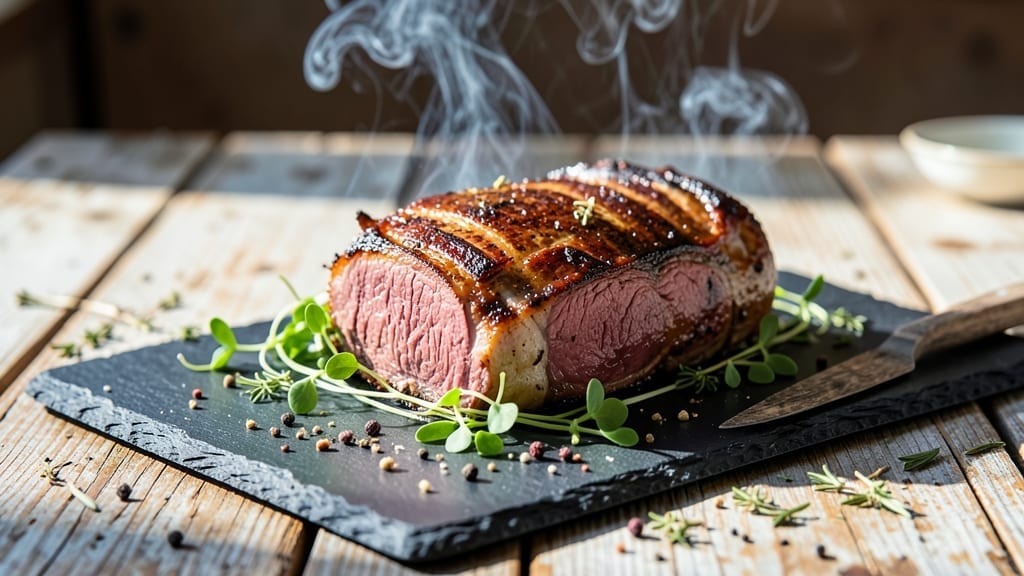
Venison roast on a smoker transforms game meat into restaurant-worthy centerpiece—where deep smoky flavors meet tender, juicy perfection with a bark-infused crust. After perfecting this method over countless hunts, I’ve developed a foolproof approach that ensures your venison stays moist while developing that coveted smoky crust. The secret lies in precise temperature control and a strategic seasoning blend that enhances the meat’s natural richness.
This recipe begins with proper venison preparation—trimmed, seasoned, and optionally brined to maximize tenderness. Using indirect heat on your smoker at 225°F, we slow-cook the roast until it reaches 145°F internal temperature for medium-rare, ensuring every bite is juicy and flavorful.
The smoker’s low-and-slow method allows the bark to develop while keeping the interior perfectly tender.
By the time you remove it from the smoker, your venison will have a deeply caramelized crust infused with smoky wood notes, while the interior remains succulent. A short resting period locks in juices, and optional basting or red wine reduction elevates the dish to restaurant-quality status.
Serve with roasted root vegetables or a crisp salad to balance the rich flavors.
Whether you’re cooking for a special occasion or simply want to make the most of your harvest, this method delivers consistent, professional results every time. Let’s get started on creating a venison roast that will impress even the most discerning guests.
Ingredients for venison roast recipe smoker
Center-cut venison, bold spices, and smoky wood chips—just the essentials for restaurant-quality roast.
| Ingredient | Amount | Notes |
|---|---|---|
| Venison Roast 🦌 | 4 lb | Center-cut, trimmed of fat |
| Kosher Salt 🧂 | 2 tbsp | Diamond Crystal preferred |
| Freshly Ground Black Pepper 🌶️ | 1 ½ tbsp | Coarsely cracked |
| Granulated Garlic 🧄 | 2 tbsp | Not garlic powder |
| Smoked Paprika 🌶️ | 1 tbsp | For deep smoky flavor |
| Dried Thyme 🌿 | 1 tbsp | French thyme preferred |
| Fresh Rosemary 🌿 | ½ cup | Chopped sprigs |
| Extra-Virgin Olive Oil 🫒 | ¼ cup | For basting |
| Wood Chips 🌳 | 2 cups | Hickory or cherry preferred |
| Beef Broth 🍲 | 1 cup | For optional basting |
| Red Wine 🍷 | ½ cup | Cabernet Sauvignon preferred |
| Honey 🍯 | 2 tbsp | For glaze |
| Mustard 🥬 | 1 tbsp | Dijon preferred |
[recipe_ingredient_scaler]
The venison roast is non-negotiable—center-cut ensures tenderness, while trimmed fat prevents flare-ups on the smoker. Costco or specialty butchers often carry game meat, but if you’re hunting, age it 3-5 days before cooking for better texture. For a 4-pound roast, plan on 2-3 hours on the smoker. The wood chips? Hickory or cherry from Traeger or Trail’s End give that authentic smoky depth—avoid fruitwoods like apple, which can overpower.
No smoked paprika? Regular paprika plus a pinch of liquid smoke works, though it won’t be identical. Fresh rosemary hard to find? Dried at half the amount is fine, but toast the sprigs first to wake up the flavor. The red wine reduction is optional but transforms this from good to showstopper—Cabernet Sauvignon has enough tannins to stand up to the gamey richness. Short on time? Beef broth reduction with a splash of balsamic mimics the depth. And if you’re basting, mix equal parts olive oil and beef broth for a glossy finish.
Rest the roast 20-30 minutes before slicing—this locks in juices and makes carving easier. Store leftovers in the fridge for 3-4 days or freeze for up to 3 months. For a crowd, double the wood chips and prep the basting sauce ahead. The bark is best eaten fresh, but the meat reheats beautifully—just wrap slices in foil and warm in a 350°F oven for 10-15 minutes.
Why You’ll Love This Recipe
- No Fuss, No Stress: Honestly, this isn’t one of those recipes that demands hours in the kitchen. Just dry off that venison, slather it with the granulated garlic and smoked paprika rub, and let it chill overnight while you prep the smoker. The real work? Almost zero. I’ve made it while scrolling through my phone—seriously.
- Smoky-Sweet Perfection: That glaze with red wine, honey, and Dijon mustard? Game-changer. It turns the bark into something almost caramelized, while the fresh rosemary and extra-virgin olive oil keep it from tasting like a campfire snack. Juicy inside, crispy outside—it’s the kind of dish that makes you lick your plate.
- Leftover Powerhouse: Between us, this roast pays off the next day. Slice it thin, reheat it gently, and toss it into wraps, salads, or even grain bowls. My kids don’t even notice it’s venison—just another protein they’ll eat. And if you freeze half, you’ve got a weeknight hero for months.
- Budget-Friendly Game: Venison’s lean but packed with flavor, and the spices? A few dollars’ worth of pantry staples. You’re not just saving money—you’re getting a dish that feels fancy without the price tag. Plus, the smoker makes it taste like you spent all day, even if you didn’t.
Step-by-step instructions for venison roast recipe smoker
This method delivers a perfectly balanced venison roast with deep smoky flavor and a bark-infused crust.
Prepare the Venison Roast with Seasoning Rub
Begin by patting the 4 lb venison roast completely dry with paper towels—this is crucial for developing that coveted bark. In a small bowl, combine the 2 tbsp kosher salt, 1½ tbsp freshly ground black pepper, 2 tbsp granulated garlic, 1 tbsp smoked paprika, and 1 tbsp dried thyme. Mix well until the spices are evenly distributed.
Generously coat the venison roast with the seasoning blend, pressing it into the meat so it adheres well. Then, in a separate small bowl, mix the ½ cup fresh rosemary with the ¼ cup extra-virgin olive oil to create a fragrant paste. Rub this mixture all over the roast, ensuring even coverage. Place the seasoned roast on a wire rack set over a baking sheet and refrigerate uncovered for at least 4 hours, or preferably overnight. This step allows the seasoning to penetrate deeply and the meat to dry slightly, which is essential for that perfect bark.
Set Up the Smoker for Low and Slow Cooking
While the venison roast rests, prepare your smoker by adding the 2 cups wood chips—hickory or cherry works beautifully for venison. Preheat the smoker to 225°F, maintaining a steady temperature throughout the cooking process. This low-and-slow approach ensures the venison remains juicy while developing rich, smoky flavors.
Once the smoker reaches the desired temperature and you see clean, blue smoke, place the venison roast on the smoker grate, fat-side up if applicable. Close the lid and resist the urge to open it frequently—each time you peek, you lose heat and moisture. Let the roast smoke undisturbed for 4-5 hours, or until the internal temperature reaches 145°F. This initial phase allows the meat to tenderize gradually without drying out.
Create the Bark-Infused Glaze and Baste the Roast
In a small saucepan, combine the 1 cup beef broth, ½ cup red wine, 2 tbsp honey, and 1 tbsp mustard. Bring to a simmer over medium heat and let it reduce by half, stirring occasionally, until it reaches a thick, syrupy consistency—this should take about 10-12 minutes. The reduction intensifies the flavors and creates a glossy glaze that will enhance the bark.
Once the glaze is ready, carefully remove the venison roast from the smoker and brush it generously with the mixture. Return the roast to the smoker and continue cooking for an additional 1-2 hours, basting with the remaining glaze every 30 minutes. The glaze will caramelize, forming a beautiful, dark bark that seals in the juices and adds a touch of sweetness to balance the smoky flavor. The roast is done when the internal temperature reaches 160°F and a meat thermometer inserted into the thickest part of the roast reads consistently.
Rest and Slice for Maximum Juiciness
Remove the venison roast from the smoker and transfer it to a cutting board. Tent loosely with aluminum foil and let it rest for at least 30 minutes—this resting period is critical. It allows the juices to redistribute throughout the meat, ensuring each slice is moist and flavorful. If you’re serving immediately, you can slice the roast against the grain into ½-inch thick pieces for maximum tenderness.
Serve the venison roast with the remaining glaze drizzled over the top, accompanied by roasted vegetables or a fresh salad. The result is a perfectly balanced dish with a smoky, juicy interior and a beautifully crisp bark that delivers on every promise of flavor and texture.
Pro Tips For Making Venison Roast Recipe Smoker
- Press That Rub Hard: Venison absorbs seasoning like a sponge, but if you just sprinkle the mix, it’ll slide off when you smoke it. Use your fingers or the flat of a knife to actually press the kosher salt, smoked paprika, and granulated garlic into every crevice—especially those deep muscle seams. I learned this the hard way when my first batch tasted underseasoned halfway through.
- Skip the Wine Reduction Shortcut: That ½ cup red wine and 1 cup beef broth glaze isn’t just flavor—it’s texture. If you rush the simmer and reduce it too fast, you’ll end up with a thin, syrupy mess that won’t caramelize properly on the roast. Stir occasionally and let it bubble slowly for those 10-12 minutes. The patience pays off with a glossy, sticky bark that actually sticks.
- Don’t Overpeck the Smoker: I know, I know—you want to check if it’s done. But every time you crack that lid at 225°F, you’re letting heat and smoke escape, and venison dries out faster than you think. Set a timer for the 4-5 hour initial smoke, then trust your thermometer. One peek? Fine. Three? You’ll regret it.
- Chill the Rosemary-Oil Paste: Mixing the ½ cup fresh rosemary with ¼ cup olive oil is genius, but if you slap that paste on warm meat, the rosemary will wilt and the oil will pool instead of clinging. Let the paste sit at room temp for 10 minutes first—just long enough for the rosemary to soften slightly. It’ll coat the roast evenly and smell like a forest when you smoke it.
Storing and reheating this venison roast recipe smoker
Fridge Storage Tips
Transfer your venison roast to an airtight container within 2 hours of cooking to maintain freshness. I use glass Pyrex containers with tight seals for optimal preservation. Store at 40°F or below—the refrigerator’s coldest shelf is ideal.
The bark stays crisp for 3-4 days, while the interior remains tender. Wrap individual slices in plastic wrap before storing to prevent drying. 🥶
Freezing for Later
For long-term storage, freeze your venison roast in quart-sized freezer bags (squeeze out excess air). Label with the date—it keeps well for up to 3 months without quality loss. Thaw overnight in the fridge for best results.
If short on time, use the microwave’s defrost setting (rotate every 30 seconds) until just thawed. Cook immediately after thawing to prevent bacterial growth.
Reheating Like a Pro
For stovetop reheating, place slices in a skillet over medium-low heat with 1 tsp olive oil. Cover and cook for 5-7 minutes, flipping once. This method keeps the bark crisp while warming the interior evenly.
Avoid high heat—it dries out the meat. Add a splash of beef broth if you prefer a saucier texture. 🔥
Oven Method for Crowds
Wrap slices in aluminum foil and reheat at 350°F for 10-15 minutes. This gentle heat preserves moisture and bark integrity. For extra flavor, drizzle with the red wine glaze before reheating. I often reheat larger portions this way for game-day gatherings—it’s foolproof and impressive. ✨
Reviving the Bark
If your reheated venison loses its crisp bark, save the day with a quick broil. Place slices on a baking sheet and broil for 1-2 minutes, watching closely to avoid burning.
This restores that coveted texture without overcooking. Pair with a side of roasted root vegetables to balance the richness. 💛
Nutrition facts
Frequently asked questions
Why does my venison roast need to dry out before smoking?
The drying step is key for developing that perfect bark—it helps the seasoning adhere and creates a crispy crust when smoked. Pat the roast dry first, then refrigerate uncovered for 4 hours or overnight to dry the surface slightly. This prevents a soggy exterior and ensures maximum flavor absorption.
Can I use a different type of wood for smoking?
While hickory or cherry work best for venison, you can experiment with pecan or applewood for milder flavors. Avoid fruitwoods like peach or cherry if you want to avoid sweetness dominating the smoky taste. Stick with hardwoods for that classic gamey depth.
What if my venison roast isn’t reaching the right temperature?
If the internal temp stalls below 145°F, close the smoker lid tightly and add more wood chips to maintain 225°F heat. Avoid opening it too often—each peek loses heat and moisture. Use a meat probe to check the thickest part; if it’s still cold after 5 hours, reduce the heat slightly to prevent overcooking.
How can I make the bark extra crispy?
For maximum bark crispiness, brush the roast with olive oil before smoking, then apply the glaze only during the last 1 hour of cooking. Finish with a quick broil for 1-2 minutes after removing from the smoker. This locks in moisture while creating that coveted crunch.
Can I skip the red wine glaze and still get great flavor?
Yes! If you’re short on time, use a mix of beef broth and honey instead. Simmer 1 cup broth with 1 tbsp honey for 10 minutes to create a similar reduction. The sweetness balances the smoky flavor without needing wine.

Trained in classic French technique but raised on slow-cooked ribs and spicy rubs, she blends culinary skill with smoke and soul.
- Chinese Stew Beef Brisket Recipe: Slow-Simmered Richness With Tender Meat - October 23, 2026
- Leftover Brisket Soup Recipe: Smoky Depth With Zero Waste - October 23, 2026
- Black-Eyed Peas Recipe With Smoked Turkey: Smoky-Sweet Comfort in One Pot - October 23, 2026