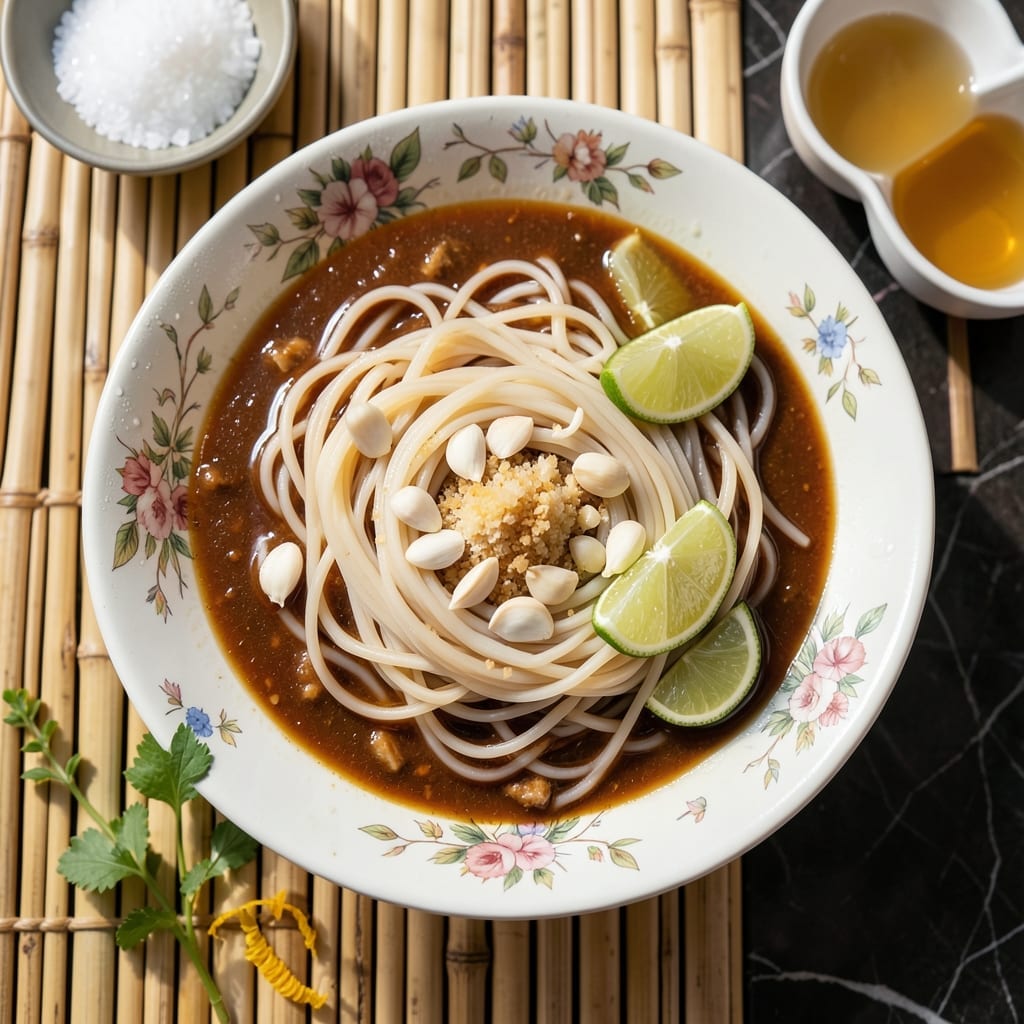
This Vietnamese fish sauce transforms simple noodle bowls into authentic restaurant-quality meals. The balance of salty, sweet, and tangy flavors elevates every bite.
Made with just a few traditional ingredients, this umami-rich sauce comes together in minutes. It’s the perfect finishing touch for vermicelli bowls.
Ingredients for Vietnamese Fish Sauce Recipe for Vermicelli
Nine traditional ingredients create this vibrant, umami-packed sauce for vermicelli bowls in minutes.
| Ingredient | Amount | Notes |
|---|---|---|
| Fish Sauce 🐟 | ½ cup | Vietnamese, high-quality recommended |
| Lime Juice 🍈 | ¼ cup | Freshly squeezed for brightness |
| Rice Vinegar 💧 | 2 tbsp | Mild and slightly sweet |
| Granulated Sugar 🍚 | 2 tbsp | Dissolves easily in liquid |
| Water 💧 | 2 tbsp | Room temperature for balance |
| Garlic Cloves 🧄 | 2 cloves | Minced finely for even distribution |
| Thai Chili 🌶️ | 1 whole | Sliced thin, seeds removed |
| Carrot 🥕 | ¼ cup | Julienned for texture contrast |
| Daikon Radish 🥬 | ¼ cup | Julienned for fresh crunch |
[recipe_ingredient_scaler]
The fish sauce is non-negotiable here. Red Boat or Three Crabs are the gold standard—look for first-press, high-protein content on the label. Most Asian grocery stores carry these brands, but check the international aisle at Whole Foods if you’re in a pinch. Avoid any bottles with added preservatives or MSG; the ingredient list should be just fish and salt.
No Thai chili? Serrano or jalapeño at a 1:1 swap works fine (adjust seeds for heat). Short on rice vinegar? Apple cider vinegar in a pinch, but the flavor profile shifts slightly. Sugar can be swapped for palm sugar or coconut sugar for depth. For extra umami, a splash of soy sauce won’t hurt—just reduce the fish sauce by half the amount.
This keeps beautifully in the fridge for up to 2 weeks in an airtight jar. The flavors meld and deepen over time, so making it a day ahead is ideal. For longer storage, freeze in ice cube trays—thaw only what you need for each batch of noodles.
Why You’ll Love This Recipe
- 5-Minute Mix: No chopping, no fuss—just whisk fish sauce, lime, vinegar, sugar, and water together. Honestly, it’s faster than waiting for takeout.
- Tangy-Sweet Balance: The lime’s zing and sugar’s sweetness tame the fish sauce’s saltiness into this crave-worthy dip. I’ll be real: I’ve caught myself sneaking spoonfuls before the noodles are even ready.
- Dressing or Dipping: I drizzle it over vermicelli bowls, use it as a dip for spring rolls, or toss it with leftovers. Between us, it’s my secret weapon for turning plain rice into something exciting.
- Penny-Pincher’s Dream: Fish sauce, vinegar, and sugar are pantry staples, so this costs almost nothing. Makes enough for a week of meals, and the flavor only gets better as it sits.
Step-by-Step Instructions for Vietnamese Fish Sauce for Vermicelli
This balanced dressing comes together quickly with precise technique and proper layering of flavors.
Step 1: Dissolve the Sugar Base
In a medium bowl, combine the 2 tbsp Granulated Sugar with the 2 tbsp Water and 2 tbsp Rice Vinegar. Stir vigorously until the sugar fully dissolves—this typically takes 30-60 seconds of continuous mixing.
I use room temperature water to speed up the dissolution process. The rice vinegar adds mild acidity that complements the fish sauce without overpowering it. You should end up with a clear, slightly syrupy liquid with no visible sugar crystals.
Step 2: Incorporate the Fish Sauce and Citrus
Add the 0.5 cup Fish Sauce and 0.25 cup Lime Juice to the sugar mixture. Whisk thoroughly for 1-2 minutes until fully emulsified. The lime juice will brighten the deep umami of the fish sauce, creating that signature tangy balance.
Use a high-quality Vietnamese fish sauce for authentic flavor. Freshly squeezed lime juice makes a noticeable difference in brightness compared to bottled. The mixture should look homogeneous with a light amber color.
Step 3: Add Aromatics and Vegetables
Stir in the 2 cloves Garlic Cloves (minced) and the 1 whole Thai Chili (sliced thin with seeds removed). Then add the 0.25 cup Carrot and 0.25 cup Daikon Radish, both julienned for consistent texture.
The garlic infuses the sauce with pungent depth, while the Thai chili adds subtle heat. The julienned carrot and daikon radish provide fresh crunch and absorb the dressing beautifully. Let the mixture sit for 10 minutes to allow the flavors to meld before serving.
Step 4: Adjust and Serve
Taste the sauce and adjust if needed—though with these precise measurements, it should be perfectly balanced. The ideal flavor profile is salty-sweet with bright acidity and a hint of heat from the chili.
This makes enough to generously dress 4 servings of vermicelli bowls. The vegetables will soften slightly as they sit in the sauce, but retain enough crispness to contrast with the noodles. Serve at room temperature for the best flavor experience.
Pro Tips For Making Vietnamese Fish Sauce Recipe For Vermicelli
- Dissolve Sugar First: Mix the granulated sugar with warm water before adding other ingredients—I learned this the hard way after finding undissolved grains in my sauce.
- Use Fresh Lime: Bottled lime juice just doesn’t cut it; fresh limes give that bright, sharp zing that makes the sauce pop.
- Taste Before Diluting: Resist the urge to add all the water at once; I burned three batches before realizing the balance shifts as it sits.
- Rest 10 Minutes: After mixing, let it sit for at least 10 minutes—sounds weird, but it lets the flavors meld, and yes, it actually changes the outcome.
Common Mistakes When Making vietnamese fish sauce recipe for vermicelli
🔥 Over-Salting the Sauce
Fish sauce is already rich in sodium, so adding extra salt can make your vermicelli topping unpleasantly briny. The umami flavor gets lost when the saltiness overpowers the balance of sweet, sour, and savory notes.
Fix: Taste as you go and use fish sauce as your primary seasoning. Skip added salt entirely or use just a pinch if needed.
🌡️ Skipping the Simmer
Raw fish sauce can taste harsh and overly pungent. Skipping the simmering step means the flavors won’t mellow or blend with other ingredients like garlic, lime, or sugar, leading to a sharp, unbalanced sauce.
Fix: Always simmer the mixture on low heat for 3–5 minutes to meld the flavors smoothly.
⏰ Letting It Sit Too Long
Fish sauce for vermicelli is best used fresh. If left to sit for too long, the lime juice can overpower the sauce, making it too acidic, while the garlic and chili may turn bitter.
Fix: Prepare the sauce just before serving and store leftovers in the fridge for no more than 2–3 days.
🥘 Ignoring Ingredient Ratios
Uneven ratios—like too much sugar or not enough lime—can throw off the classic tangy-sweet-savory balance. The sauce might end up cloying or flat instead of vibrant and complex.
Fix: Stick to a 1:1:1 ratio of fish sauce, lime juice, and sugar as a base, then adjust to taste.
Nutrition Facts

Trained in classic French technique but raised on slow-cooked ribs and spicy rubs, she blends culinary skill with smoke and soul.
- Recipe for Boneless Pork Chops in Cast Iron Skillet: Sear and Baste to Juicy Perfection - October 3, 2026
- Recipe for Boneless Cross Rib Roast: Slow-Roasted Beef with Herb Crust - October 3, 2026
- Hamburgers in Sauce Recipe Crock Pot: Slow-Cooked Savory Delight - October 3, 2026