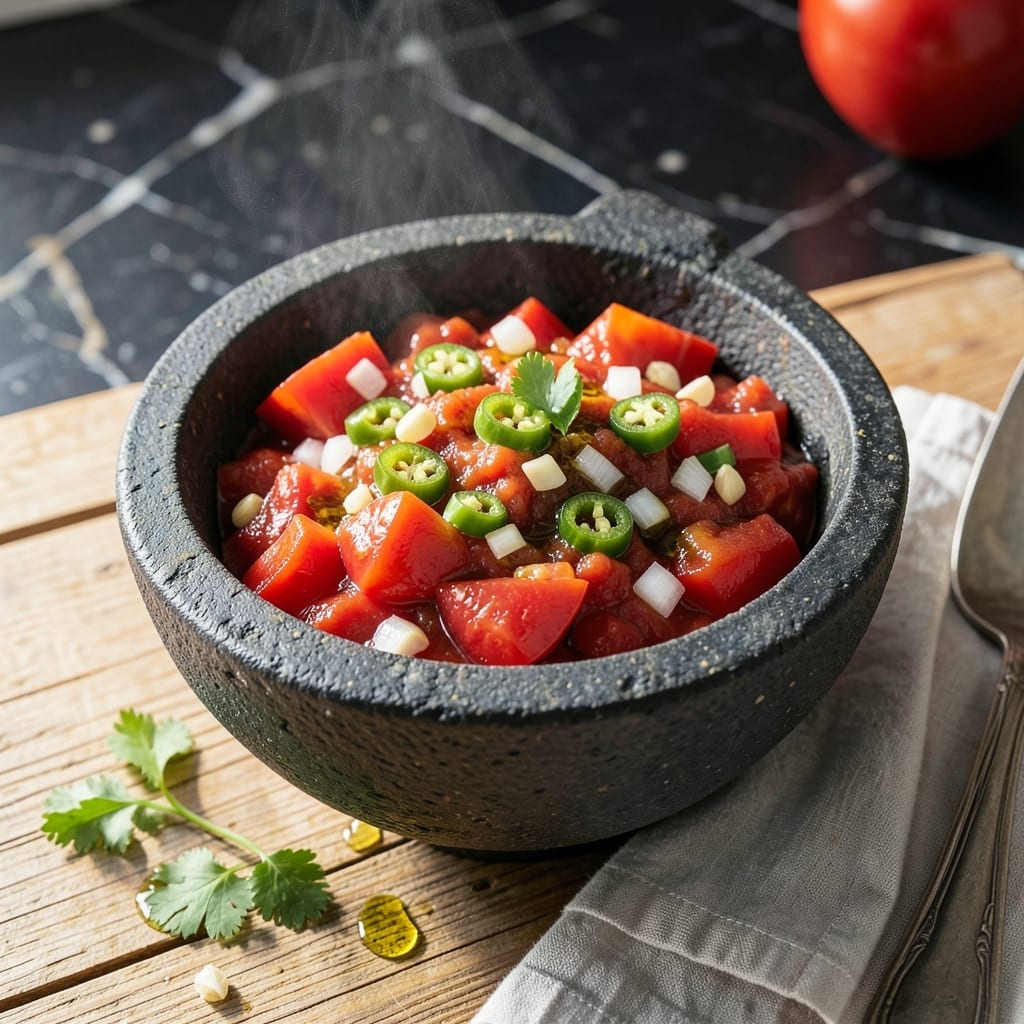
This blender salsa delivers restaurant-quality flavor with minimal effort, proving that fresh ingredients and the right technique can transform simple components into something extraordinary.
I developed this recipe after years of testing in my Boston kitchen, focusing on achieving the perfect balance of texture and taste. The Vitamix does the heavy lifting, but timing and ingredient ratios make all the difference.
What you get is a vibrant, chunky salsa with bright tomato flavor, a hint of spice, and just enough acidity to keep you coming back for more. It’s versatile enough for chips, tacos, or grilled meats.
Make a big batch—it keeps for up to a week in the fridge and only gets better as the flavors meld.
Ingredients for Vitamix Salsa
Fresh tomatoes, bright lime, and a kick of jalapeño make this blender salsa pop.
| Ingredient | Amount | Notes |
|---|---|---|
| Roma Tomatoes 🍅 | 2 lb | Cored and quartered |
| White Onion 🧅 | 1 whole | Roughly chopped |
| Jalapeño Pepper 🌶️ | 1 whole | Seeds removed for mild heat |
| Fresh Cilantro 🌿 | ½ cup | Stems removed |
| Garlic Cloves 🧄 | 4 cloves | Peeled |
| Lime Juice 🍋 | ¼ cup | Freshly squeezed |
| Olive Oil 🫒 | 2 tbsp | Extra-virgin preferred |
| Sea Salt 🧂 | 1 tsp | Adjust to taste |
| Ground Cumin 🌿 | 1 tsp | Toasted for depth |
| Black Pepper 🌶️ | ½ tsp | Freshly ground |
[recipe_ingredient_scaler]
The tomatoes are key here. Roma or vine-ripened give the best texture—avoid watery beefsteak varieties. Whole Foods and Trader Joe’s usually have great options year-round. For the jalapeño, leave the seeds in if you want extra heat (or add a pinch of cayenne). I always grab my cilantro from the Boston Public Market when it’s in season—fresher than anything in plastic.
No fresh cilantro? Flat-leaf parsley at half the amount works in a pinch. Out of jalapeños? Serrano peppers add more heat, bell peppers none at all. For a smoky twist, swap the cumin for smoked paprika. The lime juice can be bottled if fresh isn’t available, but fresh really brightens the flavor. And if you’re missing olive oil, any neutral oil (like avocado) does the job.
This salsa keeps 1 week in the fridge in an airtight container. The flavors deepen over time (worth the wait). Freezes for 3 months too—portion into ice cube trays for easy single servings. Always let it sit 10 minutes before serving to let the flavors meld.
Why You’ll Love This Recipe
- Hands-Off Magic: I just dump the Roma tomatoes, onion, jalapeño, cilantro, and garlic in the Vitamix—no chopping board needed. Pulse a few times and boom, fresh salsa.
- Restaurant-Quality Taste: The blend of charred Roma tomatoes with raw garlic and cilantro gives that authentic, vibrant flavor I usually pay extra for at taquerias.
- Meal Prep MVP: I make a double batch on Sunday and use it for tacos, eggs, and chips all week. Honestly, it tastes even better the next day.
- Budget-Friendly Staple: A handful of cheap produce turns into a week’s worth of salsa for pennies. I’ll be real—it’s saved me from takeout more than once.
Step-by-Step Instructions for Blender-Fresh Salsa
Here’s how I make restaurant-quality salsa in my Vitamix every time.
Step 1: Prep All Vegetables and Aromatics
Core and quarter the 2 lb Roma Tomatoes—no need to remove seeds as they add body to the salsa. Roughly chop the 1 whole White Onion into chunks the Vitamix can handle. For the 1 whole Jalapeño Pepper, slice it open, remove the seeds for milder heat, then chop coarsely.
Remove stems from the 0.5 cup Fresh Cilantro and peel the 4 cloves Garlic Cloves. This prep ensures everything blends smoothly without large chunks. I like to keep the pieces relatively even so the blender doesn’t have to work harder on some ingredients than others.
Step 2: Layer Ingredients in the Blender
Add the chopped vegetables to the Vitamix container first: tomatoes, onion, and jalapeño. Then add the 4 cloves Garlic Cloves and 0.5 cup Fresh Cilantro. Pour in the 0.25 cup Lime Juice and 2 tbsp Olive Oil over the top.
Sprinkle the 1 tsp Sea Salt, 1 tsp Ground Cumin, and 0.5 tsp Black Pepper evenly over everything. This layering helps the blades catch all ingredients immediately. Don’t worry about perfect distribution—the blending process will take care of that.
Step 3: Pulse for Texture Control
Secure the lid and start on the lowest speed, quickly increasing to high. Use the tamper to push ingredients toward the blades if needed. After 5-10 seconds on high, stop and check the texture—you want a chunky consistency, not a smooth puree.
If it’s too smooth, pulse 2-3 times for 1 second each until you achieve your desired texture. The salsa should have visible flecks of tomato and onion with a vibrant, fresh appearance. I prefer mine with a little texture, but adjust to your liking.
Step 4: Adjust Seasoning and Rest
Taste and adjust the 1 tsp Sea Salt if needed—the acidity from the lime can sometimes require a touch more. Transfer to a bowl and let it rest for 10 minutes at room temperature. This resting period allows the flavors to meld together beautifully.
You’ll notice the salsa thickens slightly as it sits. The colors will deepen, and the aroma will become more pronounced. This is your signal that it’s ready to serve. Stir once more before serving to redistribute any settled ingredients.
Pro Tips For Making Vitamix Salsa
- Pulse, Don’t Blend: I learned this the hard way—over-blending turns salsa into soup. Use 3-4 quick pulses for chunky texture, then check and repeat if needed.
- Seed the Jalapeños: After burning my mouth one too many times, I now scoop out the seeds and ribs for milder heat. Keep a few if you like it spicy.
- Roast the Garlic: Sounds weird, but it works: toss unpeeled garlic cloves in a dry pan for 5 minutes before blending—they’ll mellow out and sweeten the salsa.
- Drain the Tomatoes: Roma tomatoes hold a lot of water. Halve and seed them, then let them drain in a colander for 10 minutes to avoid watery salsa.
Perfect Pairings for This Dish
Chip Pairings
For classic dipping, I love the sturdy crunch of restaurant-style tortilla chips—Late July or Kettle Brand hold up perfectly to this salsa’s texture. For a Boston twist, try salt and vinegar potato chips for an unexpected but delicious contrast. 🥔
Taco Night Essential
This salsa transforms simple corn tortillas into a feast. I use Mission Brand tortillas, warmed for 30 seconds on each side in a dry skillet. Top with black beans, avocado, and cotija cheese for a quick vegetarian taco that lets the salsa shine.
Grilled Meat Companion
Spoon this over grilled chicken or carne asada for a fresh, bright finish. I marinate my chicken in lime juice and cumin before grilling to echo the salsa’s flavors. The acidity cuts through the richness of the meat beautifully.
Breakfast Boost
Stir a spoonful into scrambled eggs or top your avocado toast for a morning kick. I love it on a fried egg with crumbled queso fresco—the runny yolk mixes with the salsa for an irresistible sauce. Perfect for weekend brunch in my triple-decker kitchen.
Nutrition Facts
Frequently Asked Questions
Can I use canned tomatoes instead of fresh?
Yes, but drain and rinse them first to remove excess liquid. Use the same weight (2 lb) and expect a slightly sweeter, less vibrant flavor than fresh.
How do I make it spicier?
Keep the jalapeño seeds or add 1/2 serrano pepper. For extra heat without changing flavor, mix in a pinch of cayenne or hot sauce.
Why does my salsa turn out watery?
Over-blending or using watery tomatoes (like beefsteak) causes this. Pulse briefly and use Roma tomatoes for best texture.
Can I skip the resting time?
Not recommended—the 10 minutes lets flavors meld. Serving immediately can taste harsh or one-dimensional.

Trained in classic French technique but raised on slow-cooked ribs and spicy rubs, she blends culinary skill with smoke and soul.
- Recipe for Boneless Pork Chops in Cast Iron Skillet: Sear and Baste to Juicy Perfection - October 3, 2026
- Recipe for Boneless Cross Rib Roast: Slow-Roasted Beef with Herb Crust - October 3, 2026
- Hamburgers in Sauce Recipe Crock Pot: Slow-Cooked Savory Delight - October 3, 2026