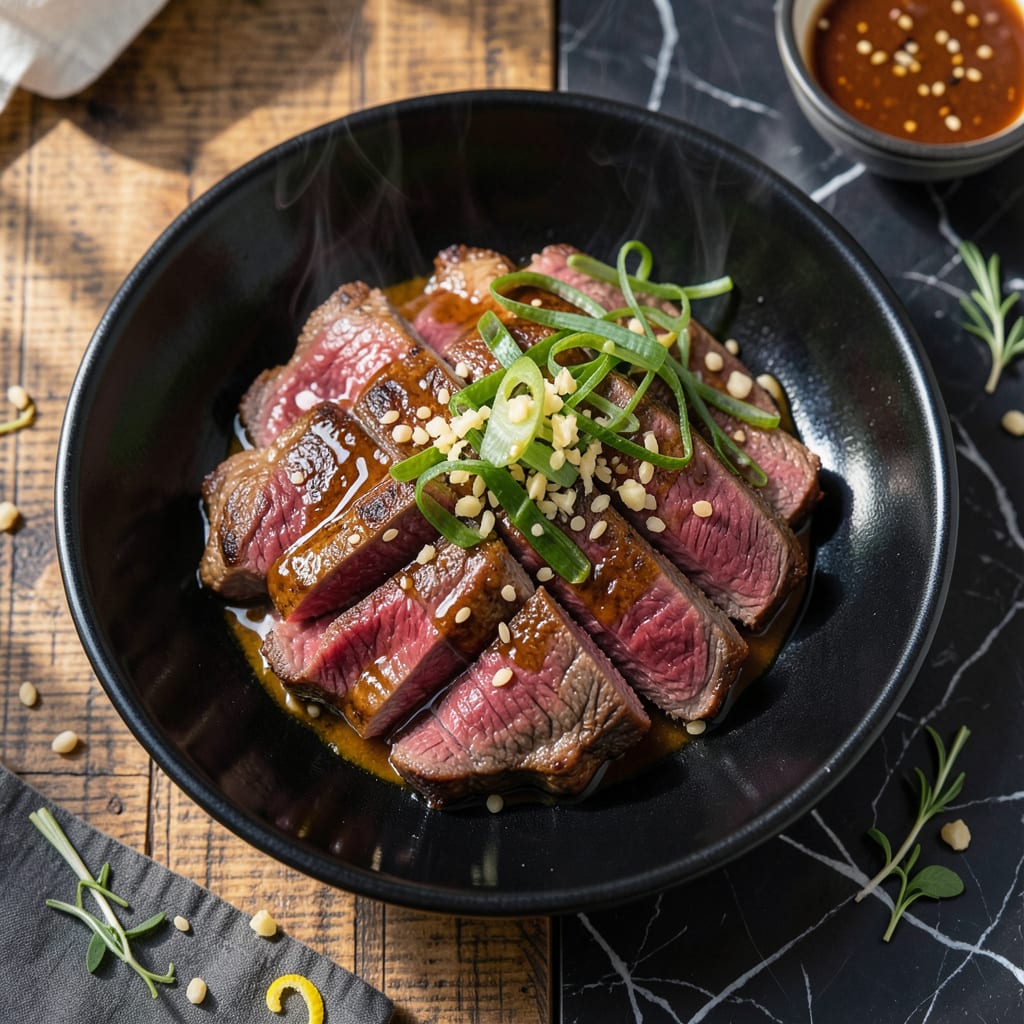
This Korean-inspired marinated beef recipe brings bold flavors to your home kitchen with a foolproof technique. The secret lies in the marinade, blending soy, garlic, and sesame for depth.
Simple ingredients and precise timing deliver restaurant-quality results. The meat absorbs the marinade fully, creating tender, flavorful steak every time.
Ingredients for Waba Grill Steak
Quality beef and a flavor-packed marinade transform this into restaurant-worthy steak at home.
| Ingredient | Amount | Notes |
|---|---|---|
| Ribeye Steak 🥩 | 2 lb | Cut into thin slices against grain |
| Soy Sauce 🫒 | ¾ cup | Low-sodium preferred for control |
| Brown Sugar 🍚 | ⅓ cup | Packed, for caramelization |
| Garlic Cloves 🧄 | 6 cloves | Minced finely for even distribution |
| Fresh Ginger 🌿 | 2 tbsp | Grated for maximum flavor extraction |
| Sesame Oil 🫒 | 2 tbsp | Toasted variety for depth |
| Rice Vinegar 💧 | 3 tbsp | Balances sweet and salty notes |
| Gochujang Paste 🌶️ | 2 tbsp | Korean chili paste for heat |
| Asian Pear 🍐 | ½ whole | Grated, natural meat tenderizer |
| Green Onions 🧅 | 4 whole | Thinly sliced for garnish |
| Toasted Sesame Seeds 🌾 | 2 tbsp | For finishing touch and texture |
| Neutral Oil 🫒 | 2 tbsp | High smoke point for searing |
| Black Pepper 🌶️ | 1 tsp | Freshly ground for best flavor |
| Red Pepper Flakes 🌶️ | ½ tsp | Optional for extra heat |
[recipe_ingredient_scaler]
Ribeye is ideal for this preparation. Look for well-marbled cuts at your butcher or Whole Foods meat counter—fat equals flavor. The Asian pear is the secret weapon here (found at H Mart or Korean markets), but a ripe Bosc pear works in a pinch. For the gochujang, Sempio or Kochukaru brands deliver authentic heat without additives. Always use freshly grated ginger—pre-ground lacks the bright, sharp notes that define this dish.
No ribeye? Flank steak or sirloin can substitute, though they benefit from an extra 30 minutes of marinating. Out of gochujang? Sriracha plus 1 tsp miso paste mimics the funk and heat. Brown sugar can be swapped for coconut sugar at a 1:1 ratio. For a gluten-free version, use tamari instead of soy sauce. The rice vinegar is non-negotiable though—its mild acidity balances the marinade perfectly.
Marinate the steak for at least 4 hours (overnight is optimal). Cooked steak keeps in the fridge for 3-4 days and reheats well in a skillet. Freeze uncooked marinated steak for up to 3 months—thaw in the fridge before cooking. Always bring meat to room temperature before searing for even cooking.
Why You’ll Love This Recipe
- One Pan Marvel: I toss everything in a bowl, let it marinate, and grill—no fancy prep or multiple dishes to wash.
- Sweet and Savory: The brown sugar caramelizes with the soy sauce, while garlic and ginger give it that deep, rich kick.
- Weeknight Hero: Honestly, it’s my go-to for busy evenings when I need something fast but still impressive.
- Leftovers Win: The flavors taste even better the next day, so I always make extra for lunch the following afternoon.
Step-by-Step Instructions for Korean-Inspired Marinated Beef
Master the technique behind this flavor-packed dish with precise timing and professional methods.
Step 1: Prepare the Marinade Base
In a large bowl, combine the 0.75 cup Soy Sauce, 0.33 cup Brown Sugar, 3 tbsp Rice Vinegar, and 2 tbsp Sesame Oil. Whisk vigorously until the brown sugar fully dissolves—the mixture should appear glossy and slightly thickened.
Add the 2 tbsp Gochujang Paste and whisk again until no streaks remain. This fermented chili paste provides depth and a subtle heat that defines Korean marinades. The consistency should be smooth with no visible separation.
Step 2: Incorporate Aromatics and Tenderizer
Finely mince the 6 cloves Garlic Cloves and grate the 2 tbsp Fresh Ginger directly into the marinade. I use a microplane for the ginger to achieve a fine, almost paste-like texture that disperses evenly throughout the liquid.
Grate the 0.5 whole Asian Pear and add it to the mixture, stirring well to combine. The natural enzymes in the pear act as a tenderizer, breaking down proteins in the ribeye for a melt-in-your-mouth texture. The marinade should now have a slightly frothy appearance from the pear’s juices.
Step 3: Marinate the Ribeye
Cut the 2 lb Ribeye Steak into thin slices against the grain—this shortens the muscle fibers for maximum tenderness. Place the slices in a resealable bag or shallow dish and pour the marinade over them, ensuring every piece is fully coated.
Add the 1 tsp Black Pepper and 0.5 tsp Red Pepper Flakes to the marinade before sealing. Refrigerate for a minimum of 4 hours, or ideally overnight. The steak should take on a deep, mahogany hue as it absorbs the flavors.
Step 4: Sear and Finish
Heat 2 tbsp Neutral Oil in a large skillet or grill pan over high heat until it shimmers. Working in batches to avoid crowding, sear the marinated ribeye slices for 2-3 minutes per side until they develop a deep caramelized crust.
You’ll know it’s ready when the edges appear slightly charred and the meat reaches your desired doneness. The sugar in the marinade will create a glossy, almost lacquered finish on the surface of the beef.
Step 5: Garnish and Serve
Thinly slice the 4 whole Green Onions on a diagonal for an elegant presentation. Transfer the cooked steak to a serving platter and sprinkle with the green onions and 2 tbsp Toasted Sesame Seeds.
The final dish should boast a vibrant sheen from the marinade, with the sesame seeds adding a nutty crunch. Serve immediately while the steak is still sizzling, accompanied by steamed rice to soak up the rich, savory sauce that forms during cooking.
Pro Tips For Making Waba Grill Steak
- Score the Fat: Cut shallow slits in the ribeye’s fat cap every half-inch to prevent curling on the grill—I learned this the hard way after my first three steaks looked like taco shells.
- Bloom the Aromatics: Sauté the minced garlic and ginger in a little oil for 30 seconds before adding soy sauce and brown sugar to deepen their flavor.
- Skip the Cold Steak: Let the ribeye sit at room temperature for 20-30 minutes before grilling, or the center stays raw while the outside burns.
- Rest Before Slicing: Tent the steak with foil and wait a solid 5 minutes before cutting, or all those juices you worked for will end up on the cutting board.
Flavor Customization for These Flavors
Sweet Heat Boost
Increase the brown sugar to ½ cup and add 1 tbsp honey for a sweeter glaze that caramelizes beautifully. Balance it with an extra ½ tsp red pepper flakes or 1 tbsp gochujang for heat. The sugar will create a stickier, more glossy finish on your steak. 🌶️
Citrus Twist
Add zest of 1 orange and 2 tbsp fresh orange juice to the marinade for a bright, citrusy note. This pairs especially well with the Asian pear, enhancing its natural sweetness while adding a refreshing contrast to the savory soy base.
Umami Depth
Stir in 1 tbsp fish sauce and 1 tbsp oyster sauce for an extra layer of umami richness. These ingredients amplify the savory notes without overpowering the dish. I love how they deepen the flavor profile, especially in the caramelized bits.
Herb Infusion
Mix in 2 tbsp chopped cilantro and 1 tbsp minced mint to the marinade for a fresh, herbal lift. The herbs add a vibrant pop of color and a bright finish that complements the bold, smoky flavors of the grilled steak. 💛
Spicy Garlic Lovers
Double the garlic to 12 cloves and add 1 tbsp gochugaru (Korean chili flakes) for a garlic-forward, spicier version. This variation is perfect for those who love heat and bold, aromatic flavors. The extra garlic cloves should be minced finely for even distribution.
Smoky Char
Replace the neutral oil with 2 tbsp smoked paprika-infused oil for a subtle smoky undertone. This adds depth reminiscent of traditional Korean grill flavors, enhancing the overall complexity of your dish.

Trained in classic French technique but raised on slow-cooked ribs and spicy rubs, she blends culinary skill with smoke and soul.
- Recipe for Boneless Pork Chops in Cast Iron Skillet: Sear and Baste to Juicy Perfection - October 3, 2026
- Recipe for Boneless Cross Rib Roast: Slow-Roasted Beef with Herb Crust - October 3, 2026
- Hamburgers in Sauce Recipe Crock Pot: Slow-Cooked Savory Delight - October 3, 2026