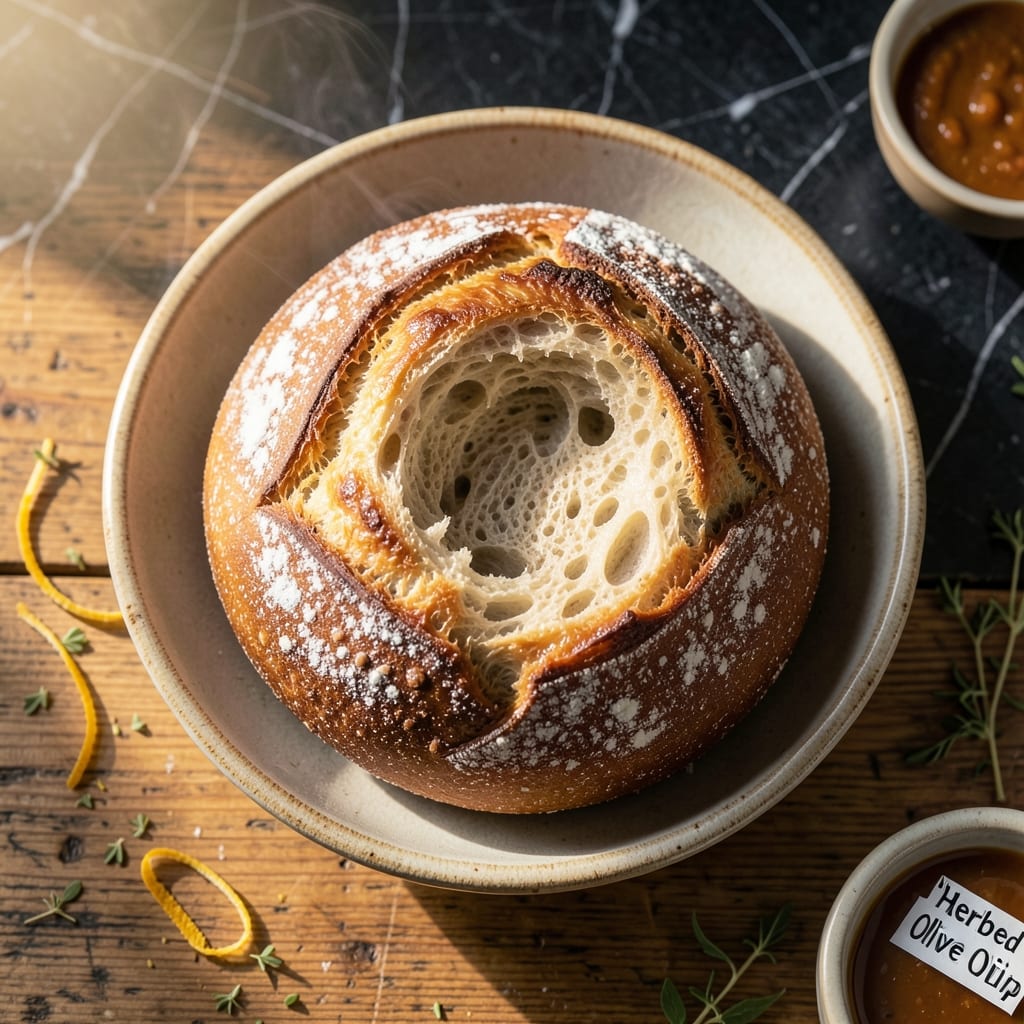
This no-knead artisan loaf proves that great bread doesn’t require elaborate techniques. With just 5 ingredients and minimal effort, you’ll achieve a crispy crust and airy interior that rivals any bakery version.
I developed this method for busy home cooks who want easy yet impressive results. The long fermentation time does all the work, developing complex flavors while you focus on other tasks.
The process is simple: mix, rest, and bake. No special equipment is needed—just a bowl, a towel, and a Dutch oven. The result is a golden, rustic loaf with a perfect crumb.
This vegan recipe delivers consistent quality every time. The secret lies in the hydration ratio and proper resting period, which ensures a light, airy texture without any kneading.
Ingredients for Water Bread Recipe Easy
Five ingredients stand between you and bakery-quality bread at home.
| Ingredient | Amount | Notes |
|---|---|---|
| Bread Flour 🌾 | 3 ½ cups | All-purpose works in a pinch |
| Water 💧 | 1 ½ cups | Warm, about 100-110°F |
| Active Dry Yeast 🍞 | 1 tsp | Or instant yeast, same amount |
| Salt 🧂 | 2 tsp | Fine sea salt preferred |
| Sugar 🍚 | 1 tsp | Optional, helps activate yeast |
[recipe_ingredient_scaler]
The flour is the foundation here. King Arthur Bread Flour is my go-to for consistent results, but Gold Medal All-Purpose works if that’s what you have (the protein content is slightly lower, but it’ll still rise beautifully). Yeast freshness is non-negotiable—check the expiration date, and if it’s been open for months, test it in warm water first to confirm it’s active.
No bread flour? All-purpose is fine, though the crumb might be slightly less chewy. Out of yeast? This recipe won’t work with baking powder or soda—yeast is essential. The sugar is optional but helpful if your kitchen is chilly (it gives the yeast a boost). For a slightly tangier flavor, swap the sugar for honey (though this would make it non-vegan).
Store flour in an airtight container to keep it fresh for 6-12 months. Yeast lasts 1-2 years unopened in the pantry, but only 4 months once opened (keep it in the fridge). This loaf stays fresh for 3-4 days at room temperature or freezes for 1 month.
Why You’ll Love This Recipe
- No-Knead Magic: I just mix flour, water, yeast, salt, and sugar—no fancy techniques, no stand mixer, just a bowl and a spoon.
- Crispy Chewy Love: The crust gets this golden crunch while the inside stays soft and airy, like a bakery loaf but made in my kitchen.
- Sandwich Savior: Honestly, it’s my new lunch staple—slather with butter, pile on deli meats, or toast it for soup-dunking perfection.
- Pennywise Loaf: Five ingredients, most of which I already have, and it costs pennies compared to store-bought artisanal bread.
Step-by-Step Instructions for Water Bread
Here’s the method. Straightforward, tested, works every time.
Step 1: Activate the Yeast with Warm Water
In a large mixing bowl, combine the 1.5 cups Water with 1 tsp Active Dry Yeast and 1 tsp Sugar. Stir gently and let sit for 5-10 minutes until the mixture becomes frothy and cloudy. This confirms the yeast is alive and active.
The water should be warm but not hot—around 100-110°F. If it’s too hot, it’ll kill the yeast. You’ll see small bubbles forming on the surface when it’s ready. This step ensures your bread will rise properly.
Step 2: Mix the Dough and Let It Rest
Add the 3.5 cups Bread Flour and 2 tsp Salt to the yeast mixture. Stir with a wooden spoon until just combined. The dough will be shaggy and sticky—that’s exactly what you want. Don’t overmix; this isn’t a traditional kneaded dough.
Cover the bowl with a damp towel or plastic wrap and let it rest at room temperature for 12-18 hours. I find overnight works best. The dough will rise significantly, developing complex flavors and a loose, airy structure. The surface should look bubbly and domed when ready.
Step 3: Shape and Proof the Dough
After the long rest, lightly flour a work surface and turn out the dough. Fold the edges toward the center to create a rough ball, then flip it seam-side down. Don’t punch it down or overhandle it—this preserves the air bubbles that give the bread its texture.
Place the dough on a parchment-lined baking sheet, cover loosely, and let it proof for 1-2 hours until nearly doubled in size. You’ll know it’s ready when it springs back slowly when poked with a finger, leaving a slight indent. Preheat your oven to 450°F during the last 30 minutes of proofing.
Step 4: Bake to Golden Perfection
Just before baking, use a sharp knife or razor to score the top of the dough in a shallow X or a single slash. This allows the bread to expand properly in the oven. Slide the dough (on the parchment) into the preheated oven.
Bake for 30-35 minutes until the crust is deep golden brown and the internal temperature reaches 200-210°F. The loaf should sound hollow when tapped on the bottom. If the top browns too quickly, tent it with foil for the last 10 minutes of baking.
Step 5: Cool Completely Before Slicing
Transfer the bread to a wire rack and let it cool for at least 1 hour before slicing. I know it’s tempting to dive in, but cutting too soon traps steam inside, resulting in a gummy texture. The crust will crisp up as it cools.
The finished loaf should have a crackly crust and an open, airy crumb with irregular holes. Slice with a serrated knife for clean cuts. Serve warm or at room temperature with your favorite toppings.
Pro Tips For Making Water Bread Recipe Easy
- Proof the Yeast: Always dissolve yeast in warm water (around 110°F) with a pinch of sugar first—I learned this the hard way after killing three batches with water that was too hot.
- Weigh the Flour: Scooping flour with a cup can pack it down, so use a scale for accuracy; 1 cup should be about 120-125g for bread flour.
- Skip Cold Water: Cold water slows yeast activation, so use lukewarm to jumpstart fermentation and cut rising time in half.
- Knead Long Enough: The dough should be smooth and elastic after 8-10 minutes of kneading—any less, and your bread will be dense, no matter how long it rises.
Flavor Customization for These Flavors
Herb-Infused Loaf
Add 1 tbsp dried rosemary or 2 tbsp fresh thyme leaves to the flour before mixing. The herbs infuse the dough during the long fermentation, creating a fragrant, savory loaf perfect for soups or salads. 🌿
Garlic and Onion
Mix in 1 tsp garlic powder and 1 tsp onion powder with the dry ingredients. This adds subtle depth without overpowering the bread’s natural flavor. I love this version for sandwiches.
Spicy Kick
For heat lovers, add ½ tsp cayenne pepper or 1 tsp red pepper flakes to the dough. The spice develops during fermentation, creating a warm, lingering heat in every bite.
Sweet Variation
Increase the sugar to 2 tbsp and add ½ cup raisins or chopped dried apricots for a slightly sweet, fruit-studded loaf. Soak the fruit in warm water for 10 minutes before mixing.
Seeded Crunch
Sprinkle 2 tbsp sesame seeds or sunflower seeds on the dough just before baking. Press them lightly into the surface so they adhere. This adds texture and visual appeal.
Cheesy Twist
For a non-vegan option, fold in ½ cup shredded cheddar or Parmesan during the final shaping. The cheese melts into pockets of gooey goodness throughout the loaf. 🧀
Nutrition Facts
Frequently Asked Questions
Why is my dough not rising after 12 hours?
This usually means the yeast was inactive. Check your water temperature—it should be 100-110°F. Also, ensure your yeast hasn’t expired. If the mixture didn’t bubble within 10 minutes during activation, start over with fresh yeast.
Can I use all-purpose flour instead of bread flour?
Yes! All-purpose works fine, though the crumb may be slightly less chewy. The bread will still rise beautifully and taste great. For best results, use a high-quality brand like King Arthur or Gold Medal.
How do I know when the bread is fully baked?
The loaf should be deep golden brown with an internal temperature of 200-210°F. It should sound hollow when tapped on the bottom. If unsure, use an instant-read thermometer for accuracy.
What happens if I skip the resting time?
Skipping the 12-18 hour rest means the dough won’t develop its full flavor or airy texture. The long fermentation is key to achieving that perfect artisan loaf structure. Don’t rush it!

Trained in classic French technique but raised on slow-cooked ribs and spicy rubs, she blends culinary skill with smoke and soul.
- Recipe for Fried Prawns Batter: Ultra-Crispy Golden Shell - October 3, 2026
- Indian Lamb Curry Recipe Pressure Cooker: Fragrant Spices in a Fraction of the Time - October 3, 2026
- Recipe for Oven Roasted: Golden Crisp Perfection Without the Fryer - October 3, 2026