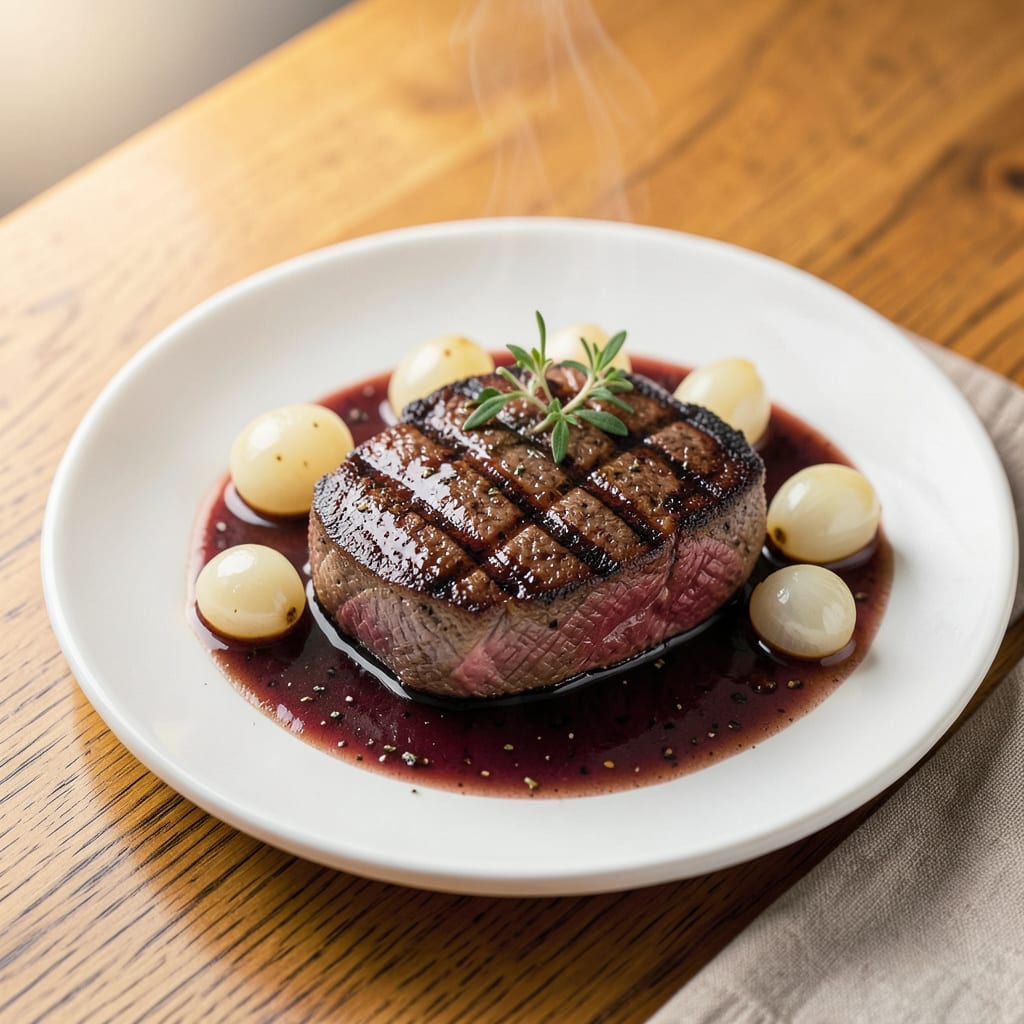
Bordelaise sauce delivers a rich, deep flavor with a perfect balance of dry red wine, beef reduction, and shallots. It has a velvety texture with a subtle tang from the wine and a savory umami finish from bone marrow or demi-glace.
This French classic transforms simple ingredients into something extraordinary through slow reduction. The wine’s acidity cuts through the beef’s richness while the shallots add a whisper of sweetness that lingers. 🔥 What surprises most people is how the sauce’s complexity develops – the longer it simmers, the more the flavors marry into that signature silky consistency. I’ve found it elevates everything from grilled steaks to roasted vegetables, proving why it’s remained a bistro staple for generations.
💡 In This Article
- Breaking Down the Classic Bordelaise Sauce Flavor Profile
- Perfect Pairings: Dishes and Wines for Bordelaise Sauce
Breaking Down the Classic Bordelaise Sauce Flavor Profile
The magic of bordelaise begins with the Maillard reaction during beef reduction. As the bones and meat roast at 400°F+, proteins and sugars transform into hundreds of new flavor compounds. These create that deep, caramelized foundation that makes the sauce taste like concentrated beef essence.
The reduction process (typically 2-3 hours) evaporates water while intensifying these flavors, giving bordelaise its signature richness that coats your palate. 🔥
Red wine plays a dual role in this sauce’s complexity. The tannins in dry reds like Cabernet Sauvignon or Merlot bind with beef proteins, creating a velvety mouthfeel while adding structure. As the wine reduces by about 75%, its acidity concentrates but mellows, leaving behind a subtle tartness that cuts through the fat.
The alcohol evaporates during the 30-45 minute simmer, but leaves behind aromatic compounds that add depth without harshness. ✨
Shallots and herbs act as the flavor bridges in bordelaise. The shallots caramelize slightly during the initial sauté, developing sweet, oniony notes that balance the wine’s acidity. Traditional recipes use 2-3 tablespoons of finely minced shallots per cup of sauce – enough to be present but not overpowering.
Fresh thyme and bay leaf add earthy, slightly floral notes that complement the beef while peppercorns provide a gentle heat that lingers on the finish. 🌟
The secret weapon in classic bordelaise is bone marrow or demi-glace. Bone marrow adds a luxurious, almost buttery richness with its 95% fat content, while demi-glace contributes gelatin that gives the sauce its silky body. When properly emulsified, these create a sauce that clings to food while delivering layers of umami.
The fat content also helps carry the wine’s aromatic compounds, making each bite more complex than the last. ⚡
What separates great bordelaise is the balance between these elements. The wine should provide acidity without sourness, the shallots sweetness without cloying, and the beef reduction depth without heaviness.
French chefs often test this balance by tasting the sauce on a spoon – it should feel complete on its own, not needing the food it accompanies. The final straining through a fine-mesh sieve ensures that velvety texture that’s become bordelaise’s hallmark. 💫
Temperature control during finishing makes all the difference. The traditional method involves mounting the sauce with 1-2 tablespoons of cold butter at the end, swirled in off-heat to create a stable emulsion.
This final step transforms the sauce from good to extraordinary, adding a glossy sheen and that characteristic “melt-in-your-mouth” quality that makes bordelaise so crave-worthy. The ideal serving temperature is 160-170°F – hot enough to be fluid but cool enough to let all the flavors shine. 💛

Trained in classic French technique but raised on slow-cooked ribs and spicy rubs, she blends culinary skill with smoke and soul.
- Recipe for Boneless Pork Chops in Cast Iron Skillet: Sear and Baste to Juicy Perfection - October 3, 2026
- Recipe for Boneless Cross Rib Roast: Slow-Roasted Beef with Herb Crust - October 3, 2026
- Hamburgers in Sauce Recipe Crock Pot: Slow-Cooked Savory Delight - October 3, 2026