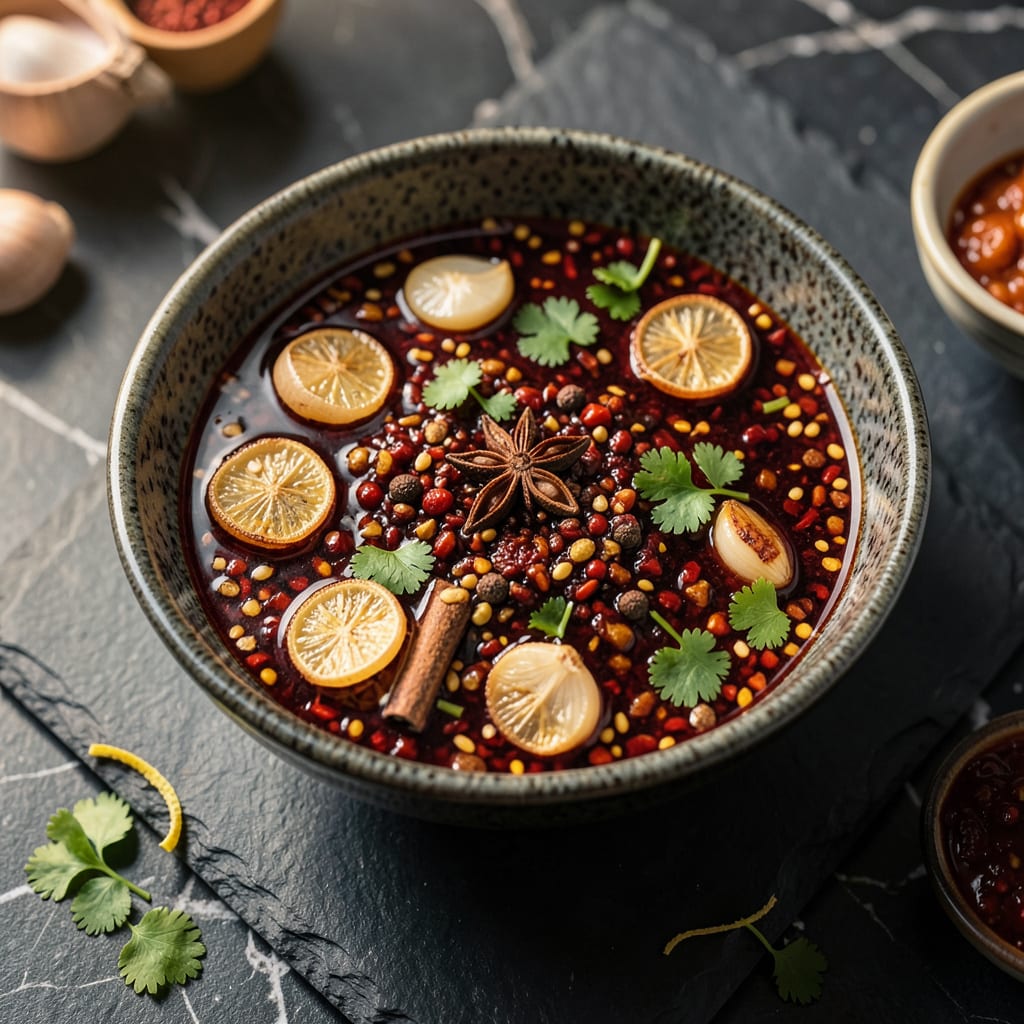
Chili oil delivers a fiery, spicy kick balanced by a rich, nutty or toasty undertone from infused oils. The heat intensity varies by chili type, often paired with aromatic garlic, Sichuan peppercorns, or sesame for layered complexity.
This isn’t just about heat—it’s a full sensory experience. 🔥 The initial punch of capsaicin gives way to deeper, toasted notes from the oil infusion process, creating a harmony that lingers. I’ve noticed that homemade versions often develop more nuance than store-bought, especially when using high-quality chilies like arbol or guajillo. The real magic happens when you taste how the oil carries those spicy flavors differently than water-based sauces, coating your palate with warmth rather than sharpness.
What makes chili oil so versatile is its ability to transform dishes. ✨ A drizzle over dumplings adds dimension, while mixing it into noodles creates an addictive, aromatic base. The best versions I’ve tried balance heat with just enough sweetness or umami to keep you coming back for another bite—without overwhelming your taste buds.
💡 In This Article
- Breaking Down Chili Oil’s Flavor Components
- Top Dishes and Ingredients to Pair with Chili Oil
Breaking Down Chili Oil’s Flavor Components
Chili oil’s signature taste starts with capsaicin—the compound that gives peppers their heat. Different chilies bring distinct heat levels: arbol peppers pack 20,000-30,000 Scoville units, while milder guajillos sit around 2,500-5,000. The oil acts as a solvent, extracting these compounds along with flavorful oils from the pepper skins.
This creates that initial fiery punch, but here’s the twist: the oil also captures the peppers’ fruity, earthy undertones that water-based sauces can’t retain. 🔥
The oil base dramatically changes the experience. Sesame oil adds a deep, nutty richness that clings to your palate, while neutral vegetable oils let the chili flavors shine without competition. I’ve found that toasted sesame oil at 350°F develops more complexity than raw, creating caramelized notes that balance the heat.
The infusion process matters too—slow heating (2-3 hours at 200°F) extracts flavors gently, while quick frying can make the oil taste harsh or bitter. ✨
Regional blends add another layer. Sichuan chili oil gets its numbing tingle from 2-3% Sichuan peppercorns, which contain hydroxy-alpha sanshool that creates that unique mouthfeel. Korean versions often include 1-2 tablespoons of gochugaru per cup, giving a brighter, fruitier heat.
The aromatics matter just as much as the chilies—garlic fried to golden brown adds sweetness, while star anise or cinnamon can introduce warming spice notes that linger. 💫
What most people miss is how the texture contributes to flavor perception. Thicker oils (like those with crushed chili flakes) deliver heat in waves as the particles release capsaicin gradually. Strained, smooth oils hit all at once. The mouthfeel changes too—sesame-based versions coat your tongue, while lighter oils feel cleaner.
I always recommend tasting as you make it: the difference between infusing at 180°F vs 220°F can mean the difference between subtle warmth and face-melting heat. ⚡
The magic happens when these elements balance. A well-made chili oil should make your lips tingle first, then reveal layers: the oil’s richness, the chilies’ fruitiness, the aromatics’ depth. The best versions I’ve tasted (and made) have a 2:1 ratio of oil to solids, allowing the heat to shine without overwhelming.
That balance is why it works equally well drizzled over delicate dumplings or stirred into hearty stews. 🌟
Pro tip: The flavor evolves over time. Fresh chili oil tastes brighter and more vegetal, while aged versions (after 2-3 weeks) develop deeper, more integrated flavors as the capsaicin mellows slightly. This is why restaurant versions often taste more complex—they’ve had time to marry.
I like to make small batches and compare them at different stages to appreciate how the flavors transform. 💛
Remember that heat isn’t just about intensity—it’s about duration. Some chili oils burn hot and fast (like those with bird’s eye chilies), while others (with ancho or pasilla peppers) provide a slower, warmer build. The oil base determines how long the heat lingers: sesame oil’s viscosity makes the sensation last 30-50% longer than lighter oils.
This is why pairing matters so much—you want ingredients that can stand up to both the initial punch and the lingering warmth. 💫

Trained in classic French technique but raised on slow-cooked ribs and spicy rubs, she blends culinary skill with smoke and soul.
- Recipe for Boneless Pork Chops in Cast Iron Skillet: Sear and Baste to Juicy Perfection - October 3, 2026
- Recipe for Boneless Cross Rib Roast: Slow-Roasted Beef with Herb Crust - October 3, 2026
- Hamburgers in Sauce Recipe Crock Pot: Slow-Cooked Savory Delight - October 3, 2026