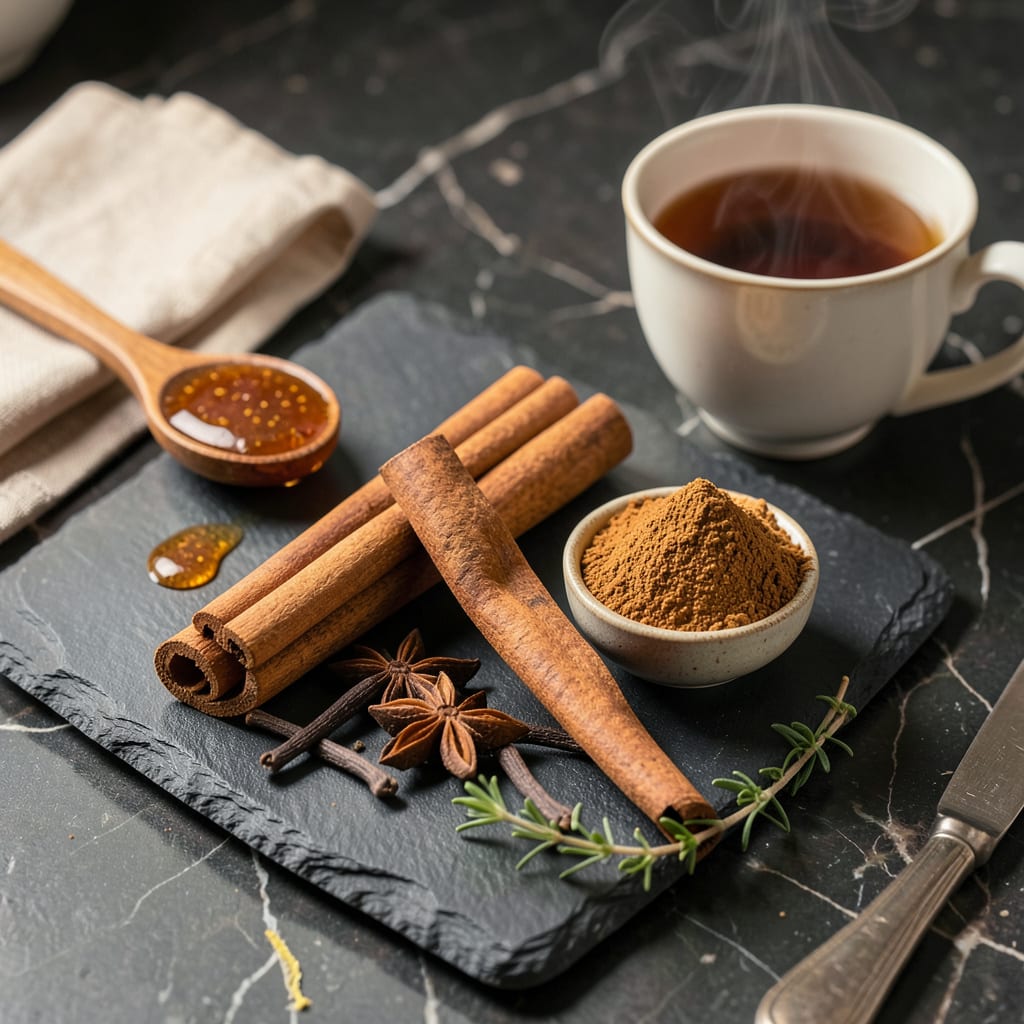
Cinnamon delivers a warm, sweet-spicy flavor with woody undertones—slightly peppery yet comforting. True cinnamon (Ceylon) is delicate and citrusy, while cassia (common supermarket type) is bolder and more intense.
This complex flavor comes from cinnamaldehyde, the compound that gives cinnamon its signature warmth and subtle kick. 🔥 I love how it can transform both sweet and savory dishes—adding depth to apple pies while balancing the richness in lamb tagines. The difference between Ceylon and cassia isn’t just about intensity; it’s about how they interact with other ingredients. Ceylon’s brightness shines in delicate desserts, while cassia’s robustness stands up to hearty stews and strong coffee flavors.
What fascinates me most is how cinnamon’s flavor evolves with heat. A quick sprinkle on oatmeal gives a gentle sweetness, but toasting it in butter releases deeper, almost smoky notes that can elevate sauces and marinades. ✨
💡 In This Article
- Cinnamon Flavor Variations: Ceylon vs Cassia Comparison
- Best Food and Drink Pairings for Cinnamon’s Flavor
Cinnamon Flavor Variations: Ceylon vs Cassia Comparison
The dramatic difference between Ceylon and cassia cinnamon starts with their growing conditions. Ceylon cinnamon thrives in Sri Lanka’s humid coastal regions, where the thin, papery bark develops delicate citrus notes from the mineral-rich soil.
Cassia, meanwhile, grows in drier climates like China and Indonesia, producing thicker bark with higher coumarin content—this compound gives it that bold, almost peppery kick that can overwhelm sensitive palates.
What really sets them apart is their bark composition. Ceylon’s thin, multi-layered quills contain about 1-2% essential oils, while cassia’s single thick layer packs 5-10%. This concentration difference explains why cassia’s flavor hits you immediately with intense heat, while Ceylon unfolds gradually with floral top notes.
🌿 The processing matters too—Ceylon’s hand-rolled quills preserve its complex aroma, while cassia’s machine-cut pieces release oils more aggressively during cooking.
I’ve tested both in my kitchen with striking results. In a simple apple compote, Ceylon cinnamon added bright, almost lemony notes that made the fruit taste fresher. The same recipe with cassia turned deep and caramelized, with a warmth that lingered on the tongue.
For baking, I use 1/4 teaspoon Ceylon where I’d use 1/8 teaspoon cassia—the potency difference is that dramatic. 🔥
The heat application changes everything. When toasted in butter, Ceylon develops honeyed, almost vanilla-like undertones, perfect for custards. Cassia, however, stands up to high heat in savory dishes—its robust flavor cuts through the richness of lamb tagines or black bean chili.
The key is understanding that Ceylon plays well with other delicate spices like cardamom, while cassia needs bold partners like cloves or black pepper to balance its intensity.
Here’s a quick reference for choosing:
- Ceylon cinnamon: Best for light desserts, fruit dishes, and beverages where you want subtle complexity. Try 1/2 stick in your chai tea for floral brightness.
- Cassia cinnamon: Ideal for hearty baked goods, meat rubs, and strong coffee drinks. Use 1/4 teaspoon in your next dry rub for ribs.
- Blending trick: Combine 70% Ceylon with 30% cassia for a balanced cinnamon that works in most recipes.
What most home cooks miss is that cinnamon’s flavor changes dramatically with storage. Ceylon loses its citrus notes after 6 months, while cassia’s heat intensifies with age. 💫 Store both in airtight containers away from light, and consider buying Ceylon in smaller quantities for maximum freshness.

Trained in classic French technique but raised on slow-cooked ribs and spicy rubs, she blends culinary skill with smoke and soul.
- Recipe for Boneless Pork Chops in Cast Iron Skillet: Sear and Baste to Juicy Perfection - October 3, 2026
- Recipe for Boneless Cross Rib Roast: Slow-Roasted Beef with Herb Crust - October 3, 2026
- Hamburgers in Sauce Recipe Crock Pot: Slow-Cooked Savory Delight - October 3, 2026