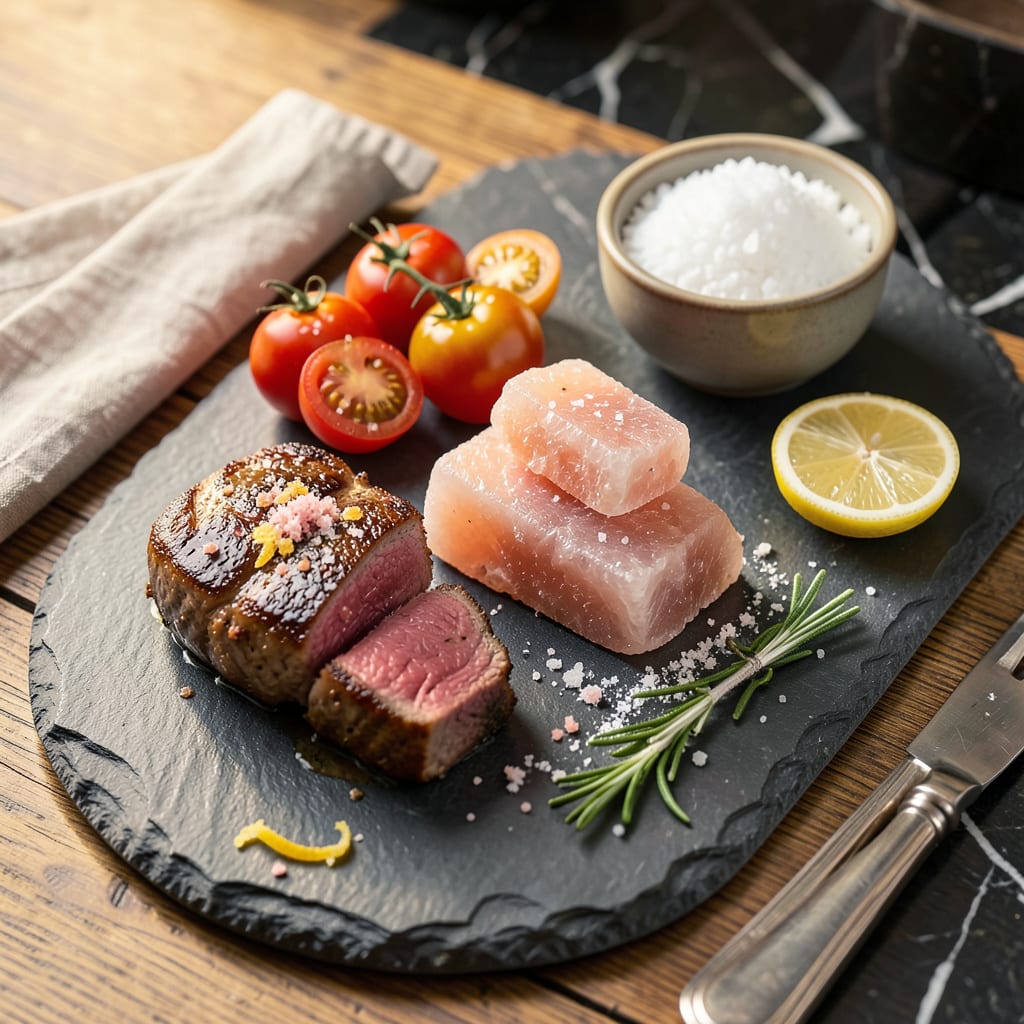
Pink Himalayan salt has a pure, mineral-rich flavor similar to table salt but with a subtly milder, less harsh taste. Its trace minerals add a faint earthy complexity that’s more noticeable in larger crystals or when used as a finishing salt.
I love how this salt brings something extra to the table—literally. The mineral content, including iron oxide (which gives it that rosy hue), calcium, and potassium, creates a nuanced flavor that’s less aggressive than iodized salt. When I use it on grilled meats or dark chocolate desserts, I notice how it enhances the natural flavors without overpowering them. 🔥
What’s fascinating is how the crystal size changes the experience. Fine grains blend seamlessly into dishes, while coarse flakes deliver little bursts of mineral-rich flavor. I always keep both on hand for different cooking needs—it’s like having two seasonings in one.
💡 In This Article
- Why Pink Himalayan Salt Tastes Different Than Regular Salt
- Best Culinary Uses for Pink Himalayan Salt’s Flavor
Why Pink Himalayan Salt Tastes Different Than Regular Salt
The secret lies in its mineral composition—unlike processed table salt (which is 97-99% sodium chloride), Himalayan pink salt contains up to 84 trace minerals including iron oxide (which gives it that signature pink hue), calcium, potassium, and magnesium. These minerals contribute subtle earthy, almost metallic undertones that you won’t find in standard iodized salt.
The iron content alone ranges from 0.001-0.02%, which might sound tiny but makes a noticeable difference in flavor complexity. ✨
What most people don’t realize is how the harvesting method preserves these minerals. This salt is hand-mined from ancient sea beds in the Punjab region of Pakistan, where it’s been protected from modern pollutants for over 250 million years.
The traditional extraction process avoids the heavy processing that strips regular table salt of its natural mineral content. The result? A salt that’s 85-98% sodium chloride (compared to 99%+ in table salt) with those precious trace elements intact. 🔥
The crystal structure plays a huge role too. Himalayan salt forms in large, irregular pyramids that dissolve more slowly than processed salt’s uniform cubes. This means the flavor releases gradually, giving you little bursts of mineral-rich saltiness rather than an immediate, sharp hit.
When I use coarse Himalayan salt as a finishing touch on grilled steaks, I can actually taste the difference in how it melts and distributes across the meat’s surface. ⚡
Here’s what’s fascinating about the science: those trace minerals actually interact with your taste buds differently. Calcium and potassium ions trigger slightly different receptor responses than pure sodium, creating what chefs call a “rounded” saltiness.
It’s why Himalayan salt can taste less harsh at the same concentration—your tongue perceives the complexity rather than just the saltiness. I’ve found this makes it particularly excellent for delicate dishes where you want enhancement without overpowering. 💫
The moisture content (about 0.1-0.5%) also contributes to its unique mouthfeel. Unlike dry, processed salt, Himalayan salt retains tiny amounts of natural moisture that help it adhere better to foods.
This is why it works so well on salt rims for cocktails or as a crust for baked potatoes—the crystals stay put while delivering that distinctive mineral kick. The moisture also means it dissolves slightly differently in cooking, which can affect how flavors bloom in your dishes. 🌟
One thing I’ve noticed in my cooking: the larger the crystal, the more pronounced the mineral notes become. Fine Himalayan salt (about 0.1-0.5mm grains) works beautifully in baking where you want even distribution, while coarse flakes (3-8mm) make spectacular finishing salts that add both texture and those subtle earthy notes.
The difference is like comparing powdered sugar to sugar cubes—same basic ingredient, completely different experience. 💛

Trained in classic French technique but raised on slow-cooked ribs and spicy rubs, she blends culinary skill with smoke and soul.
- Recipe for Boneless Pork Chops in Cast Iron Skillet: Sear and Baste to Juicy Perfection - October 3, 2026
- Recipe for Boneless Cross Rib Roast: Slow-Roasted Beef with Herb Crust - October 3, 2026
- Hamburgers in Sauce Recipe Crock Pot: Slow-Cooked Savory Delight - October 3, 2026