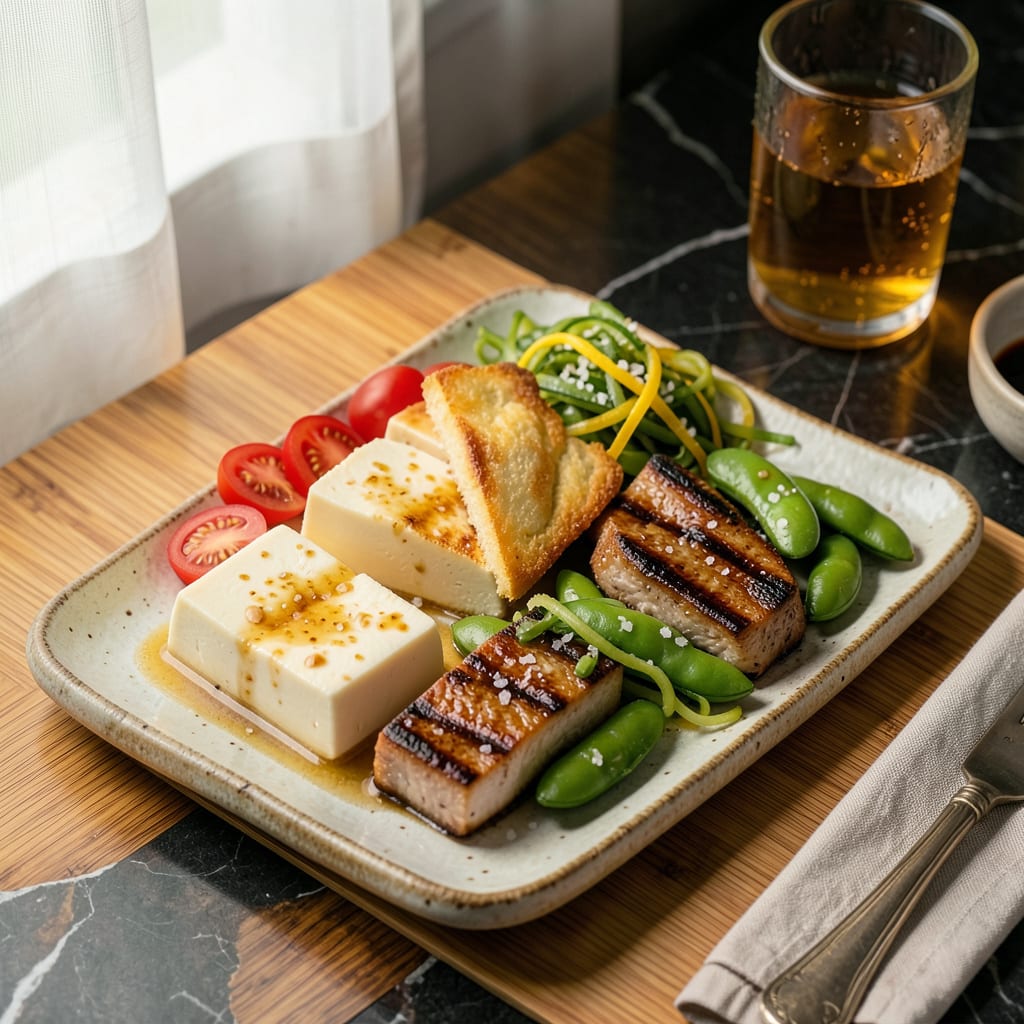
Tofu has a very mild, slightly nutty flavor that easily absorbs surrounding tastes. Its texture ranges from soft and silky (silken tofu) to firm and chewy (extra-firm), depending on the type and preparation method.
Think of tofu as a culinary blank canvas—its subtle bean-like essence comes from soybeans, but the real magic happens when it soaks up flavors from sauces, spices, or smoky grills. 🔥 I’ve found that silken tofu works wonders in creamy desserts or soups, while extra-firm holds its shape beautifully for stir-fries or crispy pan-searing. The key is understanding how water content affects texture: more water means softer, while pressed tofu develops a satisfying bite.
What surprises many first-time tofu cooks is how dramatically preparation changes the experience. A simple 30-minute marinade transforms it completely, and pressing removes excess moisture for better browning. I always recommend starting with small batches to test textures—you might discover you prefer the custard-like quality of silken or the meaty chew of super-firm. ✨
💡 In This Article
- Understanding Tofu’s Natural Flavor and Texture Variations
- How to Enhance Tofu’s Taste with Marinades and Cooking Methods
Understanding Tofu’s Natural Flavor and Texture Variations
Tofu’s subtle taste starts with its soybean base. When soybeans are soaked, blended, and strained, they create soy milk that’s then coagulated with minerals like calcium sulfate or magnesium chloride. This process locks in a delicate bean flavor that’s often described as slightly earthy or nutty—similar to cooked edamame but much milder.
The water content during production determines the final texture: silken tofu retains most moisture (about 85-90%), while extra-firm is pressed to remove up to 70% of the liquid. 🌱
The texture spectrum is what makes tofu so versatile. Silken tofu, with its custard-like consistency (think unpasteurized ricotta), contains about 5-7% protein and 88% water, making it ideal for blending into smoothies or creating creamy desserts. Regular tofu (75% water) holds its shape when cubed but still offers a tender bite—perfect for miso soup.
Extra-firm (60% water) develops a meaty chew when pressed and seared, with protein content climbing to 10-12%. For comparison, paneer has about 18% protein and 55% water, explaining its denser texture.
What most people don’t realize is that tofu’s flavor changes with its protein concentration. Higher-protein varieties (like super-firm) have a more pronounced soybean taste because there’s less water diluting the natural compounds.
The coagulation method matters too—tofu set with nigari (magnesium chloride) tends to have a cleaner taste than calcium-set versions, which can carry a faint mineral note. I always recommend tasting unseasoned tofu first to understand its baseline flavor before cooking. ✨
The mouthfeel experience varies dramatically by preparation. Unpressed tofu has a jelly-like quality that melts on the tongue, while properly pressed and frozen tofu develops a spongy, almost shrimp-like texture when thawed.
This happens because freezing creates ice crystals that expand the tofu’s structure—when thawed, these leave behind tiny pockets that absorb marinades like a sponge. The difference is striking: frozen-thawed tofu can absorb up to 50% more liquid than fresh.
Temperature plays a crucial role in texture perception. Cold tofu straight from the package has a firmer, more brittle quality, while room-temperature tofu feels softer and more yielding.
This is why silken tofu is often served chilled in Japanese hiyayakko (cold tofu dishes), where its cool, smooth texture contrasts beautifully with warm toppings like ginger and bonito flakes. The temperature contrast enhances the perceived creaminess without adding any dairy. 💫
For those transitioning from dairy, it’s helpful to compare tofu types to familiar products:
- Silken tofu: Similar to fresh ricotta or thick Greek yogurt in creaminess
- Firm tofu: Comparable to halloumi in density but with less saltiness
- Extra-firm tofu: Mimics the chew of paneer when properly pressed and cooked
The real secret to appreciating tofu’s natural flavor lies in its umami potential.
Soybeans contain high levels of glutamic acid (about 1.5-2.5g per 100g), which converts to glutamates during fermentation and cooking. This is why properly prepared tofu can develop a savory depth that complements rather than competes with other ingredients in a dish.
The next time you work with tofu, try a simple test: pan-fry a plain cube until golden, then taste it with just a sprinkle of salt—the caramelization brings out hidden nutty notes you might have missed. 🔥

Trained in classic French technique but raised on slow-cooked ribs and spicy rubs, she blends culinary skill with smoke and soul.
- Recipe for Boneless Pork Chops in Cast Iron Skillet: Sear and Baste to Juicy Perfection - October 3, 2026
- Recipe for Boneless Cross Rib Roast: Slow-Roasted Beef with Herb Crust - October 3, 2026
- Hamburgers in Sauce Recipe Crock Pot: Slow-Cooked Savory Delight - October 3, 2026