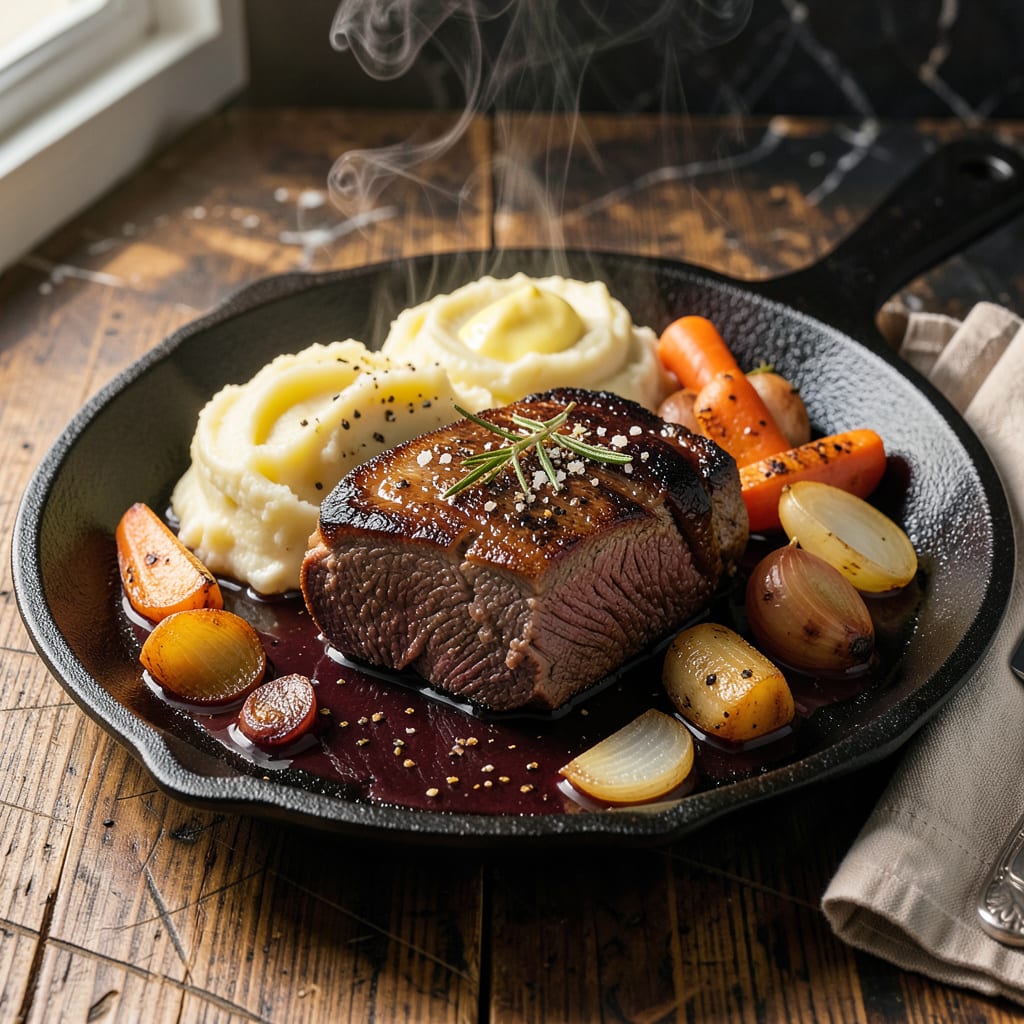
In the UK, chuck roast is most commonly called beef chuck steak or braising steak, though butchers may also refer to it as chuck steak or stewing steak depending on the cut’s intended use.
I’ve noticed UK butchers take a more practical approach to naming cuts based on how they’re meant to be cooked. 🔥 The term braising steak dominates because this cut thrives in slow, moist heat—perfect for British classics like beef and ale pie. Meanwhile, stewing steak often refers to pre-diced chuck, ready for hearty dishes. What’s fascinating is how regional preferences shape terminology; in Scotland, you might hear blade steak for bone-in chuck cuts, reflecting local butchering traditions.
💡 In This Article
- UK Butcher’s Guide: Chuck Roast Cuts and Their Names
- How to Buy Chuck Roast in the UK: Supermarket vs. Butcher
UK Butcher’s Guide: Chuck Roast Cuts and Their Names
What makes UK terminology for chuck roast so specific is how butchers classify it by cooking method rather than anatomy alone. The chuck primal (from the cow’s shoulder) gets divided into cuts based on bone structure and thickness.
A bone-in chuck steak with the blade bone intact is often called blade steak in Scotland, while the same cut might be labeled braising steak in England—both referring to the same muscle group but emphasizing different preparation styles.
The thickness plays a huge role in naming conventions. Thick slices (about 1.5-2 inches) are sold as beef chuck steak, ideal for grilling or pan-searing. Thinner cuts (around 0.5-1 inch) become braising steak, perfect for slow-cooked dishes.
🔥 What’s fascinating is how butchers will sometimes trim and tie these thinner cuts into rolls for pot roasts, creating what they call chuck roasting joints—a term you won’t hear in the US.
Regional variations add another layer of complexity. In Northern England, you might find chuck tail (the upper portion near the neck) sold separately for stews, while London butchers often bundle this with other chuck cuts under the general stewing steak label.
The key difference lies in the connective tissue content—higher in the tail portion, which breaks down beautifully during long simmering. I’ve found Scottish butchers particularly precise about distinguishing between blade steak (with the bone) and chuck steak (boneless).
Here’s what most people don’t realize: the UK’s braising steak often includes not just chuck but also other tough cuts like shin or flank, all grouped by cooking method. This practical approach means you might get a mix of muscles in your package, each contributing different textures to your finished dish.
The science behind this is that slow, moist heat breaks down collagen in all these cuts, transforming them into tender, flavorful meat—whether it’s chuck, shin, or a combination.
For home cooks, this means you can often substitute one for another in recipes. A stewing steak package might contain 50% chuck, 30% shin, and 20% flank, giving you a built-in flavor complexity.
✨ The fat content in chuck (about 15-20%) makes it particularly valuable in these mixes, as it bastes the leaner cuts during cooking. When buying, ask your butcher for the chuck-heavy portions if you want richer flavor in your stews or pies.
What I love about UK butchery is this focus on cooking application over strict anatomical terms. It’s why you’ll see labels like “slow cook beef” or “casserole beef”—terms that immediately tell you how to use the cut.
This system takes the guesswork out of meal planning, especially for traditional British dishes where chuck’s marbling and connective tissue create that signature melt-in-your-mouth texture after hours of gentle simmering.
Pro tip: If you’re after a specific chuck cut for American-style pot roast, ask for a boneless chuck roasting joint—this is the UK equivalent of what US recipes call chuck roast.
The butcher can usually cut it to your preferred thickness, and you’ll want a piece with good marbling (those white fat streaks) for maximum flavor during the long, slow cooking process. 💫

Trained in classic French technique but raised on slow-cooked ribs and spicy rubs, she blends culinary skill with smoke and soul.
- Recipe for Boneless Pork Chops in Cast Iron Skillet: Sear and Baste to Juicy Perfection - October 3, 2026
- Recipe for Boneless Cross Rib Roast: Slow-Roasted Beef with Herb Crust - October 3, 2026
- Hamburgers in Sauce Recipe Crock Pot: Slow-Cooked Savory Delight - October 3, 2026