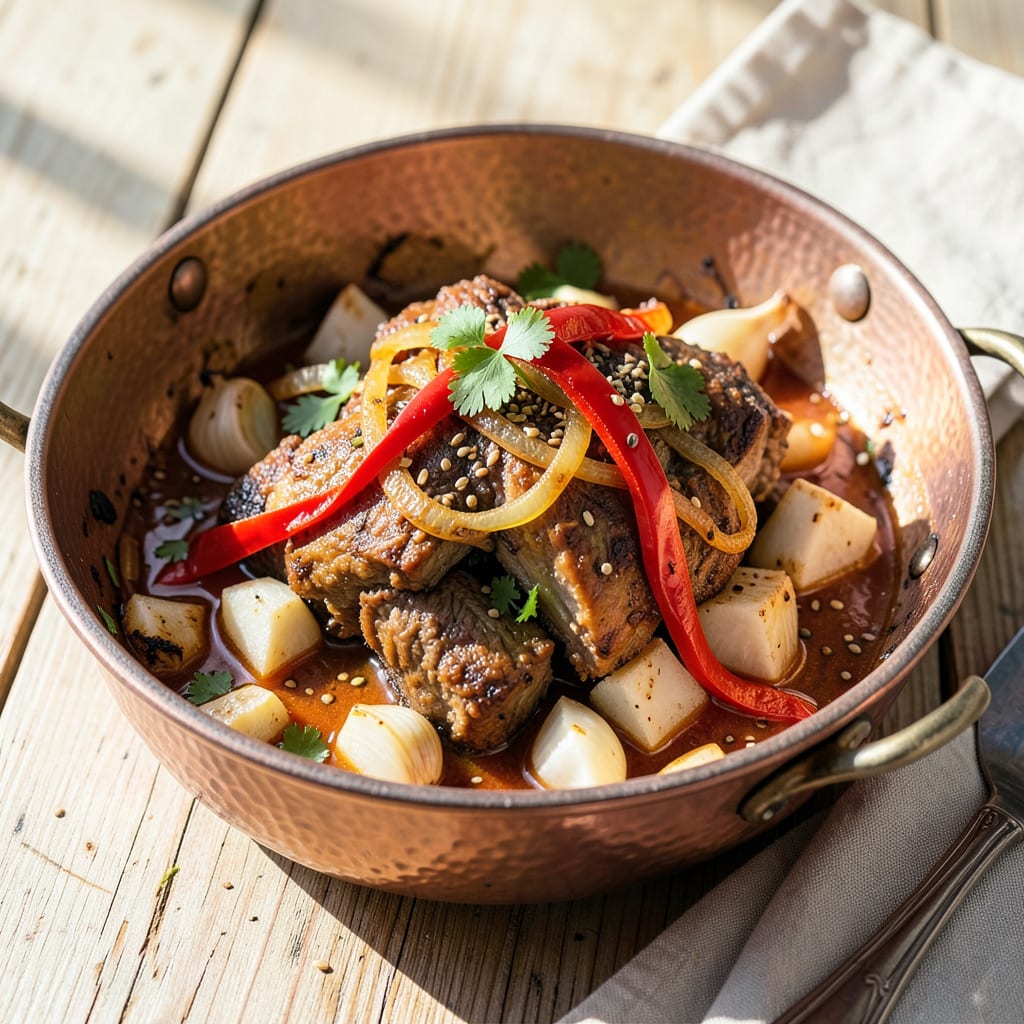
Chivo meat comes from young goats, offering a lean, tender texture with a slightly gamey yet mild flavor. It’s a staple in Latin American, Caribbean, and Mediterranean cuisines, prized for its versatility in stews, grilling, and slow-cooked dishes.
I love working with chivo because it bridges the gap between lamb and beef—leaner than pork but more flavorful than chicken. 🔥 The secret lies in its muscle structure: young goats develop tender meat with just enough connective tissue to reward slow cooking. In my kitchen, I’ve found it absorbs marinades like a sponge, making it perfect for bold spices in dishes like birria or curry de chivo. The mild gamey notes disappear when balanced with citrus or herbs, which is why it’s a favorite in coastal regions.
What surprises most people is how forgiving chivo can be for home cooks. Unlike lamb, it rarely develops that overpowering “barnyard” taste, even when cooked rare. ✨ The leg and shoulder cuts are my go-tos—they stay juicy whether you’re braising them for hours or throwing them on a hot grill. Just be sure to let it rest before slicing to keep those natural juices locked in.
💡 In This Article
- Flavor Profile and Culinary Characteristics of Chivo
- Popular Cuts of Chivo and Best Cooking Methods
Flavor Profile and Culinary Characteristics of Chivo
The distinct taste of chivo comes from its unique muscle composition and diet. Young goats raised on grass and shrubs develop meat with a delicate balance of myoglobin (which gives it a slightly darker color than chicken) and intramuscular fat—about 3-5% compared to lamb’s 8-10%.
This leaner profile means the flavor stays clean and bright, with just a whisper of gamey richness that disappears when cooked properly. The connective tissue breaks down beautifully during slow cooking, releasing gelatin that keeps the meat moist without added fats.
What sets chivo apart from lamb is its milder, almost sweet undertone. While lamb often carries a pronounced “lanolin” flavor (from sheep’s wool fat), chivo’s taste is closer to veal but with more depth.
🔥 The fat-to-meat ratio is ideal for absorbing marinades—try soaking leg cuts in a mix of orange juice, garlic, and cumin for at least 4 hours to see how the fibers transform. In Caribbean dishes, the meat is often braised with coconut milk, which neutralizes any residual gameiness while adding creaminess.
Age plays a critical role in texture and flavor. Meat from goats under 1 year old (true “cabrito”) is so tender it can be cooked quickly over high heat, while older chivo (up to 2 years) benefits from low-and-slow methods.
I’ve found that shoulder cuts from younger animals stay juicy even when grilled to 145°F, whereas tougher cuts from mature goats need 160°F and 2+ hours of braising to reach perfection. The collagen melts into the cooking liquid, creating a velvety sauce that clings to the meat.
Regional preparations highlight chivo’s adaptability. In Mexico, it’s often pit-roasted with achiote and vinegar for barbacoa de chivo, while Dominican cooks stew it with sour orange and cilantro. The key is balancing the meat’s natural leanness with enough moisture—whether through marinades, basting, or cooking in liquid.
Unlike beef, chivo doesn’t need heavy seasoning to shine; a simple rub of salt, smoked paprika, and lime zest lets its inherent flavors take center stage.
Here’s what most people miss: the best chivo comes from goats raised on diverse forage. Wild thyme, sage, and even cactus in their diet impart subtle herbal notes to the meat.
🌟 I once tasted chivo from goats grazing on coastal shrubs in Puerto Rico—the meat had a faint briny undertone that paired magically with mojo criollo. This terroir effect is why artisanal producers often specify their animals’ diet on the label.
For home cooks, the magic happens when you treat chivo like a cross between lamb and pork. It benefits from the same attention to resting times as beef (10-15 minutes after cooking) but responds to marinades like poultry.
The shoulder’s connective tissue makes it ideal for 3-hour braises, while the loin can be seared quickly like a steak. Pro tip: Always slice against the grain—chivo’s muscle fibers run in distinct directions, and cutting properly makes even the chewiest cuts feel tender.
The leanness that makes chivo healthy also means it cooks faster than you might expect. A 1-inch thick chop will reach medium-rare (135°F) in just 3-4 minutes per side on a screaming-hot grill. ✨ Overcooking is the only real danger—once it hits 155°F, the meat starts to tighten and dry out.
That’s why in professional kitchens, we use instant-read thermometers and pull chivo off the heat 5°F before our target temperature, letting carryover cooking do the rest.

Trained in classic French technique but raised on slow-cooked ribs and spicy rubs, she blends culinary skill with smoke and soul.
- Recipe for Boneless Pork Chops in Cast Iron Skillet: Sear and Baste to Juicy Perfection - October 3, 2026
- Recipe for Boneless Cross Rib Roast: Slow-Roasted Beef with Herb Crust - October 3, 2026
- Hamburgers in Sauce Recipe Crock Pot: Slow-Cooked Savory Delight - October 3, 2026