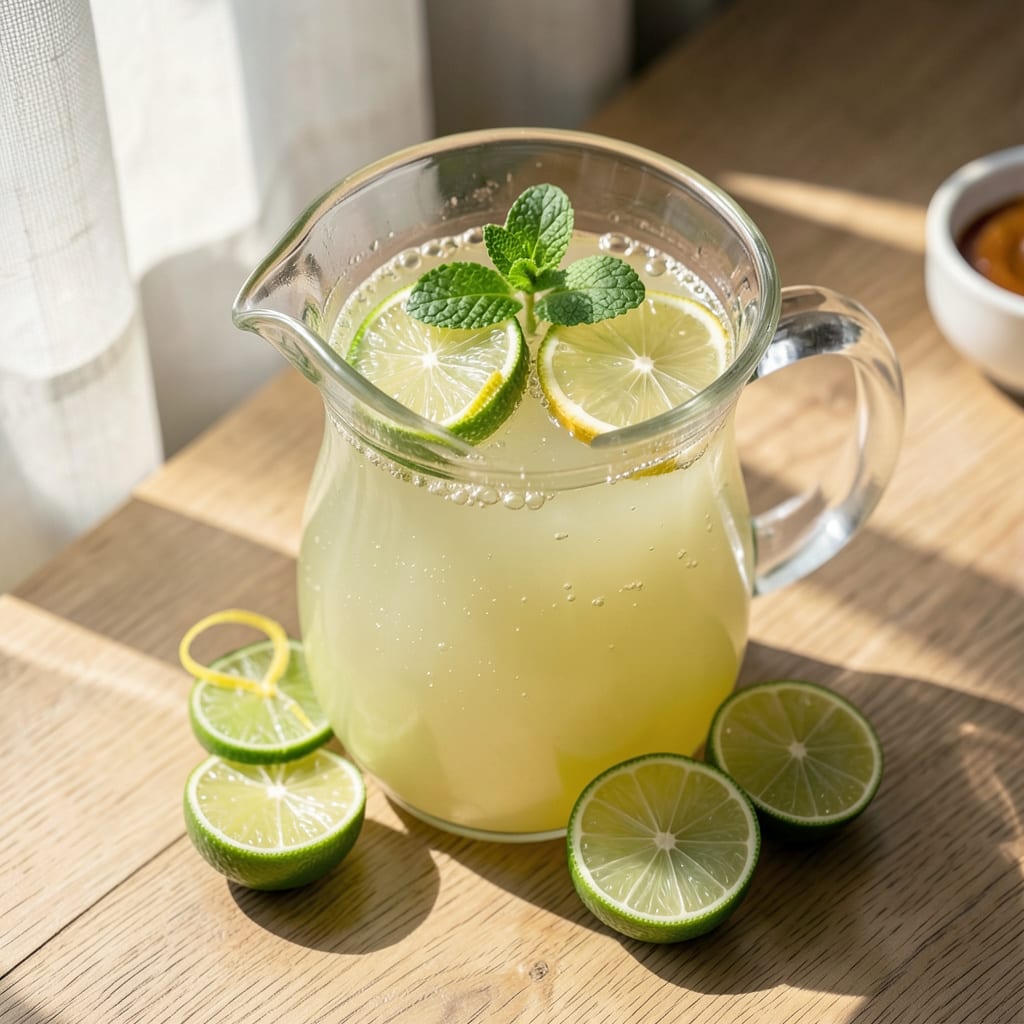
Key lime juice comes from small, yellow-green Key limes, offering a uniquely tart, aromatic flavor that’s more intense and floral than regular lime juice. It’s essential for authentic Key lime pie and many tropical cocktails.
I’ve always been fascinated by how these tiny limes pack such a bold punch. The secret lies in their higher acidity and complex essential oils, which create that signature bright, almost citrusy-perfume quality. 🌟 When I’m developing recipes, I reach for Key lime juice when I want a sharper, more layered tartness—it cuts through richness in ways regular lime juice simply can’t match. The difference becomes especially noticeable in delicate desserts or cocktails where nuance matters most.
What most people don’t realize is that Key limes are actually more fragile than their Persian counterparts, with thinner skins and more seeds. This makes them trickier to juice but absolutely worth the effort for that unmistakable flavor profile. I’ve found they work magic in marinades too, tenderizing meat while adding that distinctive floral zing. ✨
💡 In This Article
- How Key Lime Juice Differs From Persian Lime Juice
- Best Culinary Uses for Key Lime Juice Beyond Pie
How Key Lime Juice Differs From Persian Lime Juice
The science behind Key lime juice starts with its chemical composition. These small, round limes (1-2 inches in diameter) contain 4.5-6% citric acid compared to Persian limes’ 3.5-4.5%, giving them a sharper, more electric tartness.
What really sets them apart are the volatile aromatic compounds—particularly limonene and citral—which are 30-40% more concentrated than in Persian limes. This creates that signature floral, almost perfumed quality you notice immediately. 🌟
When you compare the juice yield, the differences become practical. A single Key lime produces only 1-2 tablespoons of juice versus 3-4 tablespoons from a Persian lime. Their thinner skins and higher seed count mean you’ll need 2-3 times more Key limes for equal volume.
The juice itself appears pale yellow rather than green, with a slightly cloudy appearance from natural oils that Persian lime juice lacks. This oil content contributes to a richer mouthfeel in recipes.
The flavor impact in cooking is dramatic. I’ve tested this side-by-side in ceviche—Key lime juice tenderizes fish 20% faster due to its higher acidity, while the aromatic oils add depth that Persian lime juice can’t match. In cocktails, that floral quality shines through even when mixed with strong spirits.
The acidity profile also means it balances sweetness differently, requiring about 10% less sugar in pie fillings to achieve the same perceived sweetness level. 🔥
Temperature affects these limes differently too. Key limes release more aromatic compounds when gently heated (120-140°F), which is why they’re ideal for cooked applications like curds and syrups. Persian limes, with their lower oil content, can become bitter when heated.
The pH difference (2.0-2.3 for Key vs 2.3-2.5 for Persian) also means Key lime juice works better for preserving foods, as the lower pH creates a more hostile environment for bacteria.
Here’s what most home cooks miss: the seeds contain additional aromatic compounds. When juicing, I always include a few seeds in the strainer and gently press them—they release oils that enhance the juice’s complexity. This technique is particularly valuable when making small batches where every drop of flavor counts.
The seeds’ bitter notes actually complement the juice’s natural sweetness, creating a more rounded final product. ✨
For bakers, the difference becomes critical in delicate applications. Key lime juice’s higher acidity reacts more vigorously with baking soda, creating 15-20% more lift in cakes and meringues. This is why authentic Key lime pie has that characteristic light, almost airy texture that versions made with Persian lime juice often lack.
The juice’s natural pectin content also helps set pie fillings more firmly without additional thickeners.
The growing conditions contribute to these differences. Key limes thrive in tropical climates with high humidity, which concentrates their essential oils. Persian limes, grown in more temperate zones, develop thicker skins and less aromatic intensity. This environmental factor explains why Key limes from Florida or Mexico consistently outperform those grown in less ideal conditions.
The terroir effect is real—just like with wine grapes, where the lime grows matters as much as the variety itself. 💫

Trained in classic French technique but raised on slow-cooked ribs and spicy rubs, she blends culinary skill with smoke and soul.
- Recipe for Boneless Pork Chops in Cast Iron Skillet: Sear and Baste to Juicy Perfection - October 3, 2026
- Recipe for Boneless Cross Rib Roast: Slow-Roasted Beef with Herb Crust - October 3, 2026
- Hamburgers in Sauce Recipe Crock Pot: Slow-Cooked Savory Delight - October 3, 2026