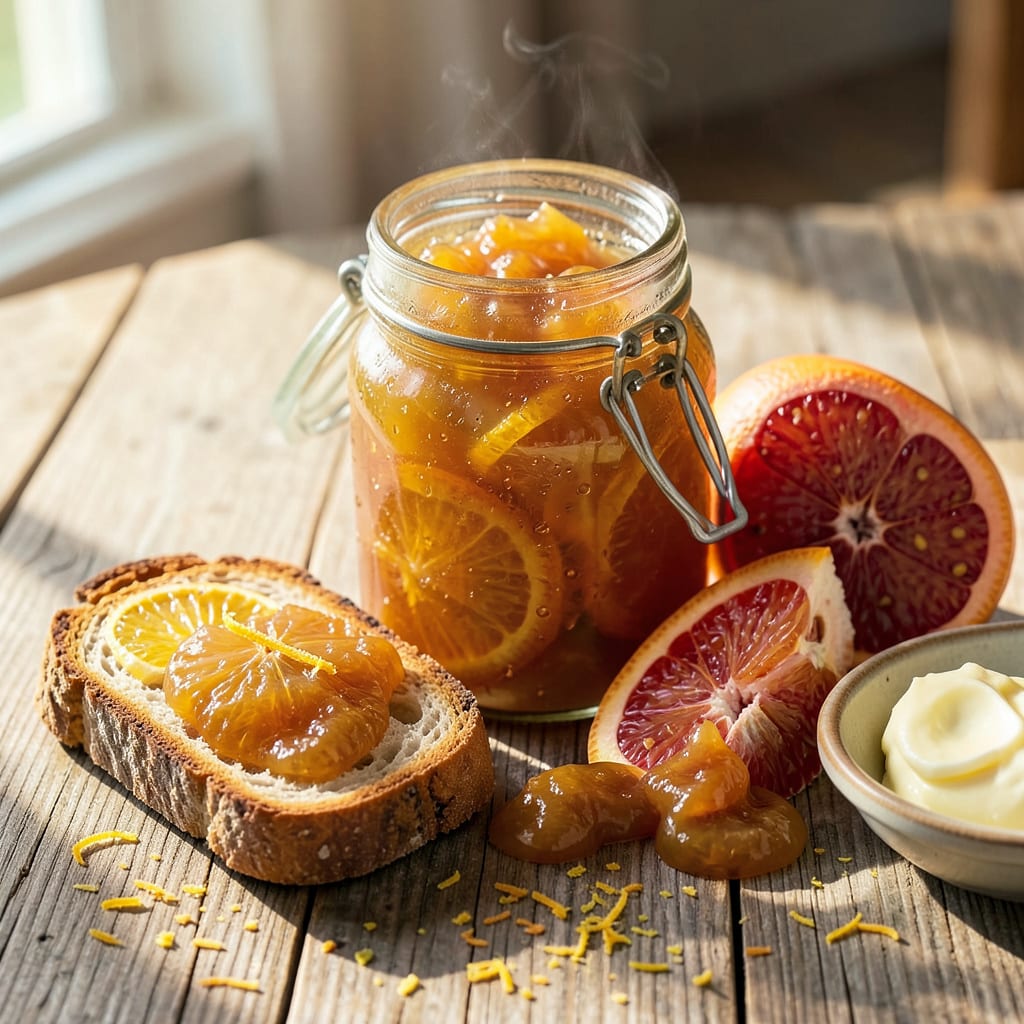
Marmalade is a sweet, tangy fruit preserve made primarily from citrus peels and juice, cooked with sugar to create a thick, jelly-like texture with suspended fruit pieces. It’s most famously made with oranges but can include other citrus fruits like lemons or grapefruits.
What sets this preserve apart is its signature balance of sweetness and bitterness, thanks to the citrus peels. 🔥 I love how the peels contribute a bright, zesty complexity that you won’t find in regular jams. The texture is another standout feature—thicker than jelly but with those delightful suspended fruit pieces that add bursts of flavor. It’s a breakfast staple in many cultures, but its versatility extends far beyond toast.
💡 In This Article
- How Traditional Marmalade Is Made from Citrus Fruits
- Best Ways to Use Marmalade Beyond Toast
How Traditional Marmalade Is Made from Citrus Fruits
The magic of marmalade starts with the citrus peel—specifically the flavedo (outer zest) and albedo (white pith). The flavedo contains essential oils that deliver bright, aromatic notes, while the albedo contributes natural pectin for thickening. Traditional recipes call for thinly slicing the entire peel (about 1/8-inch thick) to balance texture and flavor.
The peels are then soaked overnight in water to soften and reduce bitterness before cooking.
Once the peels are tender, they’re simmered with citrus juice and sugar in precise ratios—typically 1:1 sugar to fruit by weight. The mixture boils at 220°F until it reaches the gel point (tested with a candy thermometer or the “wrinkle test” on a chilled plate).
This is where pectin works its magic: the natural fibers in the peel bind with sugar and acid to create that signature jelly-like consistency. Homemade versions often have chunkier peels than commercial brands, which use fine shredding for uniformity.
The cooking process transforms the flavors dramatically. The initial bitterness of the pith mellows as the sugars caramelize, while the citrus oils intensify. I’ve found that Seville oranges (used in classic British marmalade) have 3x more pectin than navel oranges, making them ideal for that perfect set.
The final texture should suspend peel pieces evenly—like tiny flavor bombs in a glossy, amber jelly.
Commercial production differs by using added pectin and standardized peel sizes for consistency. Artisanal makers often experiment with peel cuts—thin julienne for delicate texture or thick chunks for rustic appeal. The key is patience: proper marmalade can take 2-3 hours of cooking to develop the right balance of sweetness, acidity, and body. 🔥
Here’s what most people miss: the peel’s bitterness isn’t a flaw—it’s the soul of marmalade. That contrast against the sweet jelly is what makes it so addictive. I like to think of it as the culinary equivalent of a perfectly balanced cocktail, where every element has a purpose.
The best batches have a glossy sheen and hold their shape when spooned, yet spread smoothly on warm toast.
- Peel prep: Thin slices for delicate texture, thick cuts for bold bite
- Sugar ratio: Equal parts sugar to fruit for proper preservation
- Cooking temp: 220°F is the sweet spot for gelling
- Testing doneness: Use the wrinkle test on a chilled plate

Trained in classic French technique but raised on slow-cooked ribs and spicy rubs, she blends culinary skill with smoke and soul.
- Recipe for Boneless Pork Chops in Cast Iron Skillet: Sear and Baste to Juicy Perfection - October 3, 2026
- Recipe for Boneless Cross Rib Roast: Slow-Roasted Beef with Herb Crust - October 3, 2026
- Hamburgers in Sauce Recipe Crock Pot: Slow-Cooked Savory Delight - October 3, 2026