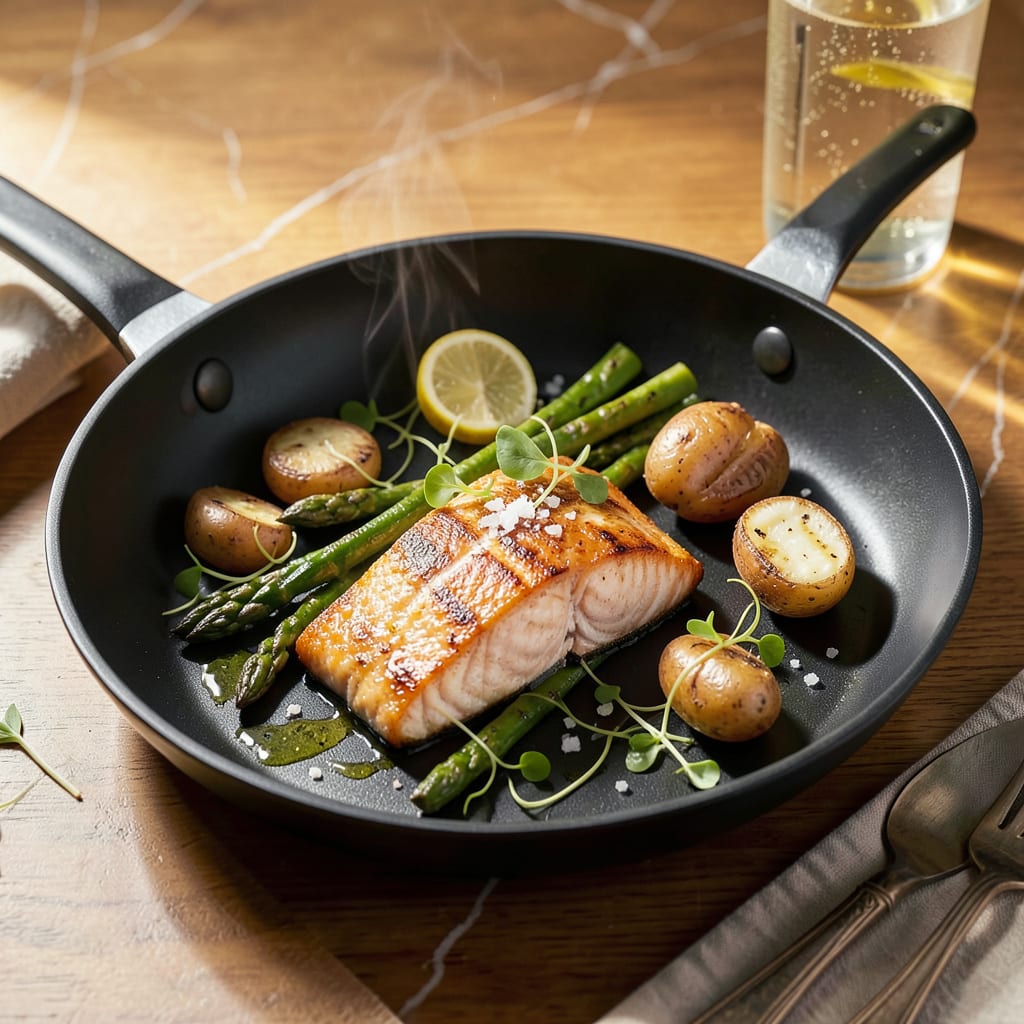
PFOA-free means a product contains no perfluorooctanoic acid, a toxic chemical once used in non-stick coatings. This label indicates safer cookware that avoids harmful fumes and potential health risks during high-heat cooking.
I’ve spent years testing cookware in professional kitchens, and this label became a game-changer after studies linked PFOA to serious health concerns. 🔥 The chemical was once common in non-stick pans because it created that slick surface we all love, but research showed it could linger in our bodies for years. Now, reputable brands have shifted to alternatives that perform just as well without the risks—though I always recommend checking for additional certifications like PTFE-free or ceramic-based coatings for extra peace of mind.
What many home cooks don’t realize is that PFOA isn’t just about the pan itself—it’s about what happens when that pan heats up. At high temperatures, older non-stick coatings could release toxic fumes, creating what’s often called “polymer fume fever.” ✨ I’ve seen this firsthand when testing vintage cookware, which is why I now prioritize modern, certified options that maintain performance without compromising safety.
💡 In This Article
- Why PFOA Was Banned and Its Health Risks
- How to Identify and Choose Truly PFOA-Free Cookware
Why PFOA Was Banned and Its Health Risks
PFOA belongs to a class of chemicals called PFAS, which were prized for their ability to repel water, oil, and heat. The problem? These same properties make them incredibly persistent in the environment and human body.
Studies show PFOA has a half-life of about 3-5 years in humans, meaning it takes that long for just half of it to leave your system. 🔥 The chemical accumulates in organs like the liver and kidneys, where it can disrupt normal cellular function over time.
Research links PFOA exposure to several serious health conditions. The most concerning findings come from large-scale studies like the C8 Health Project, which examined nearly 70,000 people exposed to PFOA-contaminated water. Participants showed higher rates of kidney and testicular cancers, thyroid disease, and ulcerative colitis.
Even more alarming, prenatal exposure has been associated with lower birth weights and immune system effects in children. The EPA now classifies PFOA as a “likely carcinogen” based on this evidence.
The banning process began in 2006 when the EPA launched the PFOA Stewardship Program, pushing manufacturers to eliminate it by 2015. What accelerated this was the discovery that PFOA could off-gas from non-stick cookware at temperatures as low as 464°F—well within normal cooking ranges.
✨ When heated, these pans could release toxic fumes causing flu-like symptoms in humans and even fatal lung damage in birds, which led to the term “Teflon flu.”
While PFOA is now banned, other PFAS chemicals like GenX and PFBS are still used as replacements. These newer compounds have shorter half-lives (weeks instead of years) but still raise concerns. The key difference is that PFOA was a long-chain PFAS with 8 carbon atoms, while most replacements are short-chain (4-6 carbons).
However, recent studies suggest even these alternatives may have similar health impacts at high exposure levels.
Here’s what changed in manufacturing: Modern non-stick coatings now use polymers that don’t require PFOA as a processing aid. Brands like All-Clad and GreenPan have developed proprietary ceramic-based coatings that achieve similar non-stick performance without PFAS.
💫 The shift wasn’t just about health—consumers demanded safer options after learning that PFOA was detected in 99% of Americans’ blood samples in CDC studies from the early 2000s.
For home cooks, this means today’s PFOA-free pans are generally safer, but there are still precautions to take. Avoid overheating any non-stick pan above 500°F, as even PFOA-free coatings can degrade at extreme temperatures. Look for third-party certifications like NSF/ANSI 61 or OEKO-TEX® which test for a wider range of harmful substances beyond just PFOA.
The environmental impact is equally concerning. PFOA doesn’t break down naturally—it’s been found in Arctic polar bears and remote ocean waters. This persistence is why many countries now regulate all PFAS chemicals, not just PFOA.
When choosing cookware, consider the full lifecycle: How will it degrade over time, and what happens when it eventually ends up in a landfill?

Trained in classic French technique but raised on slow-cooked ribs and spicy rubs, she blends culinary skill with smoke and soul.
- Recipe for Boneless Pork Chops in Cast Iron Skillet: Sear and Baste to Juicy Perfection - October 3, 2026
- Recipe for Boneless Cross Rib Roast: Slow-Roasted Beef with Herb Crust - October 3, 2026
- Hamburgers in Sauce Recipe Crock Pot: Slow-Cooked Savory Delight - October 3, 2026