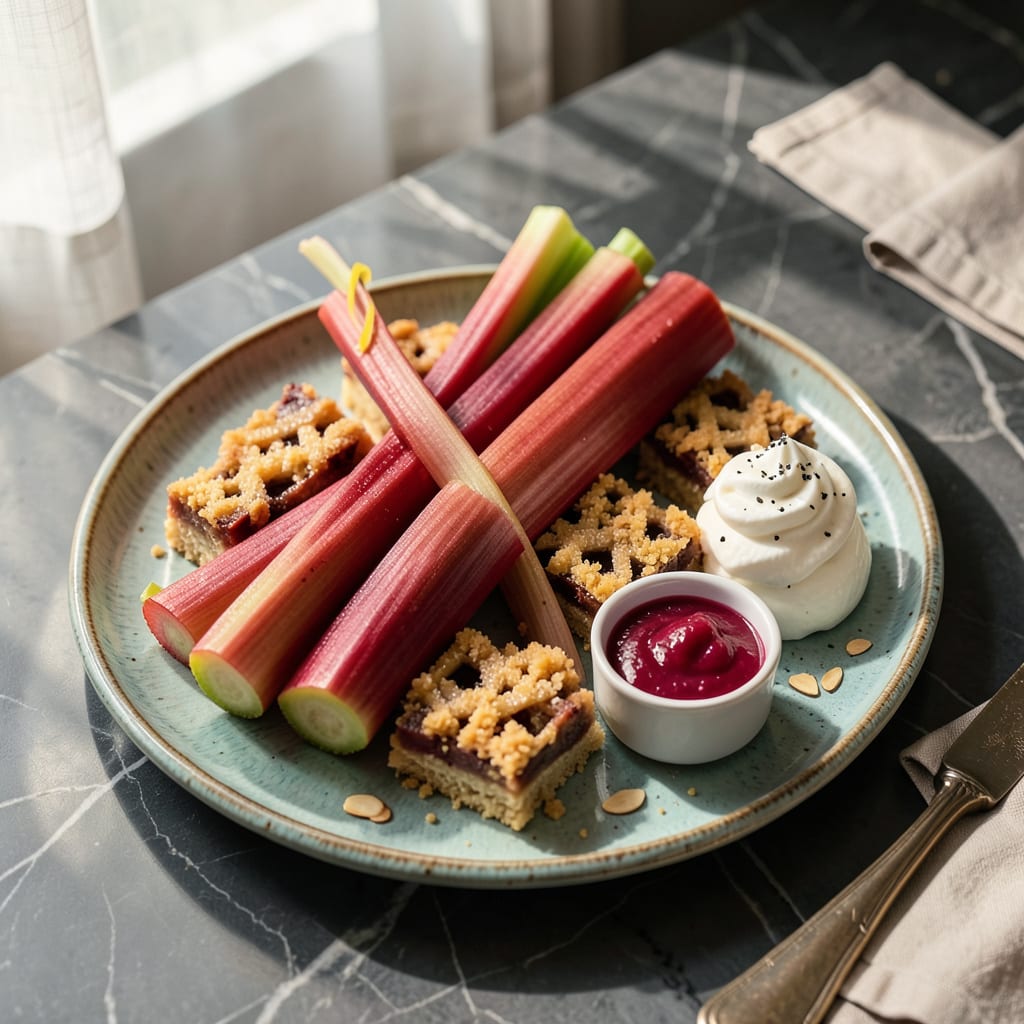
Rhubarb has a uniquely tart, almost sour flavor with subtle earthy undertones, often compared to green apples or cranberries. Its sharpness mellows when cooked with sugar, creating a balanced sweet-tart taste.
This vibrant plant delivers a puckering brightness that wakes up your palate—think of it as nature’s sour candy before any sugar is added. 🔥 What fascinates me most is how its flavor transforms dramatically with heat: raw stalks can be almost aggressively tart, while slow-cooked preparations reveal hidden layers of complexity. The earthy notes become more pronounced when paired with spices like cinnamon or cardamom, making it a chameleon ingredient in both sweet and savory dishes. I’ve found that early-season rhubarb tends to be more intensely sour, while late-summer harvests develop a slightly milder character.
💡 In This Article
- Breaking Down Rhubarb’s Tart Flavor Profile
- Best Sweet Pairings to Balance Rhubarb’s Sharpness
Breaking Down Rhubarb’s Tart Flavor Profile
The intense tartness in rhubarb comes from its high oxalic acid content—about 0.5-1.5 grams per 100 grams—which gives it that signature lip-puckering quality. This compound is the same one found in spinach and sorrel, but rhubarb contains significantly more, putting its natural pH between 3.1-3.5, similar to lemon juice.
What’s fascinating is how this acidity interacts with our taste buds, triggering a sharp response that’s immediately noticeable yet surprisingly refreshing. 🔥
When raw, rhubarb’s texture is crisp and fibrous, almost like celery but with a more pronounced graininess. The stalks contain about 95% water, which means their cellular structure breaks down quickly when cooked.
At 180°F, the oxalic acid begins to soften while the plant’s natural pectins thicken, creating that perfect jam-like consistency we love in pies. The transformation is dramatic: what starts as an almost aggressively sour bite becomes a complex, layered flavor when heat is applied.
The variety and growing conditions dramatically alter rhubarb’s taste profile. Early spring harvests tend to be most acidic, while late-season stalks develop more mellow, almost floral notes. I’ve noticed that field-grown rhubarb (with its deep red stalks) has about 20% more sugar than greenhouse varieties, which translates to a slightly rounder flavor.
The color matters too—deep crimson stalks are typically sweeter than pale green ones, though both maintain that characteristic tang.
Here’s what most people don’t realize: rhubarb’s earthy undertones come from geometric compounds called pyrazines, the same family that gives bell peppers their green aroma. These compounds become more pronounced when rhubarb is roasted or caramelized, adding a subtle vegetal depth that balances the acidity.
When I develop recipes, I often pair rhubarb with toasted spices like coriander or fennel to amplify these hidden layers. ✨
The texture evolution is equally important as the flavor change. Raw rhubarb has a satisfying crunch, but when baked at 375°F for 25-30 minutes, the fibers soften into silky strands. For compotes, I recommend a 1:1 rhubarb-to-sugar ratio by weight to achieve that perfect balance where the tartness still shines through but doesn’t overwhelm.
The key is letting it macerate for 15-20 minutes before cooking to draw out just enough liquid.
What makes rhubarb truly special is its ability to bridge sweet and savory worlds. In my test kitchen, I’ve successfully used it in everything from classic strawberry-rhubarb pies to glaze for pork ribs, where its acidity cuts through fat beautifully.
The secret is understanding that rhubarb’s tartness isn’t just something to be masked—it’s the star that makes other flavors sing. When balanced properly, it creates that magical sweet-tart harmony that keeps people coming back for another bite. 💫

Trained in classic French technique but raised on slow-cooked ribs and spicy rubs, she blends culinary skill with smoke and soul.
- Recipe for Boneless Pork Chops in Cast Iron Skillet: Sear and Baste to Juicy Perfection - October 3, 2026
- Recipe for Boneless Cross Rib Roast: Slow-Roasted Beef with Herb Crust - October 3, 2026
- Hamburgers in Sauce Recipe Crock Pot: Slow-Cooked Savory Delight - October 3, 2026