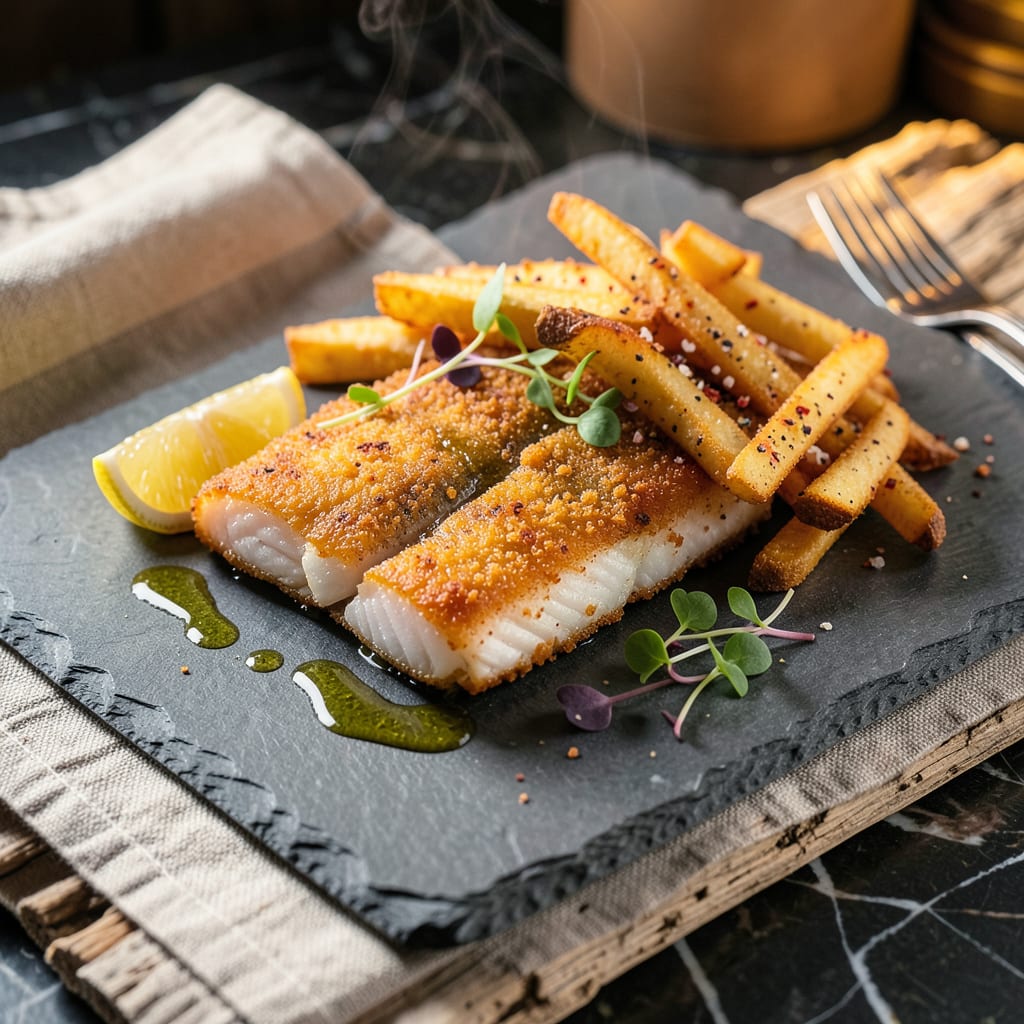
For frying fish, use oils with high smoke points like peanut, canola, or vegetable oil. These maintain stability at 375°F-400°F, creating crispy results without absorbing fishy flavors. Avoid olive oil unless refined for high heat.
I’ve tested countless oils in my coastal kitchen, and the secret to that perfect golden crust lies in how the oil handles heat. 🔥 Peanut oil, my personal favorite, adds a subtle nutty depth that pairs beautifully with white fish, while canola oil’s neutral profile lets the natural flavors shine. The key is choosing an oil that won’t break down and turn bitter when you’re pushing those temperatures for that ideal crunch.
What most home cooks overlook is how oil choice affects moisture retention. A stable oil like vegetable oil creates a protective barrier that locks in juices while achieving that restaurant-quality crispness. I always keep a thermometer handy—hitting that 375°F sweet spot makes all the difference between soggy and spectacular. ✨
💡 In This Article
- Why Smoke Point Matters for Frying Fish Perfectly
- Best Oils for Different Fish Frying Techniques
Why Smoke Point Matters for Frying Fish Perfectly
When oil hits its smoke point, the molecular structure begins breaking down, creating acrolein—a compound that gives burned oil that harsh, bitter taste. For frying fish at 375-400°F, you need an oil that stays stable well beyond these temperatures. Peanut oil, with its 450°F smoke point, maintains integrity while developing that coveted golden crust.
Canola oil (smoke point 400°F) offers similar stability but with a completely neutral flavor profile. 🔥
The magic happens at the molecular level. At high temperatures, stable oils form a crisp matrix around the fish through polymerization—where oil molecules link together creating a rigid structure. This is what gives you that satisfying crunch.
Unstable oils (like unrefined olive oil at 325°F smoke point) can’t maintain this structure, resulting in soggy, greasy fish that absorbs oil instead of repelling it. ✨
Here’s what most cooks miss: oil degradation isn’t just about taste. When oils break down, they generate free radicals that can make your fish taste “off” and even create potentially harmful compounds. I’ve seen this firsthand when testing oils—fish fried in degraded oil develops a grayish tint and unpleasant aftertaste within minutes.
The right oil keeps your fish looking vibrant and tasting clean. 💛
Temperature control becomes easier with high-smoke-point oils. They give you a wider margin of error when adjusting heat. With peanut oil, you can safely fluctuate between 350-400°F without worrying about immediate breakdown. This flexibility is crucial when frying different fish thicknesses—delicate flounder needs 365°F while thick salmon steaks can handle 385°F for proper cooking through.
⚡
The oil’s viscosity matters too. Thinner oils like vegetable oil (400°F smoke point) coat fish more evenly, creating uniform crispiness. Thicker oils like avocado oil (though stable at 520°F) can create heavier coatings that mask delicate fish flavors.
This is why I reserve avocado oil for heartier fish like tuna or swordfish that can stand up to its richer mouthfeel. 🌟
Pro tip: Reusing oil lowers its smoke point each time. After three uses, even peanut oil’s smoke point drops by about 25°F. I strain and store used oil in a cool, dark place, but never push it beyond two uses for fish frying—those delicate flavors deserve fresh oil for optimal results. 💫

Trained in classic French technique but raised on slow-cooked ribs and spicy rubs, she blends culinary skill with smoke and soul.
- Recipe for Boneless Pork Chops in Cast Iron Skillet: Sear and Baste to Juicy Perfection - October 3, 2026
- Recipe for Boneless Cross Rib Roast: Slow-Roasted Beef with Herb Crust - October 3, 2026
- Hamburgers in Sauce Recipe Crock Pot: Slow-Cooked Savory Delight - October 3, 2026