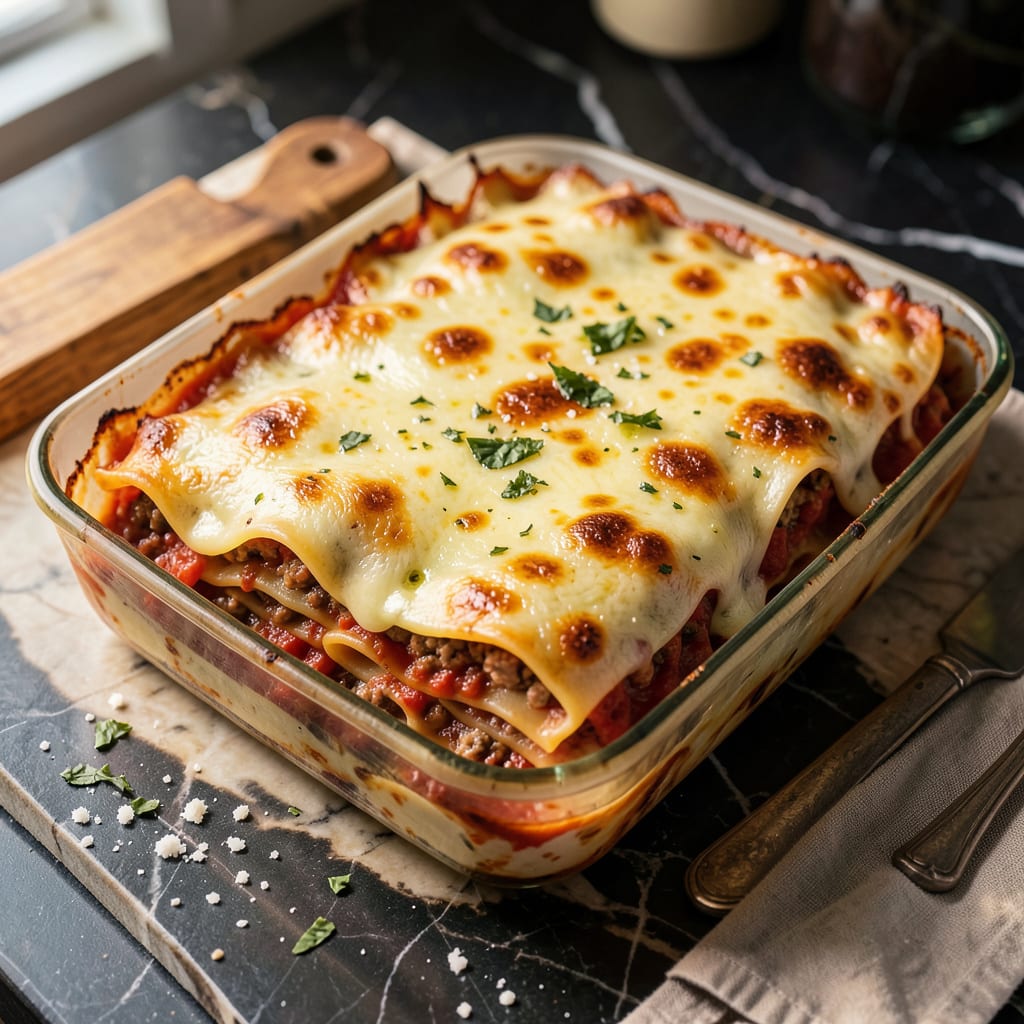
A standard lasagna pan is typically 9×13 inches (23×33 cm), holding about 12-14 cups. This rectangular size accommodates traditional lasagna layers while fitting most ovens and refrigerators.
This dimension isn’t arbitrary—it’s the sweet spot for achieving perfect layer ratios. 🔥 I’ve found that the 9×13-inch size allows for 3-4 noodle layers with ample filling between each, creating that ideal balance of pasta, sauce, and cheese. Most home ovens are designed with this size in mind, and it conveniently serves 8-12 portions, making it perfect for family meals or small gatherings.
The 12-14 cup capacity also gives you flexibility with ingredients. Whether you’re making a classic meat lasagna or a vegetable-packed version, this size handles the volume without overflowing. Plus, it fits neatly in standard refrigerators for make-ahead meals. ✨
💡 In This Article
- Why 9×13 Inches Became the Standard Lasagna Pan Size
- Choosing the Right Lasagna Pan for Your Recipe
Why 9×13 Inches Became the Standard Lasagna Pan Size
The 9×13-inch dimension emerged as the gold standard because it perfectly balances layering needs with practical kitchen constraints. Traditional lasagna requires 3-4 noodle layers with filling between each, and this size accommodates that structure without overcrowding.
The width allows for even heat distribution while the length provides enough surface area for proper sauce coverage and cheese browning. 🔥
Oven manufacturers in the 1950s standardized around this size as American kitchens evolved. Most home ovens have 24-30 inches of interior width, leaving just enough clearance on either side of the pan. The 2-3 inch depth became standard because it holds 12-14 cups of ingredients—enough for 8-12 servings while preventing overflow during baking.
European pans often run slightly smaller at 8×12 inches, reflecting their tradition of thinner, more delicate lasagna layers.
What most home cooks don’t realize is how this size affects cooking physics. The 117 square inches of surface area creates the ideal ratio of exposed edges to center mass. This allows the outer layers to crisp slightly while the center cooks through evenly at 375°F.
The rectangular shape also makes portioning easier—you can cut consistent 3×3 inch squares for serving. ✨
Commercial kitchens often use slightly larger 10×15 inch pans to maximize output, but these don’t fit most home ovens. The 9×13 size became ubiquitous because it represents the perfect compromise between professional results and home kitchen practicality.
Even restaurant supply stores stock this size most heavily, recognizing its universal appeal across both domestic and small-scale commercial cooking.
Consider how this dimension interacts with standard ingredients:
- Noodles: Fits 9-12 lasagna sheets per layer without breaking
- Sauce: Holds 3-4 cups of sauce for proper moisture balance
- Cheese: Accommodates 2-3 cups of ricotta mixture between layers
The 23×33 cm metric equivalent became the international standard through cookbook publishers.
When Julia Child included lasagna recipes in Mastering the Art of French Cooking, she specified this size, cementing its place in culinary history. Today, you’ll find this dimension in everything from disposable aluminum pans to high-end ceramic bakeware. 💫
What I love most about this size is its versatility beyond lasagna. It’s perfect for sheet cakes, casseroles, and even roasting vegetables. The standardized dimension means you can easily find replacement lids, transport carriers, and even custom-cut parchment paper—proof that good design solves multiple problems at once. ⚡

Trained in classic French technique but raised on slow-cooked ribs and spicy rubs, she blends culinary skill with smoke and soul.
- Recipe for Boneless Pork Chops in Cast Iron Skillet: Sear and Baste to Juicy Perfection - October 3, 2026
- Recipe for Boneless Cross Rib Roast: Slow-Roasted Beef with Herb Crust - October 3, 2026
- Hamburgers in Sauce Recipe Crock Pot: Slow-Cooked Savory Delight - October 3, 2026