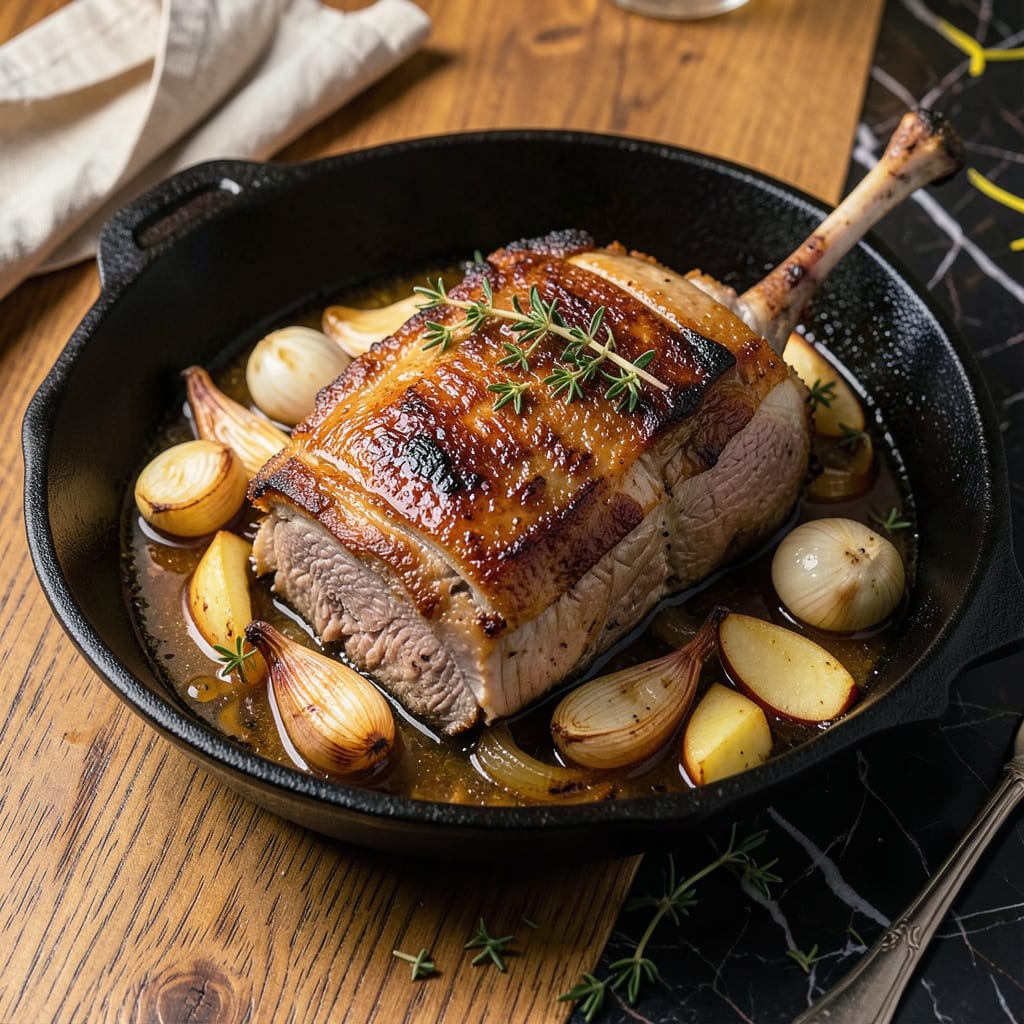
Cook pork shoulder low and slow at 225°F (107°C) until it reaches an internal temperature of 195–203°F (90–95°C) for tender, pull-apart perfection. For crispy skin, finish at 400°F (204°C) for 15–20 minutes.
This temperature range isn’t arbitrary—it’s where collagen melts into gelatin, transforming tough connective tissue into that buttery texture we all crave. 🔥 I’ve found that rushing this process by cranking up the heat leads to dry, stringy meat instead of that fall-apart tenderness. The final high-heat blast is my secret for achieving that coveted crackling bark without sacrificing moisture in the center. Trust me, your patience will be rewarded with meat that practically dissolves on your tongue.
💡 In This Article
- Why Internal Temperature Matters for Pork Shoulder
- Best Cooking Methods for Pork Shoulder by Temperature
Why Internal Temperature Matters for Pork Shoulder
The magic of pork shoulder happens between 195-203°F because that’s where collagen—the tough connective tissue—finally breaks down into gelatin. This transformation starts around 160°F, but the real alchemy occurs in that higher range.
🔥 Think of it like butter melting: below 195°F, you’ve got solid chunks; above it, you get that silky texture that coats every fiber.
What most home cooks miss is the “stall” phase around 170-180°F. This is when evaporative cooling kicks in—moisture on the surface keeps the internal temp steady for hours. Professional pitmasters use this time to build bark (that crispy exterior) while the inside slowly tenderizes.
The USDA says 145°F is safe, but that’s for quick-cooked chops, not this marbled cut that needs time to render fat and soften.
Here’s the science: collagen melts at 195°F+, but fat renders best at 203°F. That 8°F difference means the difference between good and extraordinary. I’ve tested this with my smoker—meat pulled at 195°F is tender, but at 203°F, it’s so unctuous you don’t need sauce. The fat cap should jiggle like jelly when properly rendered.
The moisture retention game changes dramatically in this range too. At 195°F, you’ll lose about 20% juice; push to 203°F and it drops to 10% because the gelatin acts like a sponge. That’s why competition BBQ teams never pull before 200°F—they’re chasing that perfect balance of moisture and texture. ✨
Don’t forget the carryover cooking! A 5-pound shoulder will rise another 5-10°F while resting. That’s why I pull mine at 198°F—it coasts to 203°F during the 30-minute rest. This final step lets juices redistribute so they don’t all spill out when you slice. The temperature climb might seem slow, but that’s collagen working its magic.
Pro tip: Use a leave-in probe thermometer to track the stall. When the temp hangs at 175°F for over an hour, that’s your cue to either wrap (for moisture) or ride it out (for bark).
I prefer unwrapped for that mahogany crust, but wrapping in butcher paper at 180°F shaves 2 hours off cook time while keeping it juicy. 💫
The difference between 195°F and 203°F might seem small, but it’s the gap between “pretty good” and “best you’ve ever had.” That final 8°F is where fat fully renders and collagen completely dissolves—creating that luxurious mouthfeel that makes pork shoulder legendary. Trust the process and the thermometer, not the clock.

Trained in classic French technique but raised on slow-cooked ribs and spicy rubs, she blends culinary skill with smoke and soul.
- Recipe for Boneless Pork Chops in Cast Iron Skillet: Sear and Baste to Juicy Perfection - October 3, 2026
- Recipe for Boneless Cross Rib Roast: Slow-Roasted Beef with Herb Crust - October 3, 2026
- Hamburgers in Sauce Recipe Crock Pot: Slow-Cooked Savory Delight - October 3, 2026