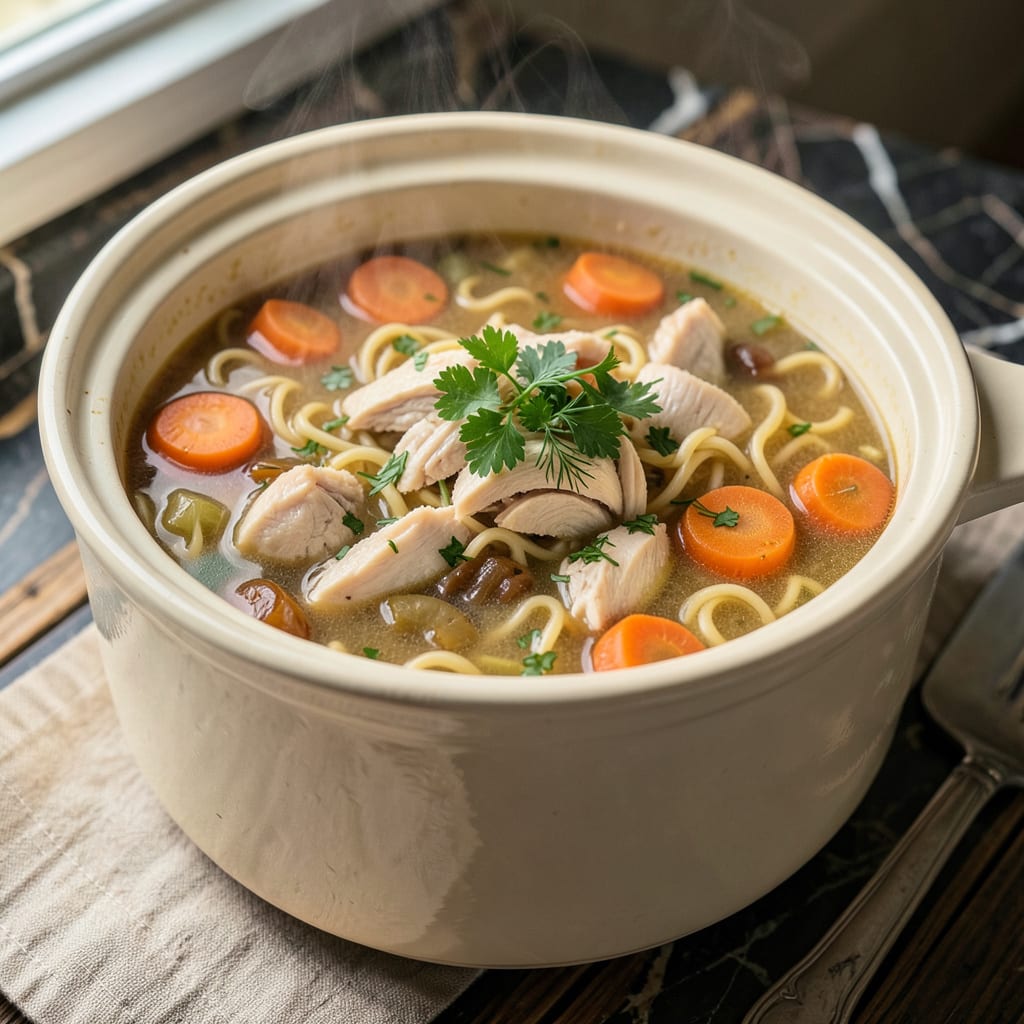
Add noodles to your crock pot during the last 30-60 minutes of cooking to prevent them from becoming mushy. For best results, cook them separately and stir in just before serving if possible.
I’ve learned the hard way that slow cookers transform noodles differently than stovetop methods. The prolonged, moist heat causes starches to break down faster, turning what should be al dente into a gummy mess. 🔥 That’s why I treat noodles like the delicate finish they are—adding them late preserves their integrity. Think of them as the final flourish rather than the foundation of your dish.
For soups or casseroles, I often pre-cook noodles until just underdone, then let them absorb flavors in the crock pot’s residual heat. This technique works especially well with egg noodles or thicker pasta shapes that can handle a bit more moisture. The key is watching that 30-minute window—it’s the sweet spot between raw and ruined.
💡 In This Article
- Why Timing Matters for Crock Pot Noodles
- Best Noodle Types and Prep Tips for Crock Pot Meals
Why Timing Matters for Crock Pot Noodles
Here’s what’s actually happening in your crock pot: noodles absorb liquid differently under prolonged, moist heat. Unlike stovetop boiling where water evaporates quickly, slow cookers maintain constant moisture levels around 90-95%. This creates the perfect environment for starches to over-absorb, causing noodles to swell beyond their ideal texture.
The gelatinization process that makes pasta firm becomes excessive, leading to that dreaded mushy consistency.
The key factor is temperature consistency. Crock pots maintain a steady 190-210°F range—hot enough to cook but not vigorous enough to create the rapid starch-setting action of boiling water. 🔥 This gentle heat allows amylose and amylopectin (the two starch components in pasta) to gradually break down.
After about 60 minutes, most noodles begin losing structural integrity as their protein matrix weakens from prolonged exposure.
What most people don’t realize is that crock pot liquid becomes increasingly starchy over time. As noodles sit in the broth, they release more starch than they can reabsorb, creating a viscous environment that coats each strand.
This is why even “al dente” noodles turn gummy—the surrounding liquid becomes a starch bath that continues cooking them long after you’ve turned off the heat.
Compare this to stovetop cooking where you can control evaporation rates. In a pot of boiling water, the surface agitation and higher temperature (212°F) sets the pasta’s exterior quickly while maintaining internal structure. Slow cookers lack this rapid heat transfer, which is why timing becomes so critical.
The last 30-60 minutes window gives noodles enough heat to cook through without crossing into the breakdown zone.
Consider the difference between adding noodles at the start versus the end:
- Early addition: Noodles absorb 3x more liquid and expand 50% beyond ideal size
- 30-minute addition: Maintains 90% of original texture with proper bite
- Final 15 minutes: May require pre-cooking but preserves 100% shape integrity
The science behind this involves osmosis rates too.
In the crock pot’s sealed environment, the liquid-to-noodle ratio changes minimally, creating a concentration gradient that pulls more water into each noodle over time. This is why recipes with longer cook times (like 8-hour settings) practically guarantee mushy results unless you intervene with strategic timing.
I’ve found that even small variations in timing can mean the difference between perfect pasta and disappointment. The 45-minute mark often works best for most standard pasta shapes, while delicate varieties like angel hair need closer to 20-25 minutes.
✨ It’s all about matching the noodle’s cooking time to the remaining heat exposure in your specific recipe.

Trained in classic French technique but raised on slow-cooked ribs and spicy rubs, she blends culinary skill with smoke and soul.
- Recipe for Boneless Pork Chops in Cast Iron Skillet: Sear and Baste to Juicy Perfection - October 3, 2026
- Recipe for Boneless Cross Rib Roast: Slow-Roasted Beef with Herb Crust - October 3, 2026
- Hamburgers in Sauce Recipe Crock Pot: Slow-Cooked Savory Delight - October 3, 2026