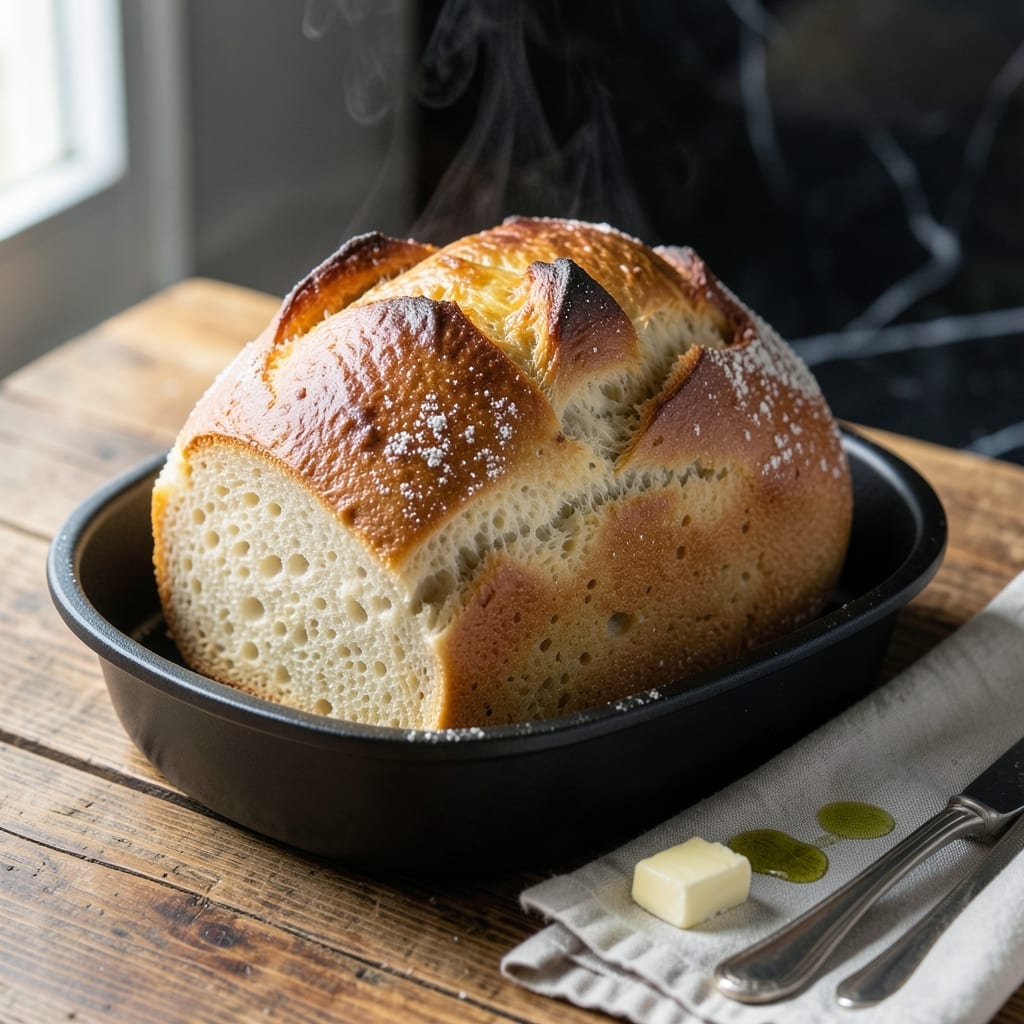
There’s something deeply satisfying about the aroma of fresh-baked bread filling your kitchen with virtually no effort. This bread maker recipe delivers a golden crust and soft, fluffy interior using basic pantry staples.
Simply add the ingredients in order, select the white bread setting, and let the machine work its magic. In about 3 hours, you’ll have a perfect loaf ready to enjoy warm from the pan.
Ingredients for White Bread Recipe for a Bread Maker
Basic pantry staples turn into warm, golden loaf magic in your machine.
| Ingredient | Amount | Notes |
|---|---|---|
| Bread Flour 🌾 | 3 ¼ cups | All-purpose works in a pinch |
| Water 💧 | 1 ¼ cups | Room temperature preferred |
| Unsalted Butter 🧈 | 2 tbsp | Softened, not melted |
| Granulated Sugar 🍚 | 2 tbsp | Feeds the yeast for rise |
| Active Dry Yeast 🍞 | 2 ¼ tsp | Or one 0.25 oz packet |
| Salt 🧂 | 1 ½ tsp | Fine sea salt or table salt |
| Nonfat Dry Milk Powder 🥛 | 2 tbsp | Adds softness and richness |
| Egg 🥚 | 1 whole | Large, room temperature |
| Honey 🍯 | 1 tbsp | Optional for slight sweetness |
| Olive Oil 🫒 | 1 tbsp | For pan greasing |
[recipe_ingredient_scaler]
The flour is the foundation here—King Arthur Bread Flour is my go-to (the higher protein content gives that perfect chew). Gold Medal or Pillsbury work too if that’s what’s in your pantry. Yeast freshness is non-negotiable: if it’s been sitting in your cupboard for over a year, grab a new packet from Walmart or Target. The butter should be soft enough to dent with your finger, but not melted (that’s a common mistake).
No bread flour? All-purpose at a 1:1 ratio works, but expect a slightly less tall loaf. Out of dry milk? Swap for 2 tbsp liquid milk and reduce water by the same amount. Skip the honey if you prefer unsweetened bread. For vegan, replace the egg with 2 tbsp applesauce and use a plant-based milk powder. The yeast can be instant or active dry—both work the same here.
Store flour in an airtight container for up to 6 months (freeze for 1 year to extend freshness). Yeast keeps in the fridge for 1-2 years unopened. Once baked, keep the loaf wrapped at room temp for 2-3 days (or slice and freeze for 3 months).
Why You’ll Love This Recipe
- I’ll be real: it uses ingredients I already have, so no extra grocery trips.
- Set and Forget: Honestly, I just dump the flour, water, butter, sugar, and yeast in the machine and let it do the work.
- Buttery Soft Crust: The unsalted butter gives it that melt-in-your-mouth texture I can’t resist.
- Sandwich Savior: Between us, this is my go-to for school lunches and quick toast breakfasts all week.
Step-by-Step Instructions for White Bread in a Bread Maker
This method delivers perfect loaves with minimal effort and maximum flavor.
Step 1: Prepare the Bread Pan and Wet Ingredients
Start by lightly greasing your bread maker pan with the 1 tbsp Olive Oil. This prevents sticking and ensures easy removal after baking. Place the pan in the machine before adding ingredients—this keeps the process neat and contained.
Add the 1.25 cups Water first, followed by the 1 whole Egg and 1 tbsp Honey. I like to crack the egg directly into the pan to avoid extra dishes. The water should be room temperature—too cold and it slows yeast activation, too hot and it kills the yeast entirely.
Step 2: Add Dry Ingredients in Order
Next, sprinkle the 2 tbsp Granulated Sugar, 1.5 tsp Salt, and 2 tbsp Nonfat Dry Milk Powder over the wet ingredients. Distribute them evenly but don’t stir—your bread maker’s paddle will handle mixing.
The sugar feeds the yeast for a consistent rise, while the milk powder adds softness and richness. Make sure the salt doesn’t directly touch the yeast, as it can inhibit activation. I create a small well in the flour for the yeast to keep them separated initially.
Step 3: Add Flour and Create a Well for Yeast
Measure the 3.25 cups Bread Flour carefully—this is the foundation of your loaf’s structure. Add it to the pan, using a spoon to level the top without compacting the flour. Bread flour’s higher protein content gives you that ideal chewy texture.
Make a small indentation in the center of the flour with your finger. This is where you’ll add the 2.25 tsp Active Dry Yeast. The well keeps the yeast dry until the machine starts mixing, which is crucial for proper activation.
Step 4: Add Butter and Start the Machine
Cut the 2 tbsp Unsalted Butter into small pieces (about ½-inch cubes) and place them in the corners of the pan. The butter should be softened but not melted—this ensures even distribution during kneading.
Select the basic white bread setting on your machine (usually a 3-4 hour cycle) and start the program. Most machines have a viewing window—you should see the paddle begin mixing within the first few minutes. If your machine has a crust setting, I recommend medium for a perfect balance between soft interior and golden crust.
Step 5: Cool and Remove the Loaf
When the cycle completes, the machine will typically beep and switch to a keep-warm setting. Let the loaf cool in the pan for 5-10 minutes—this prevents the bread from collapsing when you remove it. The internal temperature should be around 200°F when fully baked.
Gently shake the pan to loosen the loaf, then turn it out onto a wire rack. Let it cool completely (at least 1 hour) before slicing. This cooling period allows the crumb structure to set properly. Resist the temptation to cut into it too soon—the steam inside needs time to escape, or your bread will be gummy.
Pro Tips For Making White Bread Recipe For A Bread Maker
- Use Room-Temp Ingredients: Pull your water, butter, and eggs out 30 minutes before starting—I learned this the hard way after my first few loaves came out dense and uneven.
- Measure Flour Right: Scoop your bread flour into the measuring cup, then level it off, or better yet, weigh it (1 cup = 120g). Packing it in can add 20% more flour, and that’s a sure way to get a brick instead of bread.
- Check Yeast Freshness: If your active dry yeast doesn’t bubble within 5 minutes when proofed in warm water and sugar, toss it. After one failed loaf, I now test every packet—old yeast is a silent loaf killer.
- Add Butter Last: Let the bread maker mix the flour, water, sugar, and yeast first, then add butter after 5 minutes. Sounds weird, but it prevents the butter from coating the yeast and stalling the rise.
Flavor Customization for white bread recipe for a bread maker
Sweet Variations
Add 1 tbsp cinnamon and ½ cup raisins for a sweet cinnamon-raisin loaf. I also love swapping honey for 2 tbsp maple syrup and adding 1 tsp vanilla extract for a subtle sweetness boost. 💛
Savory Options
For a savory twist, add 2 tbsp grated Parmesan and 1 tsp garlic powder to the dry ingredients. Or try 1 tbsp dried herbs like rosemary or thyme for an herbed bread perfect with soups.
Whole Grain Boost
Replace 1 cup bread flour with whole wheat flour for a nuttier flavor and added fiber. The texture will be slightly denser but still soft. I sometimes add 2 tbsp ground flaxseed for extra nutrition.
Cheesy Bread
Mix in ½ cup shredded cheddar or Parmesan during the final kneading cycle. For best results, use the dough setting, then add cheese before the last knead. The cheese melts beautifully throughout the loaf.
Spiced Loaf
Add 1 tsp pumpkin pie spice for a warm, aromatic bread perfect for fall. Or try ½ tsp cardamom for a Scandinavian-inspired twist. Both pair wonderfully with butter or jam. ✨
Seed Topping
Before baking starts, sprinkle 2 tbsp sesame, poppy, or sunflower seeds on top. Press them lightly into the dough so they adhere. This adds crunch and visual appeal to your finished loaf.
Nutrition Facts
Frequently Asked Questions
What’s the best crust setting for soft bread?
Use the medium crust setting for a perfect balance of soft interior and golden exterior. Dark crust can make the edges too firm, while light may leave the bread pale and undercooked.
Can I use all-purpose flour instead of bread flour?
Yes, swap at a 1:1 ratio. Bread flour yields a taller, chewier loaf, but all-purpose works fine for a slightly denser texture. The difference is subtle for most home bakers.
Why did my loaf collapse after baking?
This usually happens if the bread wasn’t fully baked or cooled properly. Ensure the internal temperature reaches 200°F, and let it cool on a rack for at least 1 hour before slicing.
Can I add mix-ins like nuts or dried fruit?
Add up to ½ cup of mix-ins when the machine beeps during the final kneading cycle. This prevents them from being crushed or unevenly distributed.

Trained in classic French technique but raised on slow-cooked ribs and spicy rubs, she blends culinary skill with smoke and soul.
- Recipe for Boneless Pork Chops in Cast Iron Skillet: Sear and Baste to Juicy Perfection - October 3, 2026
- Recipe for Boneless Cross Rib Roast: Slow-Roasted Beef with Herb Crust - October 3, 2026
- Hamburgers in Sauce Recipe Crock Pot: Slow-Cooked Savory Delight - October 3, 2026