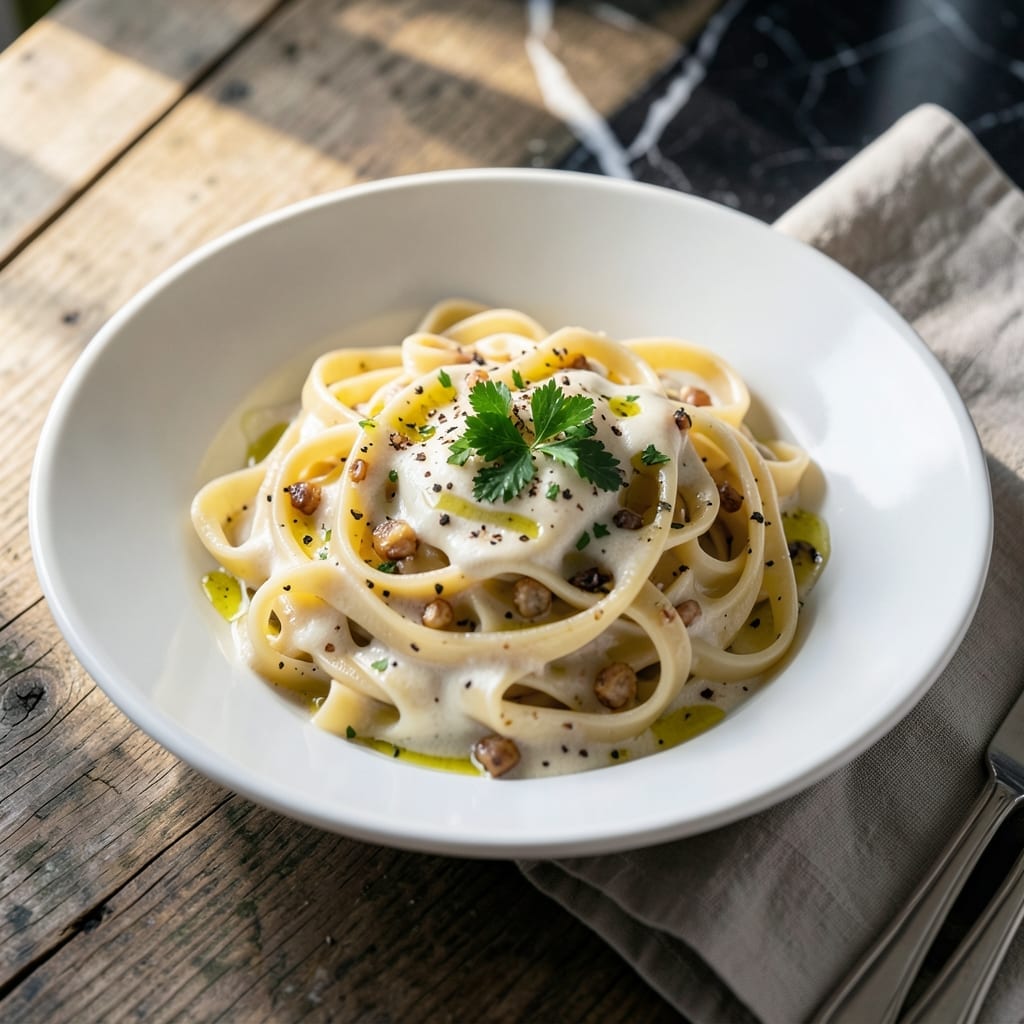
This Italian white wine pasta delivers restaurant-quality results with minimal effort. The sauce transforms simple ingredients into a light yet luxurious coating for perfectly al dente noodles.
Mastering this dish is about timing—cooking the pasta just right while building layers of flavor in the sauce. The result is elegant, comforting, and ready in under 30 minutes.
Ingredients for White Wine Sauce Pasta Recipe Italian
Restaurant-quality Italian pasta begins with these carefully selected, luxurious yet simple ingredients.
| Ingredient | Amount | Notes |
|---|---|---|
| Dry White Wine 🍷 | 1 ½ cups | Sauvignon Blanc or Pinot Grigio |
| Pasta 🍝 | 12 oz | Linguine or fettuccine preferred |
| Unsalted Butter 🧈 | ½ cup | Divided, high-quality European style |
| Shallots 🧅 | 2 whole | Finely minced for best texture |
| Garlic Cloves 🧄 | 4 cloves | Minced to release full flavor |
| Heavy Cream 🥛 | ½ cup | Full-fat for luxurious texture |
| Parmesan Cheese 🧀 | ¾ cup | Freshly grated from wedge |
| Fresh Parsley 🌿 | ¼ cup | Finely chopped for garnish |
| Kosher Salt 🧂 | 1 tsp | Plus more to taste |
| Freshly Ground Black Pepper 🌶️ | ½ tsp | Plus more to finish |
| Extra-Virgin Olive Oil 🫒 | 2 tbsp | For cooking aromatics |
| Vegetable Stock 🥫 | ½ cup | Low-sodium preferred for balance |
| Lemon Zest 🍋 | 1 tsp | Finely grated for brightness |
[recipe_ingredient_scaler]
The wine is critical—select a dry white you’d actually drink. Sauvignon Blanc or Pinot Grigio work beautifully. For the pasta, bronze-die extruded linguine or fettuccine holds sauce best. The Parmesan must be freshly grated from a wedge; pre-grated contains anti-caking agents that compromise texture. Source European-style butter (higher fat content) from Whole Foods or Trader Joe’s for optimal results.
No white wine? Dry vermouth (kept in the freezer) works in a pinch. Substitute shallots with yellow onion at a 1:1 ratio, though the flavor will be slightly sharper. Out of heavy cream? Half-and-half yields a lighter sauce. For a vegetarian boost, stir in 1/4 cup grated Pecorino Romano. The vegetable stock can be homemade or high-quality store-bought—Better Than Bouillon is excellent.
The sauce keeps 3-4 days refrigerated, though it’s best fresh. Cooked pasta can be stored separately for 2 days—toss with a little oil to prevent sticking. Freezing isn’t recommended; the cream separates. Always reserve pasta water before draining—it’s essential for adjusting sauce consistency (worth the extra minute).
Why You’ll Love This Recipe
- 20-Minute Meal: I can have this on the table faster than it takes to decide what to order for takeout.
- Buttery Garlic Depth: The shallots and garlic simmered in white wine create this rich, velvety sauce that clings to every strand of pasta.
- Date Night Ready: Honestly, it feels fancy enough for company but I make it on random Tuesdays too.
- Budget Stretcher: A bottle of dry white wine makes multiple batches, and the rest of the ingredients are pantry staples I always have.
Step-by-Step Instructions for White Wine Sauce Pasta
Master this elegant technique for a restaurant-quality dish with perfectly balanced flavors.
Step 1: Sauté Aromatics in Olive Oil and Butter
Heat 2 tbsp extra-virgin olive oil and 2 tbsp unsalted butter in a large skillet over medium heat until the butter melts and foams subsides. Add the 2 whole shallots and cook for 3-4 minutes, stirring frequently, until they soften and become translucent.
Add the 4 cloves garlic cloves and cook for an additional 30-60 seconds, just until fragrant. Be careful not to let the garlic brown, as it can turn bitter. The mixture should smell sweet and aromatic, not acrid.
Season with 1 tsp kosher salt and 0.5 tsp freshly ground black pepper at this stage to build layers of flavor from the start.
Step 2: Deglaze with White Wine and Reduce
Carefully pour in the 1.5 cups dry white wine and stir to combine with the aromatics. Increase the heat to medium-high and let the wine simmer vigorously for 5-7 minutes, or until the liquid reduces by about half.
Scrape the bottom of the skillet with a wooden spoon to incorporate any browned bits—this is where the depth of flavor develops. The wine should lose its sharp alcohol bite and take on a mellow, slightly sweet character as it reduces.
Once reduced, stir in the 0.5 cup vegetable stock and let the mixture simmer for another 2-3 minutes to meld the flavors together.
Step 3: Cook Pasta and Finish the Sauce
While the sauce simmers, cook the 12 oz pasta in a large pot of salted boiling water until al dente, about 1-2 minutes less than the package instructions. Reserve 1 cup of the pasta water before draining.
Add the 0.5 cup heavy cream to the sauce and simmer for 2 minutes until slightly thickened. Reduce the heat to low and stir in the remaining 0.25 cup unsalted butter, one piece at a time, until the sauce is smooth and glossy.
Add the drained pasta to the skillet and toss to coat, adding reserved pasta water as needed to achieve a silky consistency. The sauce should cling to the pasta without pooling at the bottom of the pan.
Step 4: Incorporate Cheese and Final Touches
Remove the skillet from heat and stir in the 0.75 cup parmesan cheese, a handful at a time, until fully melted and incorporated. The sauce should become creamy and luxurious, coating each strand of pasta evenly.
Return the skillet to low heat if needed to gently warm the sauce, but avoid high heat to prevent the cheese from separating. Stir in the 1 tsp lemon zest for a bright, citrusy note that balances the richness of the dish.
Taste and adjust seasoning with additional kosher salt or freshly ground black pepper if needed.
Step 5: Garnish and Serve Immediately
Transfer the pasta to serving plates and garnish with the 0.25 cup fresh parsley, finely chopped. The parsley adds a pop of color and a fresh, herbal contrast to the creamy sauce.
Serve immediately while the pasta is hot, as the sauce will thicken as it cools. Each serving should have a glossy, well-coated appearance with a perfect balance of richness and acidity from the wine.
Pro Tips For Making White Wine Sauce Pasta Recipe Italian
- Reduce the Wine First: Simmer the white wine for 3-4 minutes before adding butter or pasta water—this burns off the harsh alcohol and concentrates the flavor. I learned this the hard way after serving a sauce that tasted like a wine glass instead of a pasta dish.
- Mince Shallots Fine: Chop shallots into tiny, even pieces so they melt into the sauce rather than stay as crunchy bits. Sounds tedious, but it actually changes the outcome—your sauce will be silky, not chunky.
- Resist Early Salting: Wait to salt the sauce until after the wine reduces, or you risk oversalting as the liquid evaporates. My grandmother swore by this, and she was right: patience here means better control over the final taste.
- Use Pasta Water: Always reserve at least a cup of starchy pasta water to loosen the sauce—it binds the butter and wine together better than plain water or broth. I skip this when I’m lazy, but the dish is noticeably better when I don’t.
Regional Styles of This Dish
🍷 Roman Style
In Rome, white wine sauce pasta often features a delicate balance of garlic, white wine, and pecorino cheese. The sauce is light yet rich, allowing the pasta—typically spaghetti or linguine—to shine. A touch of lemon zest or fresh parsley adds brightness, reflecting the city’s love for simple, high-quality ingredients. Historically, Roman cuisine emphasizes minimalism, letting each component stand out.
🍝 Tuscan Style
Tuscany’s version leans into rustic flavors, incorporating olive oil, fresh herbs like rosemary or thyme, and sometimes mushrooms or sun-dried tomatoes for depth. The white wine sauce here is often reduced longer to intensify its flavor, pairing beautifully with pappardelle or fettuccine. Tuscan dishes celebrate the region’s agricultural roots, with a focus on local produce and hearty textures.
🍲 Venetian Style
Venice’s take on white wine sauce pasta often includes seafood, such as clams or shrimp, reflecting its coastal location. The sauce is lighter, with white wine, garlic, and a splash of lemon juice to complement the briny flavors. Linguine or spaghetti are common choices, soaking up the fragrant broth. Venetian cuisine highlights the harmony between land and sea.
🥘 Sicilian Style
In Sicily, the dish might feature capers, olives, or anchovies for a bold, tangy twist. The white wine sauce is often brightened with citrus or a hint of saffron, adding a golden hue. Sicilian pasta dishes, like bucatini, are hearty and packed with Mediterranean flavors, showcasing the island’s diverse culinary influences.
Nutrition Facts

Trained in classic French technique but raised on slow-cooked ribs and spicy rubs, she blends culinary skill with smoke and soul.
- Recipe for Boneless Pork Chops in Cast Iron Skillet: Sear and Baste to Juicy Perfection - October 3, 2026
- Recipe for Boneless Cross Rib Roast: Slow-Roasted Beef with Herb Crust - October 3, 2026
- Hamburgers in Sauce Recipe Crock Pot: Slow-Cooked Savory Delight - October 3, 2026