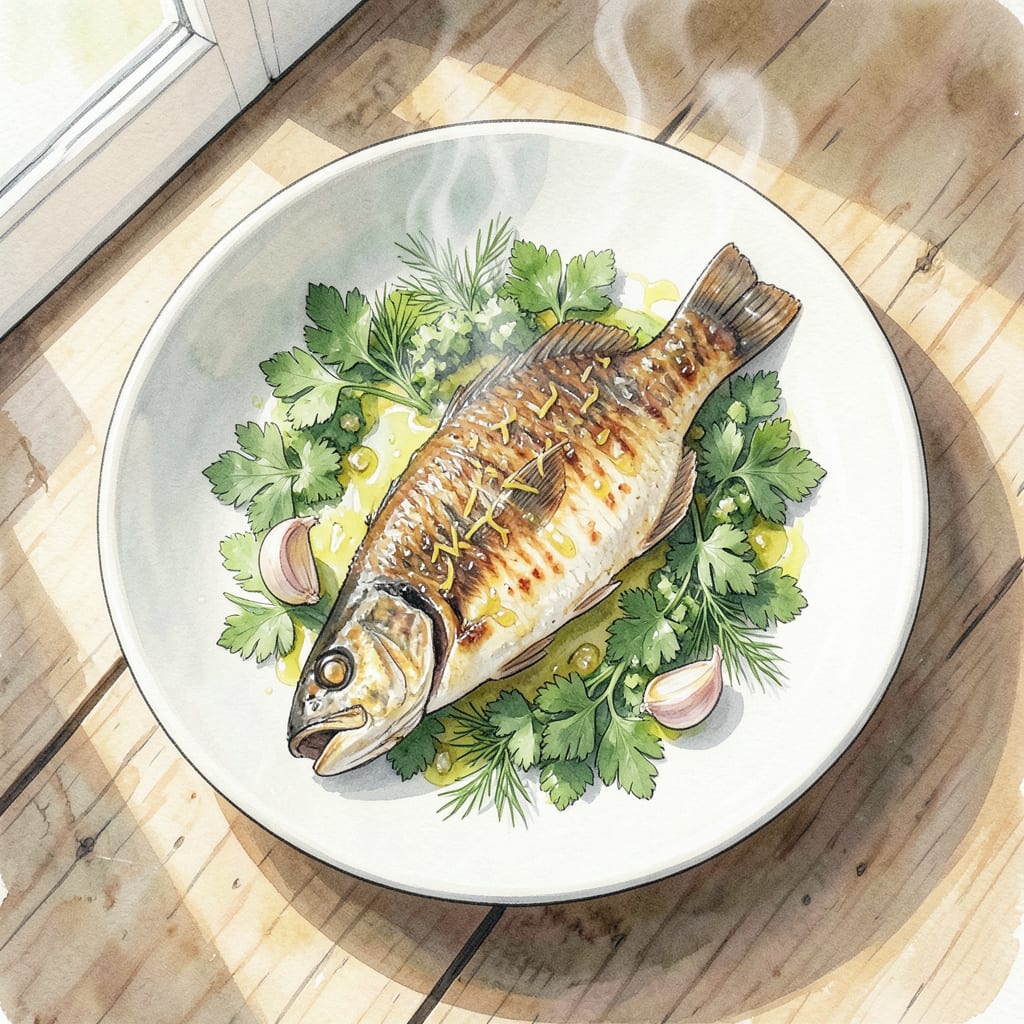
I’ve perfected cooking whole pompano with a Mediterranean twist that elevates this delicate fish to new heights. Pan-searing creates a crispy skin while locking in tender, flaky flesh. The secret lies in precise temperature control and a flavorful herb crust.
This perfect whole pompano recipe delivers restaurant-quality results at home. With simple ingredients and clear instructions, you’ll achieve a beautifully browned exterior and moist interior. Serve with roasted vegetables or a fresh salad for a complete meal.
Ingredients for Whole Pompano
Simple ingredients come together to create this restaurant-quality whole pompano dish with Mediterranean flair.
| Ingredient | Amount | Notes |
|---|---|---|
| Whole Pompano 🐟 | 2 whole | Fresh, scaled and gutted |
| Extra-Virgin Olive Oil 🫒 | ¼ cup | For pan-searing |
| Fresh Parsley 🌿 | ½ cup | Chopped, for herb crust |
| Fresh Dill 🌿 | ¼ cup | Chopped, for herb crust |
| Garlic Cloves 🧄 | 4 cloves | Minced, for herb crust |
| Lemon Zest 🍋 | 2 tbsp | Freshly grated |
| Fresh Lemon Juice 🍋 | 2 tbsp | Freshly squeezed |
| Salt 🧂 | 1 tsp | Kosher salt, divided |
| Black Pepper 🌶️ | ½ tsp | Freshly ground, divided |
| Paprika 🌶️ | ½ tsp | Smoked or sweet |
| White Wine 🍷 | ¼ cup | Dry white wine, optional |
[recipe_ingredient_scaler]
For the best results, source fresh whole pompano from a reputable fish market or high-quality supermarket. Look for bright, clear eyes and vibrant color. If pompano is unavailable, you can substitute with branzino or sea bass. Fresh herbs matter here—farmers market quality makes a difference in the herb crust.
No fresh dill? Use extra parsley or try tarragon as a substitute. For the lemon zest, use a Microplane grater for fine texture. If using white wine, dry varieties like Pinot Grigio work best. You can replace white wine with fish stock or additional lemon juice if needed.
Leftover pompano keeps for 1-2 days in the refrigerator. Store in an airtight container with any remaining pan juices. To reheat, gently warm in a skillet with a little olive oil to maintain moisture. Freezing is not recommended as it can affect texture.
Step-by-Step Instructions for Whole Pompano
Mastering this Mediterranean-inspired whole pompano recipe is easier than you think with these detailed steps.
Step 1: Prepare the Herb Crust
Start by combining the 0.5 cup Fresh Parsley, 0.25 cup Fresh Dill, and 4 cloves Garlic Cloves in a food processor. Process until the mixture is finely chopped and well combined. Transfer this herb mixture to a bowl and mix in the 2 tbsp Lemon Zest, 1 tsp Salt, 0.5 tsp Black Pepper, and 0.5 tsp Paprika. The aroma of fresh herbs mingling with citrus zest is the first sign you’re on the right track.
I like to prepare this herb crust just before cooking to maintain maximum freshness. If you’re short on time, you can make it a few hours in advance and store it in an airtight container in the refrigerator.
Step 2: Season and Crust the Pompano
Pat the 2 whole Whole Pompano dry inside and out with paper towels. This step is crucial as it helps the herb crust adhere better and promotes even cooking. Season the cavity of each fish with the remaining kosher salt and freshly ground black pepper. Then, gently spread the herb mixture evenly over both sides of the fish, making sure to get some under the skin as well for maximum flavor penetration.
The fish should be coated with the herb mixture but not overwhelmed by it. You want to see the delicate texture of the fish through the crust. At this point, the kitchen will be filled with the tantalizing aroma of herbs and citrus, building anticipation for the final dish.
Step 3: Pan-Sear the Pompano
Heat 0.25 cup Extra-Virgin Olive Oil in a large oven-safe skillet over medium-high heat until it shimmers. Carefully place the crusted pompano in the hot oil, skin side down if they have skin. Sear for 2-3 minutes on each side until you achieve a golden-brown crust. The sizzling sound and the aroma of searing fish signal that the cooking process is underway.
Transfer the skillet to a preheated oven at 400°F. If you don’t have an oven-safe skillet, transfer the fish to a baking sheet lined with parchment paper. Bake for 8-12 minutes depending on the size of the fish and your oven’s performance. The fish is done when it flakes easily with a fork and reaches an internal temperature of 145°F at the thickest part.
Step 4: Finish with White Wine and Lemon
Remove the skillet from the oven and carefully transfer the pompano to a serving platter. If using 0.25 cup White Wine, pour it into the hot skillet to deglaze, scraping up any browned bits from the pan. Add the 2 tbsp Fresh Lemon Juice to the wine mixture and simmer over medium heat for 1-2 minutes until slightly reduced. The sauce will be slightly tangy and aromatic, complementing the herb-crusted fish perfectly.
Spoon this flavorful sauce over the cooked pompano just before serving. The bright citrus notes will enhance the rich flavor of the fish, while the herbs will add a fresh, aromatic quality to the dish.
Storing and Reheating whole pompano
Refrigerator Storage
After cooking, let your whole pompano cool for no more than 2 hours before refrigerating. Store in an airtight container with any remaining pan juices to keep the fish moist. Refrigerate at 40°F or below for up to 1-2 days. ❄️
Freezer Storage
While freezing is not recommended as it can affect the delicate texture of pompano, you can freeze it if necessary. Wrap the cooled fish tightly in plastic wrap or aluminum foil, then place in a freezer-safe bag. Store in the freezer for up to 3 months. When you’re ready to eat it, thaw overnight in the refrigerator.
Reheating Methods
For best results, reheat gently to maintain moisture. Use a skillet with a little olive oil over low heat, adding the fish skin side down if it has skin. Cover and heat for 5-7 minutes until warmed through. Alternatively, reheat in a 275°F oven for 10-12 minutes. 🔥
Maintaining Quality
To preserve the delicate flavor and texture, avoid microwaving whenever possible. If you must use a microwave, heat on low power in 30-second intervals, checking frequently to prevent overcooking. Add a splash of lemon juice or white wine before reheating to help maintain moisture.
Serving After Reheating
Once reheated, serve immediately with fresh herbs and a squeeze of lemon juice. The remaining pan sauce from the original cooking can be reheated separately and spooned over the fish for added flavor. Consider adding a simple green salad or roasted vegetables to complete the meal.
Nutrition Facts

Trained in classic French technique but raised on slow-cooked ribs and spicy rubs, she blends culinary skill with smoke and soul.
- Recipe for Boneless Pork Chops in Cast Iron Skillet: Sear and Baste to Juicy Perfection - October 3, 2026
- Recipe for Boneless Cross Rib Roast: Slow-Roasted Beef with Herb Crust - October 3, 2026
- Hamburgers in Sauce Recipe Crock Pot: Slow-Cooked Savory Delight - October 3, 2026