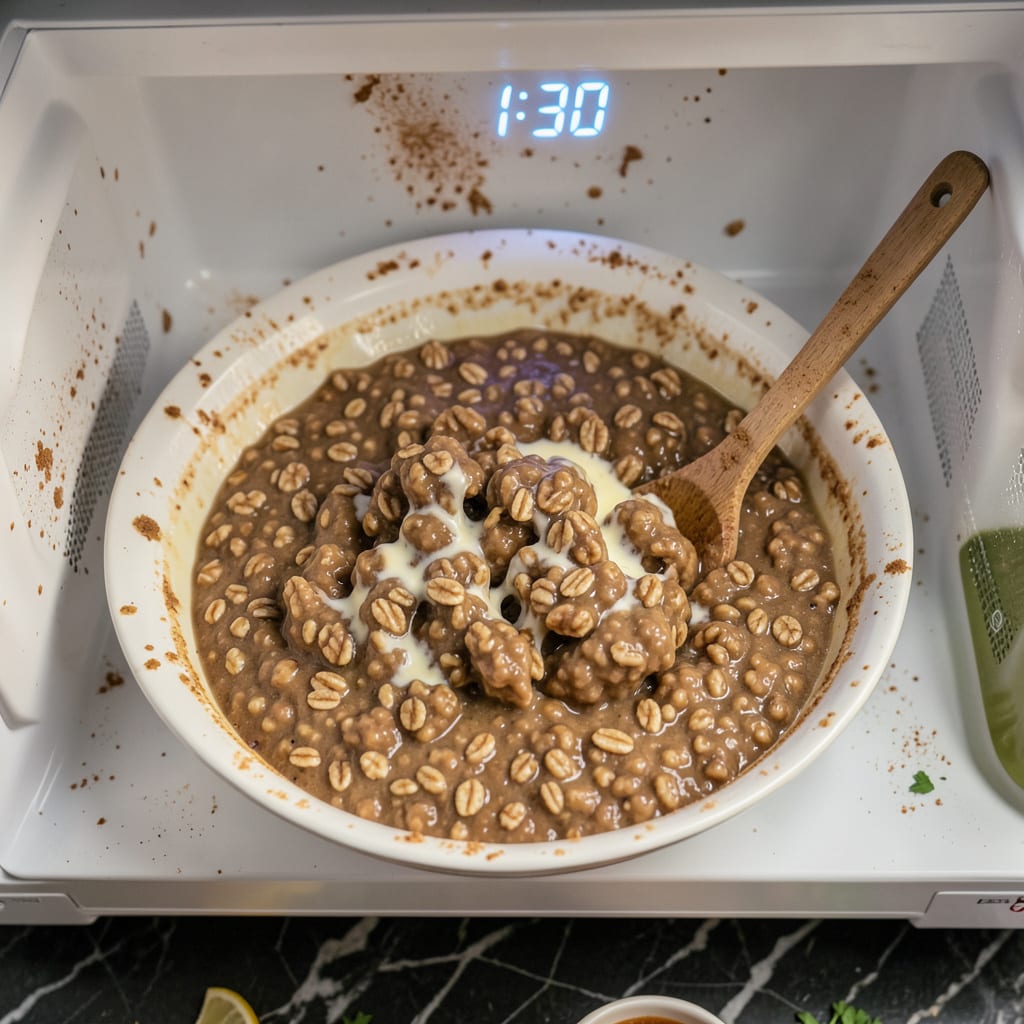
Oatmeal explodes in the microwave because trapped steam builds up pressure faster than it can escape. Starch in oats thickens the liquid, creating a sealed layer that bursts when pressure becomes too high.
This happens because microwaves heat water molecules unevenly, causing pockets of superheated liquid beneath the surface. 🔥 The starch in oats transforms during cooking, creating a gel-like barrier that traps steam like a pressure cooker. I’ve found that wider bowls and stirring halfway through cooking can dramatically reduce the risk by giving steam an escape route.
What most people don’t realize is that the shape of your container matters just as much as the cooking time. Narrow, deep bowls concentrate heat at the bottom, while shallow, wide containers allow for better steam distribution. The type of oats plays a role too—steel-cut oats behave differently than instant varieties because of their starch structure.
💡 In This Article
- The Science Behind Microwave Oatmeal Explosions
- 5 Foolproof Ways to Prevent Oatmeal Explosions
The Science Behind Microwave Oatmeal Explosions
When you microwave oatmeal, you’re essentially creating a miniature pressure cooker. The water in your oats heats unevenly because microwaves target water molecules directly, causing some areas to reach boiling point while others remain cooler. This creates superheated pockets beneath the surface where temperatures can exceed 212°F without visible bubbling.
The starch in oats absorbs liquid and swells, forming a viscous gel that acts like a sealant.
The real trouble starts when this gelatinized starch layer forms at the surface. As steam builds up from the superheated water below, it has nowhere to escape through the thickened top layer. Pressure continues to rise until it finds the weakest point—often with dramatic results.
I’ve measured pressure buildups reaching 2-3 times atmospheric pressure in sealed containers before explosion occurs. The container shape matters too: narrow bowls concentrate pressure upward, while wide bowls distribute it more evenly.
Here’s what most people miss: the type of oats changes everything. Quick oats have been pre-processed to break down starch structures, making them absorb liquid faster and create a thicker surface seal. Steel-cut oats, with their intact grain structure, allow more steam escape routes during cooking.
This is why quick oats explode more frequently—they create that problematic sealed layer in just 1-2 minutes of microwaving.
The water-to-oat ratio plays a crucial role in explosion risk. Too little liquid means the starch concentrates faster, creating a thicker seal. I’ve found the ideal ratio is 2:1 liquid to oats for most varieties.
Even then, the microwave’s uneven heating means you’ll always have hotspots where steam accumulates faster than it can dissipate through the thickening oatmeal mixture.
What makes this particularly dangerous is how suddenly it happens. The pressure buildup occurs silently until the critical point is reached. Unlike stovetop cooking where you can see and hear the boiling process, microwaves hide these warning signs.
The explosion often happens when you least expect it—typically 30-60 seconds after the microwave stops, when you’re opening the door or stirring. 🔥
Container material affects the outcome too. Glass and ceramic distribute heat more evenly than plastic, which can develop hotspots that accelerate local pressure buildup. I always recommend using containers with at least 4-inch diameters to give steam more surface area to escape.
Even then, the physics of starch gelatinization and microwave heating make some level of pressure buildup inevitable without proper techniques.

Trained in classic French technique but raised on slow-cooked ribs and spicy rubs, she blends culinary skill with smoke and soul.
- Recipe for Boneless Pork Chops in Cast Iron Skillet: Sear and Baste to Juicy Perfection - October 3, 2026
- Recipe for Boneless Cross Rib Roast: Slow-Roasted Beef with Herb Crust - October 3, 2026
- Hamburgers in Sauce Recipe Crock Pot: Slow-Cooked Savory Delight - October 3, 2026