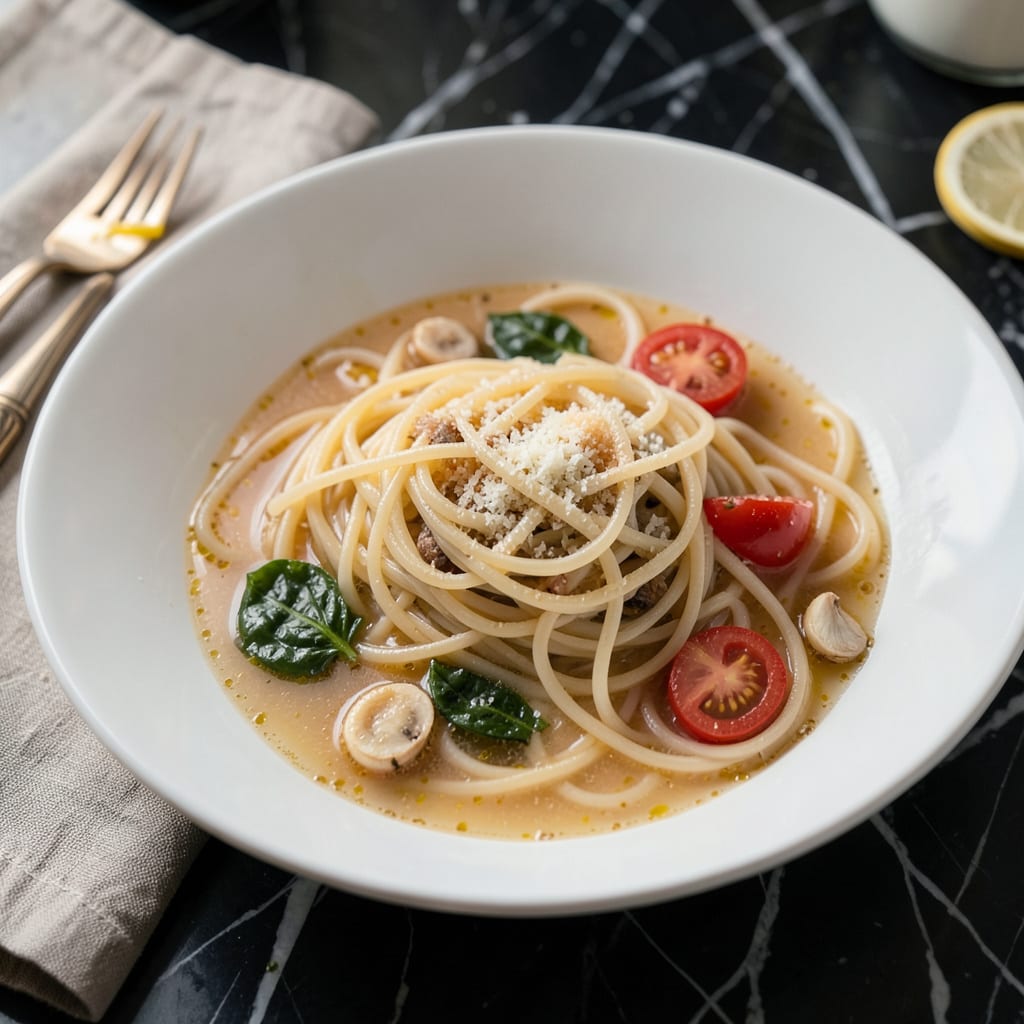
Watery spaghetti usually happens when you use too much water, don’t salt it properly, or drain it incorrectly. Overcooking or rinsing the pasta can also release excess starch, making it soggy instead of perfectly al dente.
I’ve seen this happen most often when the pasta-to-water ratio is off—think of it like a crowded pool where everyone’s bumping into each other. 🔥 The starch molecules get agitated and leak out, creating that unwanted slimy texture. Another common mistake? Skipping the salt, which actually helps control how much water the pasta absorbs. Even the timing matters: pull it out a minute early, and you’ll preserve that ideal bite while avoiding the mushy aftermath.
What many don’t realize is that rinsing pasta washes away the very starch that helps sauce cling—so unless you’re making a cold dish, skip the rinse entirely. ✨
💡 In This Article
- Why Spaghetti Absorbs Too Much Water During Cooking
- How to Fix and Prevent Watery Spaghetti Every Time
Why Spaghetti Absorbs Too Much Water During Cooking
When pasta hits boiling water, the starch granules inside begin to swell and gelatinize. This process is essential for achieving that ideal al dente texture, but it can go wrong quickly.
The key factor is the pasta-to-water ratio—too little water (less than 4 quarts per pound) creates a crowded environment where starch molecules collide and leak out excessively, turning your water into a thick, gluey broth. 🔥
Salt plays a surprising role here. Adding 1-2 tablespoons of salt per gallon of water doesn’t just season the pasta—it actually strengthens the gluten network in the wheat. This creates a more resilient structure that resists over-hydration. Without enough salt, the pasta becomes like a sponge, absorbing water uncontrollably.
I’ve seen this firsthand when testing different salt levels—the difference in texture is dramatic.
The cooking time matters more than you think. Pasta continues to absorb water the longer it boils, with the outer layers breaking down first. After about 8-10 minutes (for most spaghetti), the structure starts to collapse if left in the water.
The starch that gives sauce its clinging power begins leaking into the water instead of staying on the surface where it belongs. This is why timing is everything—pull it out when it’s still slightly firm in the center.
Here’s what most people don’t realize about rinsing: that post-cooking rinse washes away the very starch that should be helping your sauce adhere. Unless you’re making a cold pasta salad, rinsing creates a double problem—it removes flavor and leaves your pasta with nothing to grab onto the sauce. The water you’re trying to remove?
You’re actually adding more by rinsing, as the pasta reabsorbs some of that rinse water. ✨
Temperature shocks can also contribute to waterlogging. Adding pasta to water that’s not at a full rolling boil causes uneven cooking and excessive starch release. The ideal scenario is dropping pasta into water at 212°F and maintaining that temperature throughout cooking. Any fluctuation can lead to that dreaded mushy texture we’re all trying to avoid.
Consider this comparison: properly cooked spaghetti should have a thin layer of starch on its surface—just enough to help sauce cling but not so much that it creates a gummy texture. When you see cloudy water in your pot, that’s a sign you’ve crossed the line into starch overload.
The solution isn’t just in the cooking—it’s in understanding these fundamental interactions between water, starch, and heat. 💫

Trained in classic French technique but raised on slow-cooked ribs and spicy rubs, she blends culinary skill with smoke and soul.
- Recipe for Boneless Pork Chops in Cast Iron Skillet: Sear and Baste to Juicy Perfection - October 3, 2026
- Recipe for Boneless Cross Rib Roast: Slow-Roasted Beef with Herb Crust - October 3, 2026
- Hamburgers in Sauce Recipe Crock Pot: Slow-Cooked Savory Delight - October 3, 2026