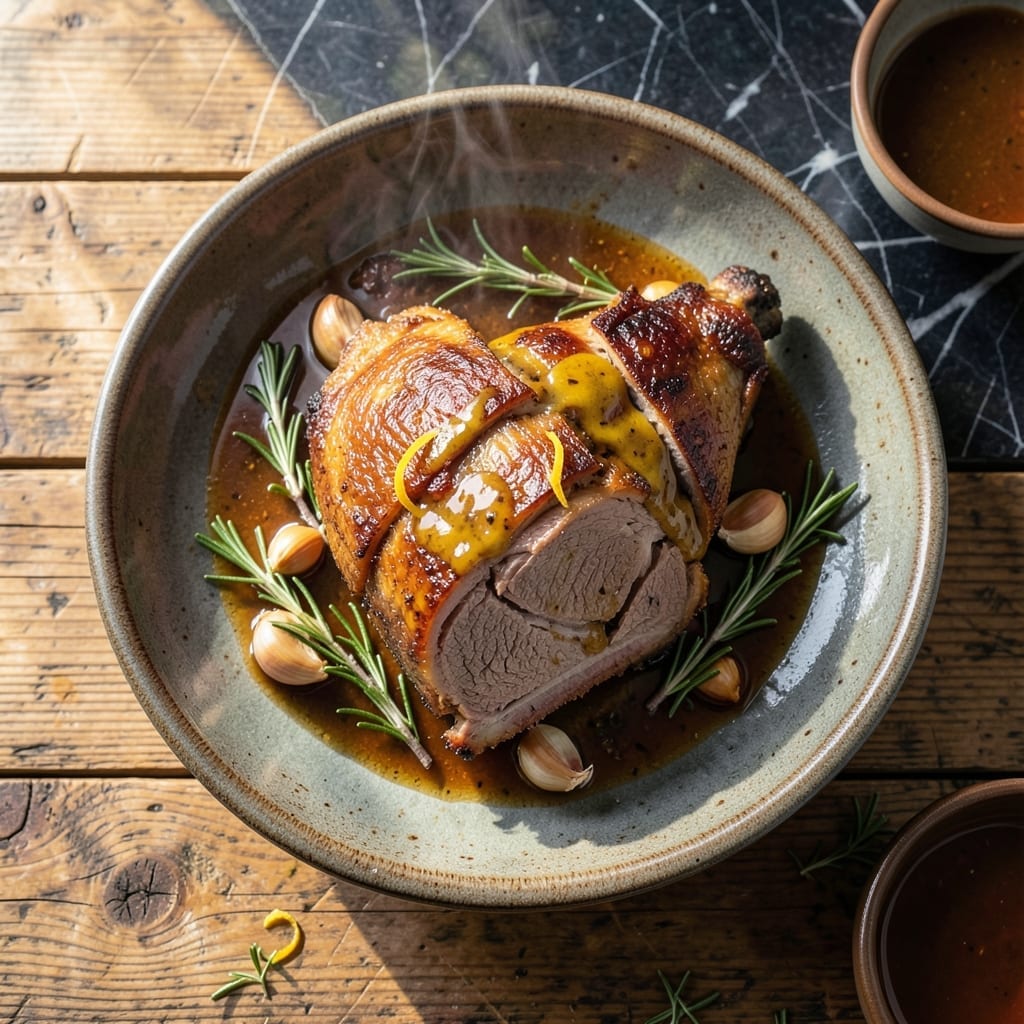
Wild boar offers a rich gamey flavor that transforms beautifully with the right approach. My French training taught me how to balance bold meats with herbs, and this roast proves that lesson perfectly.
This method uses a simple herb crust to complement the meat’s natural intensity without overpowering it. The slow roasting process ensures the boar remains tender while developing a crispy golden exterior.
What emerges from the oven is a centerpiece worthy of any special occasion. The herb crust creates a fragrant seal that locks in juices, delivering a succulent result with every bite.
Serve with roasted root vegetables to complete the meal. Here’s how to prepare it at home.
Ingredients for Wild Boar Roast
Rich, bold, and beautifully balanced—these ingredients let the wild boar shine.
| Ingredient | Amount | Notes |
|---|---|---|
| Wild Boar Shoulder Roast 🐗 | 3 lb | Bone-in preferred for flavor |
| Fresh Rosemary Sprigs 🌿 | 4 whole | Leaves stripped from stems |
| Fresh Thyme Sprigs 🍃 | 6 whole | Leaves stripped from stems |
| Garlic Cloves 🧄 | 6 cloves | Minced finely for crust |
| Dijon Mustard 🟡 | 3 tbsp | Whole grain preferred |
| Extra-Virgin Olive Oil 🫒 | ¼ cup | High-quality for richness |
| Kosher Salt 🧂 | 2 tsp | Diamond Crystal brand preferred |
| Black Pepper 🌶️ | 1 tsp | Freshly cracked for best flavor |
| Juniper Berries 🫒 | 1 tsp | Lightly crushed for depth |
| Red Wine 🍷 | 1 cup | Dry variety for deglazing |
| Chicken Stock 🥣 | 1 cup | Low-sodium for control |
| Carrots 🥕 | 3 whole | Peeled and chopped |
| Celery Stalks 🥬 | 2 whole | Trimmed and chopped |
| Yellow Onion 🧅 | 1 whole | Diced finely for aromatics |
[recipe_ingredient_scaler]
The boar is the star here. Wild Fork Foods or a specialty butcher are your best bets—look for deep red color and good marbling. If you’re lucky enough to have a local hunter, even better (just ensure it’s properly aged). The herb crust needs fresh rosemary and thyme—Whole Foods has great quality, but a home garden works too. Don’t skimp on the juniper berries; they add that classic gamey depth.
No wild boar? Pork shoulder gets you 80% there—just reduce the cooking time by a third. Fresh herbs are ideal, but dried at one-third the amount works in a pinch. The red wine can be swapped for beef broth plus a splash of balsamic. If you’re missing juniper berries, a touch of gin (yes, really) adds a similar piney note. The Dijon mustard is non-negotiable though—it’s what binds the crust.
The roast can rest for up to 2 hours before carving—it actually gets better as it sits. Leftovers keep 4-5 days in the fridge or 3 months frozen. Reheat gently in the oven to preserve that crispy crust (microwave kills the texture).
Why You’ll Love This Recipe
- Set It and Forget: I rub the boar shoulder with Dijon, rosemary, thyme and garlic, then let the oven do all the work for hours.
- Unami Bomb: The wild boar soaks up every bit of that rosemary-thyme-garlic crust, making each bite ridiculously rich and deep.
- Sunday or Tuesday: Honestly, this feels fancy enough for a holiday but I’ve made it on a random Wednesday just because.
- Leftovers for Days: One roast feeds us for two meals, and the shredded meat makes killer sandwiches the next day.
Step-by-Step Instructions for Wild Boar Roast
Here’s the method. Straightforward, tested, works every time.
Step 1: Prepare the Herb Crust and Vegetable Base
Strip the leaves from the 4 whole fresh rosemary sprigs and 6 whole fresh thyme sprigs, then finely chop them. In a small bowl, combine the chopped herbs with the 6 cloves garlic cloves (minced), 3 tbsp Dijon mustard, 0.25 cup extra-virgin olive oil, 2 tsp kosher salt, 1 tsp black pepper, and 1 tsp juniper berries (lightly crushed). This creates a fragrant paste that will form a flavorful crust on the roast.
In a roasting pan, arrange the 3 whole carrots (peeled and chopped), 2 whole celery stalks (trimmed and chopped), and 1 whole yellow onion (diced finely) in an even layer. These vegetables will serve as a bed for the roast and infuse the dish with additional flavor.
Step 2: Sear and Coat the Wild Boar Roast
Pat the 3 lb wild boar shoulder roast dry with paper towels to ensure a good sear. Heat a large skillet over medium-high heat and sear the roast on all sides until deeply browned, about 3-4 minutes per side. This step builds a rich, caramelized crust that enhances the meat’s natural flavors.
Transfer the roast to the roasting pan on top of the vegetables. Brush the herb paste all over the surface of the roast, ensuring it is evenly coated. Let the paste sit on the meat for 10 minutes to allow the flavors to penetrate before roasting.
Step 3: Roast to Perfection
Preheat your oven to 325°F. Place the roasting pan in the oven and roast the wild boar for 2 to 2.5 hours, or until the internal temperature reaches 160°F on a meat thermometer. Baste the roast with the pan juices every 30 minutes to keep it moist and enhance the flavor.
The roast is done when the meat is tender and the crust is a deep, golden brown. The aroma of the herbs and garlic will fill your kitchen, signaling that the dish is nearing completion.
Step 4: Deglaze and Create the Pan Sauce
Remove the roast from the oven and transfer it to a cutting board, tenting it loosely with foil to rest for 15 minutes. Place the roasting pan on the stovetop over medium heat, and add the 1 cup red wine. Use a wooden spoon to scrape up the browned bits from the bottom of the pan.
Let the wine reduce by half, then add the 1 cup chicken stock and simmer for another 5 minutes until the sauce has slightly thickened. Strain the sauce if desired, or leave the vegetables in for a rustic presentation. Serve the sauce alongside the sliced roast.
Pro Tips For Making Wild Boar Roast
- Score the Fat Cap: Cut deep crosshatches into the boar’s fat cap before seasoning—this lets the rosemary, thyme, and Dijon mustard penetrate while rendering out tough fat.
- Low and Slow Wins: Wild boar dries out fast at high heat; I learned this the hard way after ruining two roasts. Keep it at 275°F until it hits 195°F internal.
- Marinate Overnight: Rub the boar with crushed garlic, mustard, and herbs the night before. Sounds like extra work, but it actually changes the outcome.
- Let It Rest: Give it a solid 20-30 minutes under foil after roasting—this keeps the juices from running all over the cutting board when you slice.
Best Sauces and Condiments for This wild boar roast
Juniper Berry Sauce
I love making a juniper-infused reduction to complement the boar’s gamey notes. Simmer 1 cup red wine with 1 tsp crushed juniper berries, 2 tbsp balsamic vinegar, and 1 tbsp honey until reduced by half. The piney aroma pairs perfectly with the herb crust. 💫
Rosemary Mustard Cream
A creamy sauce balances the richness beautifully. Whisk ½ cup crème fraîche with 1 tbsp Dijon mustard and 1 tbsp chopped fresh rosemary. I add a splash of the pan drippings for extra depth.
Wild Mushroom Gravy
For an earthy touch, sauté 8 oz wild mushrooms in the roasting pan after removing the meat. Add 1 cup chicken stock, simmer until thickened, then finish with 1 tbsp butter for silkiness.
Cherry Port Reduction
This sweet-tart sauce cuts through the fat. Combine 1 cup port wine, ½ cup dried cherries, and 1 tbsp thyme leaves. Reduce until syrupy—about 15 minutes on medium-low heat. 🍒
Herb Butter Finish
Mix 4 tbsp softened butter with leftover herb crust paste. Dollop on sliced meat just before serving. The butter melts into the roast, creating a luxurious finish.
Spiced Apple Compote
For a fruity contrast, cook 2 diced apples with 1 cinnamon stick, 1 star anise pod, and ¼ cup brown sugar until tender. The warmth complements the boar’s depth.
Nutrition Facts
Frequently Asked Questions
How long should I rest the roast before serving?
Let it rest 15 minutes after roasting. This allows juices to redistribute for a moist, tender result. Skipping this step can lead to dry meat.
Can I use pork shoulder instead of wild boar?
Yes, but reduce cooking time by 1/3. Pork shoulder lacks the gamey depth but still works well with the herb crust and pan sauce.
What’s the best internal temperature for doneness?
Aim for 160°F on a meat thermometer. This ensures tenderness while keeping the meat safe to eat. Overcooking can make it tough.
How do I prevent the herb crust from burning?
Tent the roast with foil if the crust browns too quickly. The 325°F oven temperature should prevent burning, but foil adds protection.

Trained in classic French technique but raised on slow-cooked ribs and spicy rubs, she blends culinary skill with smoke and soul.
- Recipe for Boneless Pork Chops in Cast Iron Skillet: Sear and Baste to Juicy Perfection - October 3, 2026
- Recipe for Boneless Cross Rib Roast: Slow-Roasted Beef with Herb Crust - October 3, 2026
- Hamburgers in Sauce Recipe Crock Pot: Slow-Cooked Savory Delight - October 3, 2026