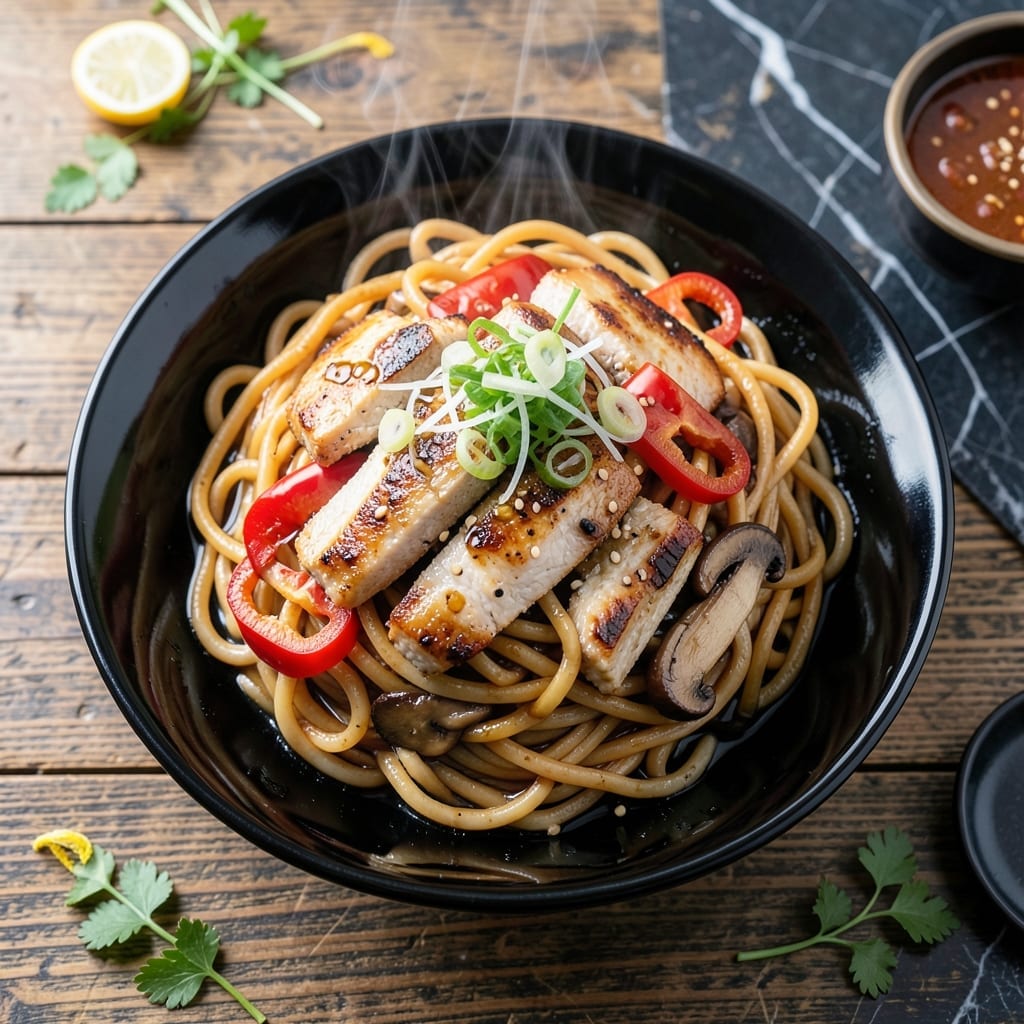
I’ve recreated Wagamama’s signature yaki udon with a sweet-savory glaze that clings to every chewy noodle. The dish balances tender udon, crisp vegetables, and a glossy sauce that’s both rich and perfectly balanced.
Stir-frying over high heat is key to achieving the restaurant’s characteristic smoky depth. The sauce—a blend of soy, mirin, and oyster sauce—caramelizes slightly, coating each strand without weighing it down.
This version stays true to the original while using simple, accessible ingredients. The udon absorbs the sauce beautifully, and the vegetables retain a satisfying crunch.
Ready in under 30 minutes, it’s a quick way to bring authentic Japanese flavors to your kitchen. Here’s how to make it.
Ingredients for Yaki Udon Recipe Wagamama
Fresh noodles, crisp veggies, and a glossy sauce that delivers restaurant-quality flavor at home.
| Ingredient | Amount | Notes |
|---|---|---|
| Udon Noodles 🍜 | 20 oz | Fresh or frozen, not dried |
| Soy Sauce 🫒 | ⅓ cup | Low-sodium preferred for balance |
| Mirin 🍶 | ¼ cup | Sweet rice wine, essential |
| Oyster Sauce 🫒 | 3 tbsp | Vegetarian oyster sauce if needed |
| Brown Sugar 🍚 | 2 tbsp | Light or dark works fine |
| Sesame Oil 🫒 | 1 ½ tbsp | Toasted for nutty depth |
| Vegetable Oil 🫒 | 2 tbsp | High smoke point for stir-frying |
| Garlic Cloves 🧄 | 4 cloves | Minced finely for even flavor |
| Fresh Ginger 🌿 | 1 tbsp | Grated, adds bright zing |
| Red Bell Pepper 🌶️ | 1 whole | Thinly sliced for crunch |
| Carrots 🥕 | 2 whole | Julienned or thinly sliced |
| Green Cabbage 🥬 | 2 cups | Thinly shredded for texture |
| Green Onions 🧅 | 3 whole | Sliced, white and green parts |
| Sesame Seeds 🌾 | 2 tbsp | Toasted for garnish |
[recipe_ingredient_scaler]
The udon noodles are non-negotiable here—fresh or frozen from an Asian market (like H Mart or Uwajimaya) gives you that chewy texture dried just can’t match. Look for vacuum-sealed packs in the refrigerated section. Mirin and oyster sauce might be in the international aisle, but Kikkoman and Lee Kum Kee are reliable, widely available brands. Don’t skip the toasted sesame oil—it’s what gives the dish its signature nutty aroma.
No oyster sauce? Vegetarian oyster sauce (made from mushrooms) works perfectly here. Mirin can be swapped for 1 tbsp sugar plus 1 tbsp rice vinegar in a pinch. Fresh ginger is ideal, but ground ginger at half the amount gets you close. For the veggies, broccoli or snap peas can stand in for the cabbage. The sauce is forgiving—taste as you go and adjust the sugar or soy to your liking.
Fresh udon keeps in the fridge for 1-2 days max—use it fast. The sauce can be pre-mixed and stored for up to 5 days (the flavors meld beautifully). Leftovers reheat well in a skillet with a splash of water, but they’re best fresh. Don’t freeze the cooked dish—the noodles turn mushy.
Why You’ll Love This Recipe
- One Pan Wonder: I love how it all comes together in a single skillet with just udon noodles, soy sauce, and mirin—minimal cleanup, maximum flavor.
- Sweet-Savory Magic: The brown sugar caramelizes with the oyster sauce and soy, creating that sticky, umami-rich coating that’s honestly addictive.
- Feeds the Crew: Between us, it’s my go-to for feeding a crowd or meal prepping—hearty, filling, and everyone asks for seconds.
- Budget Keeper: Udon noodles stretch far, and the sauce ingredients are pantry staples. I’ll be real: it’s a wallet-friendly dinner that never disappoints.
Step-by-Step Instructions for Yaki Udon Stir-Fried Noodles
Here’s my tested method for achieving that signature sweet-savory wagamama-style glaze and perfect texture.
Step 1: Prepare and Cook the Udon Noodles
Bring a large pot of water to a rolling boil. Add the 20 oz udon noodles and cook according to package instructions, usually 2-3 minutes for fresh or frozen. You want them just shy of fully done—they’ll finish cooking in the pan later.
Drain the noodles in a colander and rinse immediately under cold water to stop the cooking process. This removes excess starch that could make your stir-fry gummy. Shake off as much water as possible, then toss with 1 tbsp of the sesame oil to prevent sticking. The noodles should be slippery, not dry.
Step 2: Create the Yaki Udon Sauce Base
In a small bowl, whisk together the 0.33 cup soy sauce, 0.25 cup mirin, 3 tbsp oyster sauce, and 2 tbsp brown sugar. Stir until the sugar completely dissolves—this should take about 1 minute of vigorous whisking.
I like to taste the sauce at this point and adjust if needed. The balance should be sweet-savory with a hint of umami depth. If it tastes too sharp, a pinch more sugar will help. Set this aside while you prepare the vegetables—it’ll develop more complexity as it sits.
Step 3: Stir-Fry the Aromatics and Vegetables
Heat the 2 tbsp vegetable oil in a large wok or skillet over medium-high heat until it shimmers. Add the 4 cloves garlic cloves and 1 tbsp fresh ginger, stirring constantly for 30 seconds until fragrant. Don’t let them brown—burnt garlic turns bitter.
Add the red bell pepper, carrots, and 2 cups green cabbage. Stir-fry for 4-5 minutes until the vegetables are tender-crisp. The bell pepper should start to soften but still have some bite, and the cabbage should wilt slightly while retaining its vibrant color.
Step 4: Combine Noodles and Sauce for the Final Cook
Add the cooked udon noodles to the wok, breaking up any clumps with your spatula. Pour the prepared sauce over everything and add the remaining 0.5 tbsp sesame oil. Toss vigorously for 2-3 minutes until the noodles are evenly coated and heated through.
The sauce should gloss the noodles beautifully, clinging to each strand without pooling at the bottom. If it seems too thick, add a splash of water. If too thin, let it cook down for another 1-2 minutes. The noodles should be tender with a slight chew, not mushy.
Step 5: Finish and Serve with Garnishes
Remove from heat and stir in the 3 whole green onions, reserving some for garnish. Transfer to serving plates and sprinkle with the 2 tbsp sesame seeds. The seeds should be toasted until golden for maximum nutty flavor—this takes about 2 minutes in a dry pan.
Serve immediately while hot. Each plate should have a mix of glossy noodles, vibrant vegetables, and that distinctive wagamama-style glaze. The flavors will meld further as it sits, but it’s best enjoyed fresh from the pan.
Pro Tips For Making Yaki Udon Recipe Wagamama
- Pre-Boil Udon: I learned this the hard way—parboil the udon for 1-2 minutes before stir-frying to remove excess starch and prevent gummy clumps. Drain well and toss with a little oil to keep them separated.
- Bloom the Sauces: Heat the soy sauce, mirin, and oyster sauce together for 30 seconds before adding to the noodles. This mellows the raw edge of the alcohol in mirin and deepens the flavor.
- Skip the Over-Salting: Oyster sauce and soy sauce are already salty, so go light on additional salt. Taste as you go—I ruined a batch by assuming it needed more seasoning.
- Use Brown Sugar Slurry: Mix the brown sugar with a splash of warm water to dissolve before adding. This prevents grainy bits and ensures the sauce clings evenly to the noodles.
Make-Ahead Tips for Leftovers
Prep the Sauce First
The sauce is the heart of this dish and actually improves with time. I whisk together the soy sauce, mirin, oyster sauce, and brown sugar up to 24 hours ahead. Store it in an airtight container in the fridge. 💡
Noodle Prep Strategy
Fresh udon noodles can be pre-cooked 1 day ahead. After boiling and rinsing, toss them with 1 tbsp sesame oil, then refrigerate in a sealed container. This prevents sticking and maintains their chewy texture.
For frozen udon, thaw in the fridge overnight before cooking.
Chop Veggies Early
All vegetables can be prepped 1 day in advance. Store bell pepper, carrots, and cabbage in separate containers with damp paper towels to maintain crispness. The garlic and ginger can be minced together and kept in a small jar.
Day-Of Assembly
When ready to cook, remove prepped ingredients from the fridge 30 minutes early to take the chill off. The sauce will thicken slightly when cold—just whisk in 2 tbsp warm water to restore its consistency.
Leftovers Storage
While best fresh, leftovers keep well in the fridge for 3-4 days. Store in shallow containers to cool quickly. Reheat in a skillet with a splash of water to revive the noodles. ❄️
Nutrition Facts
Frequently Asked Questions
Can I use dried udon noodles instead of fresh?
Dried works but requires 10-12 minutes of boiling. Fresh or frozen is ideal for that authentic chewy texture.
Why rinse the noodles after boiling?
Rinsing removes excess starch so your stir-fry stays light, not gummy. It also stops the cooking process.
Can I make this vegetarian?
Yes! Swap oyster sauce for vegetarian oyster sauce or 3 tbsp soy sauce + 1 tsp sugar.
What if my sauce is too thin?
Let it reduce for 1-2 minutes over medium-high heat. If too thick, add a splash of water.

Trained in classic French technique but raised on slow-cooked ribs and spicy rubs, she blends culinary skill with smoke and soul.
- Recipe for Boneless Pork Chops in Cast Iron Skillet: Sear and Baste to Juicy Perfection - October 3, 2026
- Recipe for Boneless Cross Rib Roast: Slow-Roasted Beef with Herb Crust - October 3, 2026
- Hamburgers in Sauce Recipe Crock Pot: Slow-Cooked Savory Delight - October 3, 2026