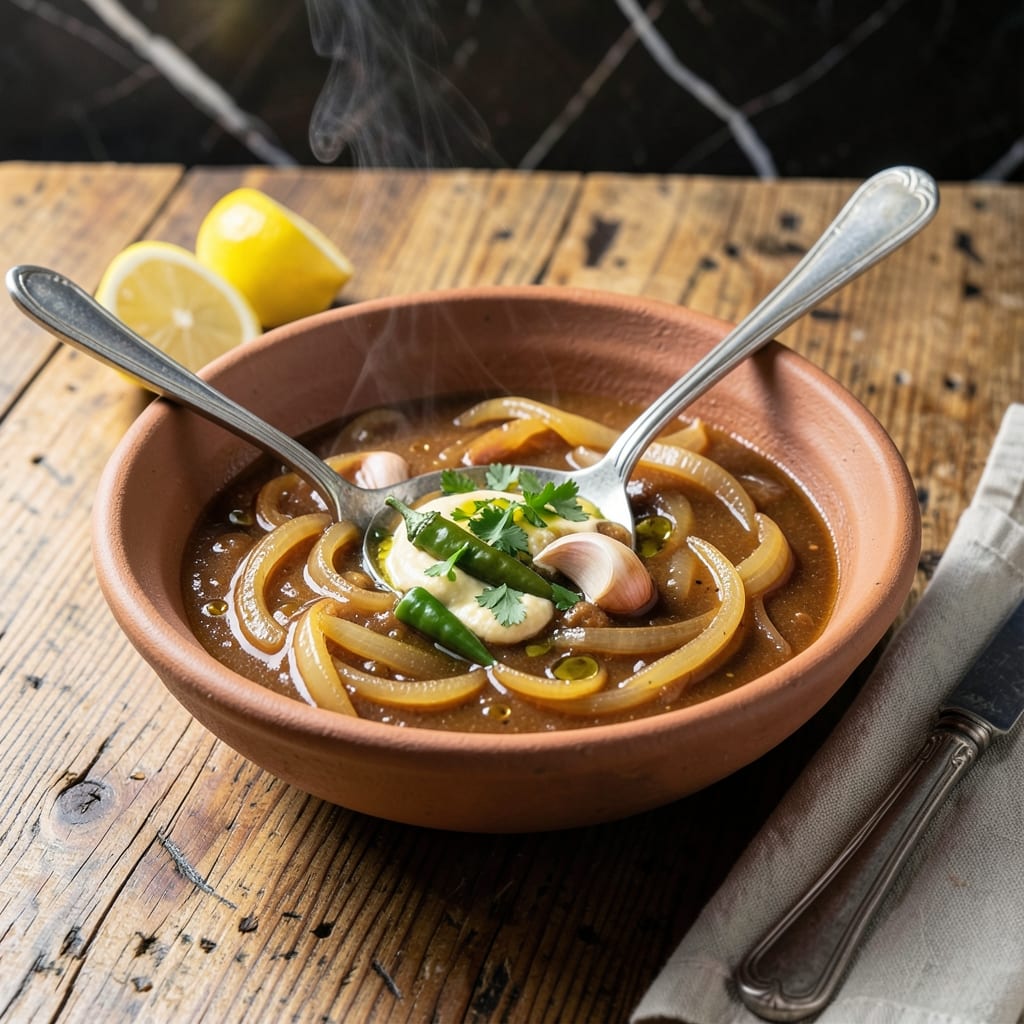
This vibrant West African sauce transforms simple dishes with its bold, tangy character. The foundation of Senegambian yassa, it balances sweet caramelized onions with sharp mustard and bright lemon for a complex, unforgettable flavor profile.
I developed this version to capture the authentic taste while using accessible ingredients. The onions cook down to a rich, jam-like consistency that coats proteins beautifully. A proper simmer ensures the flavors meld without losing their individual notes.
The result is a versatile sauce that elevates grilled meats, rice dishes, or even sandwiches. Its bright acidity cuts through rich foods, while the sweet onion base provides depth that keeps you coming back for more.
Make a batch and store it in the fridge for up to a week—it only gets better as the flavors mature.
Ingredients for Yassa Onion Sauce
Ten simple ingredients create this bold, tangy West African sauce that elevates any dish.
| Ingredient | Amount | Notes |
|---|---|---|
| Yellow Onions 🧅 | 4 whole | Thinly sliced, about 2 lbs |
| Vegetable Oil 🫒 | ½ cup | Divided for cooking |
| Dijon Mustard 🟡 | ⅓ cup | Sharp, high-quality brand |
| Fresh Lemon Juice 🍋 | ⅓ cup | About 3-4 lemons |
| Apple Cider Vinegar 🍏 | 2 tbsp | Balances sweetness |
| Garlic Cloves 🧄 | 6 cloves | Minced for depth |
| Habanero Pepper 🌶️ | 1 whole | Seeded, minced (optional) |
| Vegetable Broth 🥣 | ½ cup | Low-sodium preferred |
| Granulated Sugar 🥄 | 1 tbsp | Balances acidity |
| Salt 🧂 | 1 ½ tsp | Diamond Crystal preferred |
| Black Pepper 🌶️ | 1 tsp | Freshly ground |
[recipe_ingredient_scaler]
The onions are everything here—yellow onions caramelize the best. Whole Foods or Trader Joe’s usually have good ones (look for firm, dry skins). Don’t skimp on the Dijon; Maille or Grey Poupon give that sharp kick authentic yassa needs. I always grab fresh lemons for the juice (bottled just doesn’t cut it). The habanero’s optional, but a little heat balances the sweetness perfectly.
No Dijon? Whole grain mustard at equal amount works—texture’s slightly different but flavor’s close. Out of apple cider vinegar? White vinegar plus a pinch of sugar gets you there. Vegetable broth can be swapped for water in a pinch, but you’ll miss some depth. The sugar isn’t just for sweetness—it helps the onions caramelize properly (don’t skip it). Fresh garlic’s non-negotiable though.
This keeps 7 days in the fridge—actually improves as the flavors meld. Freeze in ice cube trays for up to 3 months. Just thaw and reheat gently (don’t boil or the flavors dull). Perfect for batch cooking.
Why You’ll Love This Recipe
- 5-Minute Chop: I can slice the onions while the oil heats—no fancy prep, just straightforward cooking.
- Tangy Punch: The mix of lemon juice, vinegar, and Dijon gives that sharp, bright kick I crave with every bite.
- Pairs With Anything: Honestly, it works on grilled chicken, fish, or even just crusty bread for dipping.
- Stretches for Days: Leftovers taste even better the next day, and it costs pennies to make a big batch.
Step-by-Step Instructions for Yassa Onion Sauce
This method delivers the perfect balance of sweet, tangy, and spicy notes every time.
Step 1: Caramelize the Yellow Onions to Deep Golden
Heat 0.5 cup vegetable oil in a large, heavy-bottomed pot over medium heat. Add all 4 whole yellow onions and cook, stirring occasionally, for 25-30 minutes until they transform from translucent to a rich, deep golden brown.
Here’s the thing—don’t rush this step. The natural sugars in the onions need time to caramelize properly. If they start to stick, lower the heat slightly and add a splash of water. You’ll know they’re ready when they’re the color of dark amber and smell intensely sweet.
Step 2: Build the Flavor Foundation
Add the 6 cloves garlic cloves and 1 whole habanero pepper to the caramelized onions. Cook for 2-3 minutes until the garlic is fragrant and just beginning to turn light golden at the edges. Stir constantly to prevent burning.
I always mince the habanero finely (after seeding) for even heat distribution. If you prefer a milder sauce, you can reduce the amount or omit it entirely. The garlic should never brown—just soften and perfume the oil beautifully.
Step 3: Deglaze and Create the Sauce Base
Pour in the 0.5 cup vegetable broth, 0.33 cup fresh lemon juice, 2 tbsp apple cider vinegar, 1 tbsp granulated sugar, 1.5 tsp salt, and 1 tsp black pepper. Stir well to combine, scraping up any browned bits from the bottom of the pot.
The liquid will bubble vigorously at first. Let it simmer for 5 minutes until it reduces slightly and the flavors begin to meld. Taste and adjust the seasoning—you want that perfect balance where the tang cuts through the sweetness of the onions.
Step 4: Finish with Dijon Mustard and Final Reduction
Reduce the heat to low and stir in the 0.33 cup Dijon mustard. This is the moment that matters: the mustard will thicken the sauce and add its distinctive sharpness. Cook for another 5-7 minutes until the sauce reaches your desired consistency.
Real talk: the sauce should coat the back of a spoon but still be pourable. If it’s too thick, add a splash of water. If it’s too thin, let it reduce a bit longer. The mustard will mellow as it cooks, losing its raw bite while maintaining its depth of flavor.
Pro Tips For Making Yassa Onion Sauce
- Caramelize Slowly: Cook the onions on medium-low heat for at least 30-40 minutes, stirring occasionally—rushing this with high heat will leave them burnt on the outside and raw inside.
- Use Fresh Lemon: Bottled lemon juice lacks the brightness this sauce needs; fresh lemon juice adds that sharp, clean acidity that balances the sweetness of the onions.
- Skip the Shortcut: Don’t swap apple cider vinegar for white vinegar—its mild, fruity tang is crucial for that authentic yassa flavor.
- Bloom the Mustard: Stir the Dijon mustard into the warm oil for 30 seconds before adding liquids—this wakes up its flavor so it doesn’t taste dull in the finished sauce.
Storing and Reheating This yassa onion sauce
Fridge Storage
Let the sauce cool completely before transferring to an airtight container. It will keep beautifully in the fridge for up to 7 days, and I find the flavors actually deepen and improve over time. Always use a clean spoon when serving to prevent contamination. ❄️
Freezing for Longer Storage
For longer storage, freeze in ice cube trays for up to 3 months. Once solid, transfer the cubes to a freezer bag for easy portioning. This method preserves the bright, tangy character perfectly.
Stovetop Reheating
Gently reheat on the stovetop over low-medium heat for 5-7 minutes, stirring occasionally. If the sauce thickens too much, add a splash of water or broth to restore the desired consistency. Avoid boiling to prevent the flavors from dulling. 🔥
Microwave Reheating
For quick reheating, microwave individual portions in 30-second intervals at 50% power, stirring between each. This prevents hot spots and keeps the texture smooth. Cover loosely to avoid splatters.
Reviving Thickened Sauce
If the sauce thickens too much in storage, whisk in 1-2 tbsp warm water until it reaches the right consistency. The acidity and sweetness will balance out again once it’s fully reheated.
Nutrition Facts
Frequently Asked Questions
Can I use red onions instead of yellow?
Red onions work but have a sharper bite. For best results, stick with yellow onions as they caramelize more sweetly. Red onions may also turn the sauce pink.
How do I reduce the acidity?
Balance the tang by adding 1-2 tsp honey or more sugar. Simmer for 5 minutes to let flavors meld. Taste as you go.
Can I make this without mustard?
Yes, but the flavor changes significantly. Try 1/4 cup tahini for creaminess or 2 tbsp vinegar for acidity. Neither replicates the mustard’s depth.
Why did my sauce separate?
Overheating can cause separation. Stir constantly on low-medium heat and avoid boiling. If it happens, whisk vigorously or blend briefly.

Trained in classic French technique but raised on slow-cooked ribs and spicy rubs, she blends culinary skill with smoke and soul.
- Recipe for Boneless Pork Chops in Cast Iron Skillet: Sear and Baste to Juicy Perfection - October 3, 2026
- Recipe for Boneless Cross Rib Roast: Slow-Roasted Beef with Herb Crust - October 3, 2026
- Hamburgers in Sauce Recipe Crock Pot: Slow-Cooked Savory Delight - October 3, 2026