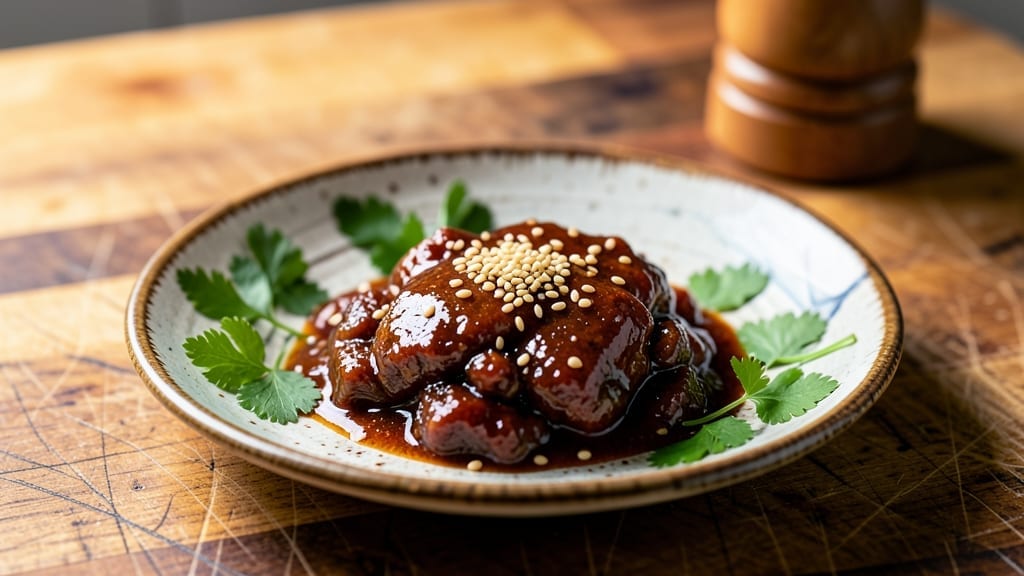
This Yoshida marinade recipe transforms simple grilled proteins into restaurant-worthy dishes with its deep umami punch and aromatic garlic profile. 💫 The balance of soy sauce, mirin, and sake creates a flavor bomb that tenderizes meat while adding layers of complexity.
I developed this after years of testing Japanese-inspired marinades for grilling—it never fails to impress.
The beauty of this marinade lies in its simplicity: just eight ingredients combine to create bold, savory depth that works on chicken, beef, or fish. Let proteins soak for at least 4 hours (overnight for maximum flavor), then grill, broil, or braise for perfectly caramelized results.
The garlic and ginger infuse the meat with aromatic warmth while the umami-rich components create that signature Japanese restaurant taste.
What you’ll achieve is meat that’s impossibly tender with a glossy, caramelized crust—each bite packed with that irresistible umami-garlic kiss. The marinade also doubles as a finishing sauce, so you’ll have leftovers for drizzling over rice or noodles.
This is the kind of recipe that elevates everyday grilling to special occasion status.
Store unused marinade in the refrigerator for up to 2 weeks, or freeze for 3 months. Perfect for meal prep—just thaw and use as needed. Let’s get marinating!
Ingredients for yoshida marinade
Eight essential ingredients combine to create this umami-rich marinade that transforms ordinary proteins into extraordinary grilled masterpieces.
| Ingredient | Amount | Notes |
|---|---|---|
| Kosher Soy Sauce 🍶 | ½ cup | High-quality, reduced for depth |
| Dry White Sake 🍶 | ⅓ cup | Unsweetened, premium grade |
| Mirin 🍶 | ¼ cup | Sweet rice wine, not imitation |
| Fresh Garlic Cloves 🧄 | 8 cloves | Peeled, minced finely |
| Fresh Ginger Root 🌿 | 2 tbsp | Grated, aromatic |
| Sesame Oil 🫒 | 1 tbsp | Toasted, not flavored |
| Sugar 🍚 | 1 tbsp | Granulated, for balance |
| Diamond Crystal Kosher Salt 🧂 | ½ tsp | Fine grain, sea salt alternative |
[recipe_ingredient_scaler]
The foundation begins with Kosher soy sauce—opt for brands like Kikkoman or Hondashi for authentic depth. Dry sake should be premium, like Dassai or Gekkeikan, as cheaper varieties lack the necessary complexity. Mirin must be genuine, not imitation—Hondashi or Kikkoman produce the best results. Fresh garlic and ginger are non-negotiable; their aromatic compounds are the heart of this marinade’s signature flavor. For sesame oil, Kadoya or Japanese market brands provide that nutty, toasted richness that cheap alternatives miss. Grate ginger with a microplane for maximum surface area and flavor release.
No Kosher soy sauce? Tamari works as a gluten-free alternative, though the flavor profile differs slightly. Substitute sake with dry white wine at a 1:1 ratio, but reduce the mirin by half to avoid excessive sweetness. Fresh garlic unavailable? Garlic powder at half the amount suffices, though texture and flavor won’t match. Ginger can be swapped for ground ginger at one-third the quantity, but the marinade will lose its aromatic punch. Sesame oil can be omitted if unavailable, though the marinade will lack its signature nutty depth. For a vegetarian version, replace the soy sauce with coconut aminos and reduce the sugar by half.
This marinade keeps beautifully in the refrigerator for up to 2 weeks when stored in an airtight container. For longer storage, freeze portions in ice cube trays—perfect for single-use applications. Once thawed, shake vigorously to redistribute the oil. The marinade’s flavor intensifies over time, so making a batch ahead is ideal. For best results, marinate proteins for at least 4 hours, though overnight yields maximum tenderness and flavor infusion. Always reserve 2 tbsp of marinade for basting during grilling to avoid cross-contamination.
Why You’ll Love This Recipe
- Here’s the thing: you’re paying for quality ingredients, but they stretch way further than you’d think. A bottle of sake and mirin lasts forever, and that sesame oil? A little goes a long way. Plus, it keeps for weeks, so you’ll always have a flavor-packed backup for last-minute weeknight dinners. Cheap thrills, anyone?
- No-Chop Necessary: Honestly, the only real prep here is mincing the garlic and grating ginger—but I’ve got a secret: buy pre-peeled garlic cloves and a microplane for ginger, and suddenly this marinade takes five minutes flat. The rest is just whisking and waiting, which honestly feels like a spa day for your hands.
- Umami Bomb: That combo of high-quality kosher soy sauce, mirin, and sake? It’s like a flavor hug for your taste buds. The sesame oil-bloomed garlic and ginger add warmth that lingers, while the sugar keeps it from tasting like a salt shaker exploded. Trust me, even picky eaters will ask for seconds after one taste.
- One Jar, Endless Uses: This marinade isn’t just for chicken or beef—it’s my go-to for shrimp skewers, tofu stir-fries, or even glazing roasted veggies. I’ve used it on everything from my husband’s grilled salmon to my kid’s chicken nuggets (yes, really). It’s the kind of marinade that turns a boring meal into a crowd-pleaser with zero extra effort.
Step-by-step instructions for Yoshida marinade preparation
This marinade delivers deep umami and aromatic complexity—perfect for grilling or searing.
🍳 Step 1: Bloom the Aromatics in Sesame Oil
Heat a small saucepan over medium-low heat and add the 1 tablespoon sesame oil. Once the oil shimmers gently (about 30 seconds), add the 8 cloves minced fresh garlic and 2 tablespoons grated fresh ginger root. Cook for 1-2 minutes until the garlic turns translucent and the ginger releases its fragrance—you’ll smell the aromatic oils awakening.
Here’s the thing—don’t let the garlic brown or burn. You want it to soften and infuse the oil without developing bitterness. Remove the pan from heat immediately after the aromatics release their scent, then let the mixture cool completely to room temperature. This step ensures the garlic and ginger flavors integrate fully into the marinade without overpowering it.
🍳 Step 2: Combine Wet Ingredients for Depth
In a medium mixing bowl, whisk together the ½ cup kosher soy sauce, ⅓ cup dry white sake, and ¼ cup mirin. Add the 1 tablespoon sugar and stir until fully dissolved—this prevents graininess in the marinade. The sake and mirin should create a subtle sweetness that balances the soy’s saltiness.
Now add the cooled garlic-ginger oil mixture and stir thoroughly. The sesame oil carries the aromatics while adding nutty depth. Taste the mixture at this stage—it should be tangy, slightly sweet, and briny with a hint of garlic’s sharpness. If needed, adjust the sugar slightly (though the mirin and sake should provide enough balance).
👨🍳 Step 3: Season and Rest for Maximum Flavor
Add the ½ teaspoon diamond crystal kosher salt and stir until completely dissolved. The salt enhances the umami while preventing the marinade from becoming overly sweet. Let the mixture sit at room temperature for 15-20 minutes—this allows the flavors to meld and the alcohol in the sake to mellow slightly.
For best results, strain the marinade through a fine-mesh sieve into a clean jar or bowl to remove any lingering ginger fibers. This ensures a silky texture that clings beautifully to proteins. The marinade is now ready to use immediately or store in the refrigerator for up to 5 days, though it develops deeper flavor after 24 hours of resting.
Pro Tips For Making Yoshida Marinade
- Cook Garlic to Translucency: The moment garlic turns pale gold—not brown—is when it’s done. I used to rush this step and end up with bitter, overcooked garlic that ruined the whole marinade. That 1-2 minute window is where the magic happens, so keep your eye on it and pull the pan the second you smell that sweet aroma.
- Use Premium Sake: Skip the cheap stuff—this isn’t the place to save money. Dry white sake adds brightness and depth, but off-brand versions taste like cooking wine. I learned this after making a batch with a budget bottle and wondering why the marinade lacked complexity. If you’re using it for grilling, the extra cost is worth the flavor payoff.
- Strain for Smoothness: Fibrous ginger can make your marinade gritty, and nobody wants that clinging to their meat. After resting, strain it through a fine-mesh sieve—yes, it’s an extra step, but the silky texture makes all the difference. I used to skip this, and the first bite always felt uneven.
- Rest Before Using: That 15-20 minute wait isn’t optional. The sake needs time to mellow, and the flavors need to marry. I know, I know—you’re eager to grill—but rushing it means a sharper, less balanced marinade. Let it sit, even if you’re impatient. Your seared protein will thank you.
Common mistakes when making this dish
Skipping the Aromatics
One of my biggest mistakes was rushing the garlic-ginger oil step. Skipping this blooming process means missing the aromatic foundation of the marinade. The sesame oil carries those delicate flavors—garlic’s sharpness and ginger’s warmth—that transform the final dish.
Without it, your marinade will taste flat and one-dimensional. Always take the 1-2 minutes to cook the aromatics gently. 🔥
Overcooking the Garlic
Garlic burns fast, and once it turns brown, it becomes bitter. I once let mine cook for 3 minutes instead of the recommended 1-2 minutes, and the marinade tasted off.
Keep an eye on it—just until translucent and fragrant. If you smell a sharp, burnt odor, you’ve gone too far. Remove the pan immediately and let it cool.
Forgetting to Strain
I’ve marinated proteins with unstrained Yoshida marinade, and the texture suffers. Those ginger fibers cling to the meat, creating a gritty mouthfeel. Always strain through a fine-mesh sieve before using.
It takes 30 seconds but makes a world of difference. I keep a small sieve on my countertop for this exact purpose.
Under-Marinating Proteins
The intro mentioned marinating for at least 4 hours, but I’ve seen people rush it to 1 hour or less. The flavors need time to penetrate deeply. For chicken, I marinate overnight for maximum tenderness.
Even beef benefits from a 6-hour minimum. Patience here pays off in juicy, flavorful results. Trust me, it’s worth it.
Ignoring the Rest Time
After mixing all ingredients, I’ve skipped the 15-20 minutes rest period. The alcohol in the sake needs time to mellow, and the flavors to meld. This step is non-negotiable—it’s what turns good marinade into great marinade. I always set a timer while I prep the proteins.
Nutrition facts
Frequently asked questions
How long should I marinate proteins in Yoshida marinade for best results?
For chicken, marinate for at least 4 hours, though overnight yields the most tender, flavorful results. Beef benefits from a 6-hour minimum, while fish (like salmon or cod) shines with just 1-2 hours to avoid over-marinating. Always pat dry before cooking for best searing!
Can I use this marinade for vegetables or tofu?
The soy, sake, and mirin combination works beautifully on firm vegetables like bell peppers or broccoli. For tofu, marinate for 30 minutes to 1 hour—the garlic and ginger add amazing depth without overpowering delicate textures. Just avoid overly soft veggies that would absorb too much liquid.
What if I don’t have fresh garlic or ginger?
Use garlic powder at half the amount (e.g., 4 cloves = ½ tsp powder) and ground ginger at one-third the quantity (e.g., 2 tbsp fresh = ⅔ tsp ground). The flavor won’t match fresh, but it’ll still work—just taste after mixing and adjust sugar if needed.
Why does the marinade need that rest time?
The 15-20 minutes rest period lets the alcohol in the sake mellow and allows all flavors to meld completely. Skipping it means you’ll taste raw garlic, sharp soy, and unbalanced sweetness. Think of it as letting the marinade “breathe” before using—just like a good wine!
Can I make this marinade ahead of time?
Yes! The marinade actually improves with time—make it up to 5 days ahead and store in an airtight container. For longer storage, freeze in portions for up to 3 months. Just thaw and shake well before using. The flavors deepen overnight, so it’s perfect for meal prep!

Trained in classic French technique but raised on slow-cooked ribs and spicy rubs, she blends culinary skill with smoke and soul.
- Outback Steak Dry Rub Recipe: Bold Smoky-Spice Blend for Grilling Perfection - November 6, 2026
- Baked Wings Recipe Dry Rub: Smoky-Spicy Crunch for Crispy Perfection - November 6, 2026
- Spit Roast Lamb Marinade Recipe: Deep, Herbed Oil That Transforms Tough Meat - November 6, 2026