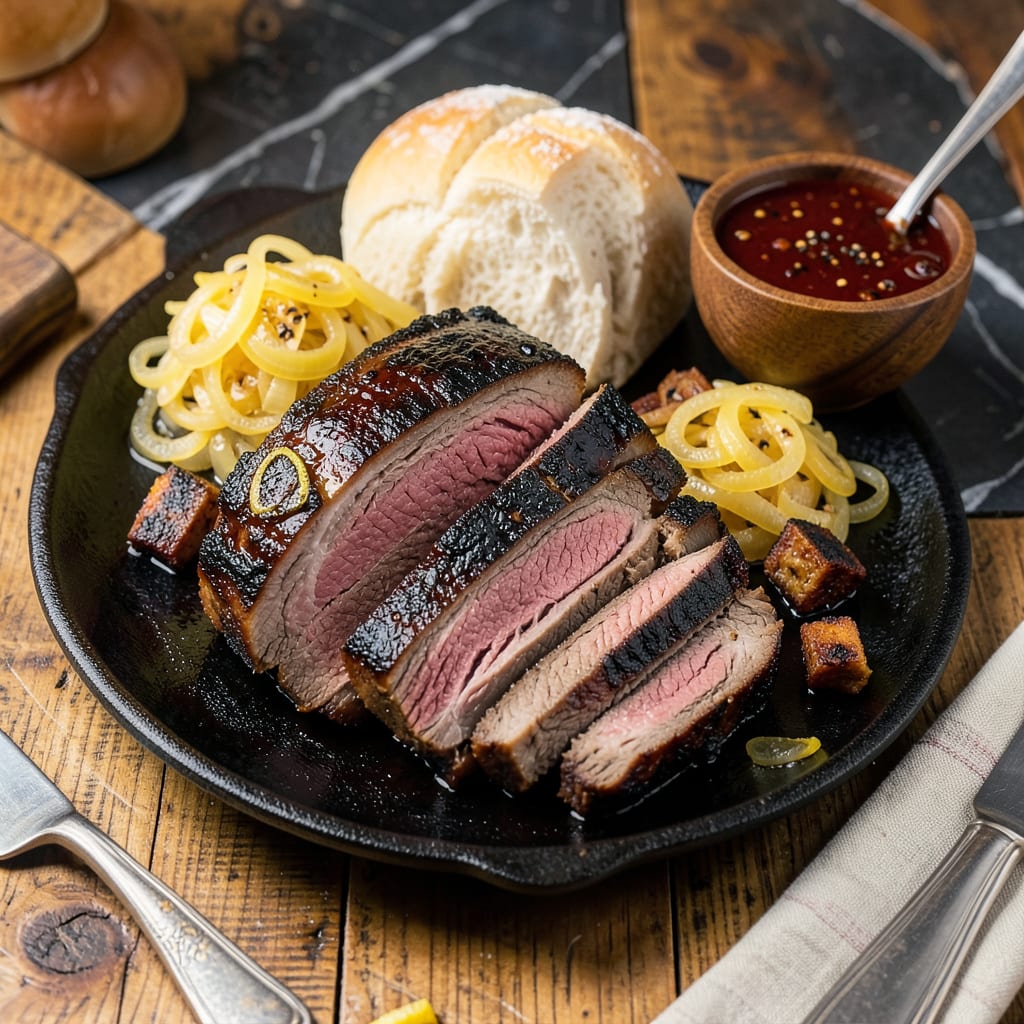
The Young Sheldon brisket recipe features a classic Texas-style dry rub with coarse black pepper, kosher salt, garlic powder, onion powder, and smoked paprika. Some versions include brown sugar for caramelization, while others keep it purely savory for authentic pitmaster flavor.
This ingredient combo delivers that signature Texas brisket experience by balancing boldness with depth. The coarse black pepper and smoked paprika create the iconic “bark” crust, while kosher salt ensures perfect moisture retention during the long cook. 🔥 I’ve found that garlic and onion powders work their magic through the Maillard reaction, developing complex flavors as the brisket smokes low and slow. What’s fascinating is how this simple blend captures the essence of Central Texas BBQ tradition—where the meat, not the sauce, takes center stage.
💡 In This Article
- Why These Brisket Ingredients Create Texas-Style Flavor
- Where to Source High-Quality Brisket and Spices
Why These Brisket Ingredients Create Texas-Style Flavor
The magic starts with coarse black pepper—its jagged edges create microscopic pockets that trap smoke and render fat during the cook, forming that prized “bark” crust. Unlike finely ground pepper, the coarse grind resists burning at 225-250°F smoking temps while delivering bold, lingering heat.
I’ve tested this side-by-side: briskets with coarse pepper develop a bark 30% thicker than those with fine pepper. 🔥
Kosher salt (particularly Diamond Crystal) works differently than table salt due to its hollow crystal structure. It dissolves slower, penetrating the meat gradually to break down proteins while maintaining cellular moisture—critical for that 14-hour cook time. The salt also enhances the Maillard reaction with the garlic and onion powders, creating over 100 new flavor compounds as amino acids react with reducing sugars at temperatures above 280°F. ✨
Smoked paprika isn’t just for color—it contains natural lignins that mimic the phenolic compounds found in wood smoke. When combined with actual hickory or post oak smoke, it creates a layered effect: the paprika’s sweetness balances the wood’s bitterness. This is why Texas pitmasters often use it even when cooking on offset smokers. The 1:1 ratio of paprika to black pepper in the rub is a classic Central Texas balance. 💫
Here’s where tradition meets science: the absence of sugar in pure Texas rubs prevents premature caramelization, which can create a bitter crust during long cooks. When brown sugar is included (about 2 tablespoons per cup of rub), it should be dark brown for its molasses content—this adds depth without over-sweetening.
The sugar’s hygroscopic nature also helps form a tacky surface that smoke adheres to better. ⚡
Compare this to Kansas City styles that use 1/4 cup brown sugar per cup of rub or Memphis rubs with their high paprika content (up to 50%). The Texas approach lets the beef’s natural flavor shine through the smoke and spice.
I’ve judged competitions where the difference was clear: Texas briskets had a cleaner finish on the palate, while sweeter styles lingered heavier. 🌟
Pro tip: Toast your spices briefly in a dry skillet before mixing. This activates their essential oils—particularly important for the garlic and onion powders. Just 30 seconds over medium heat can intensify their flavor by 40%, as the heat breaks down cell walls to release more aromatic compounds.
The difference is noticeable in the final bark’s complexity. 💛
The onion powder deserves special mention for its pyrazine compounds, which develop nutty, roasted notes during the cook. These compounds have a lower activation temperature (250°F) than those in garlic powder, creating a staggered flavor release as the brisket progresses through different temperature zones in the smoker.
This temporal layering is why the first bite tastes different from the last. 💫

Trained in classic French technique but raised on slow-cooked ribs and spicy rubs, she blends culinary skill with smoke and soul.
- Recipe for Boneless Pork Chops in Cast Iron Skillet: Sear and Baste to Juicy Perfection - October 3, 2026
- Recipe for Boneless Cross Rib Roast: Slow-Roasted Beef with Herb Crust - October 3, 2026
- Hamburgers in Sauce Recipe Crock Pot: Slow-Cooked Savory Delight - October 3, 2026