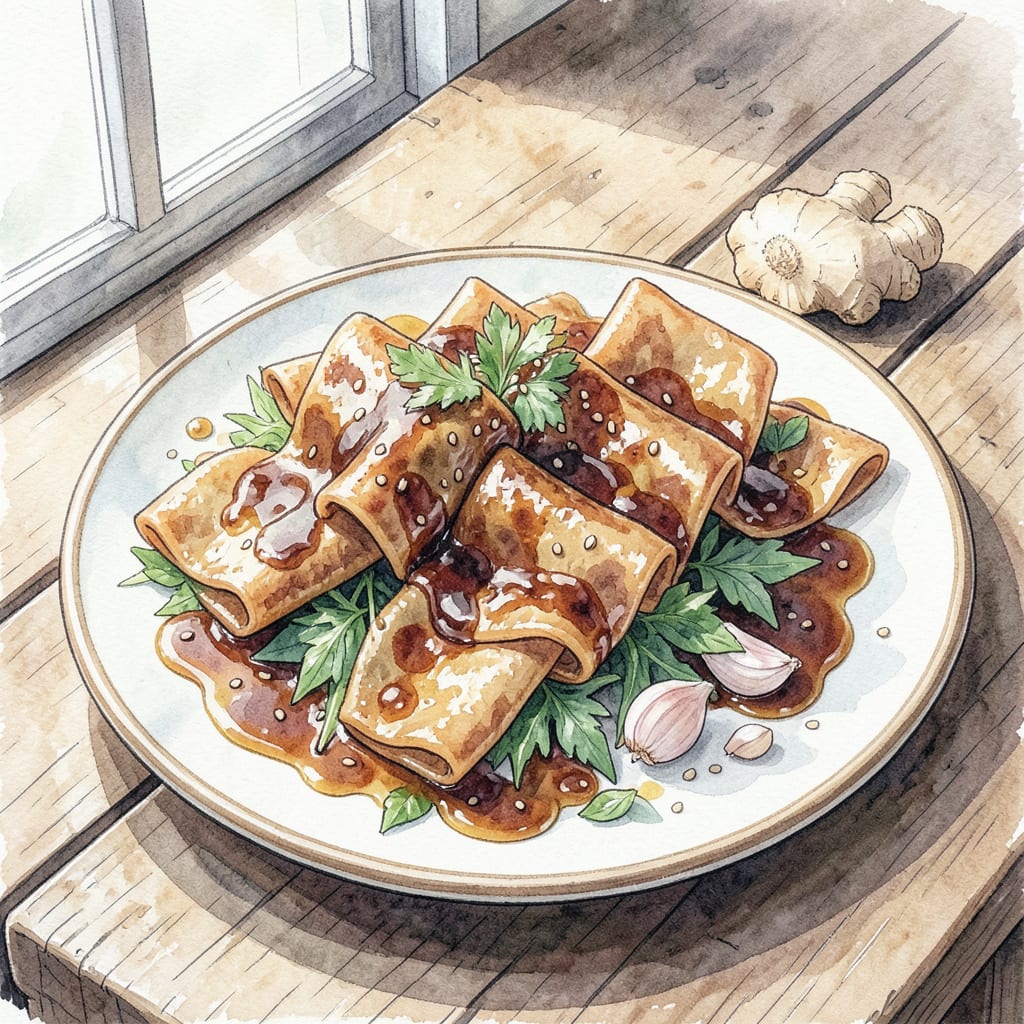
I’ve fallen for yuba’s silky texture and delicate flavor, and I’m excited to share this 20-minute recipe with you. As a pitmaster with French technique training, I’ve found that yuba pairs beautifully with traditional Japanese ingredients.
This dish showcases yuba as the main protein source, complemented by simple yet flavorful accompaniments. With basic pantry staples and quick cooking, you’ll have a satisfying meal ready in no time.
Ingredients for Yuba
Quick, pantry-friendly ingredients come together for this silky yuba delight.
| Ingredient | Amount | Notes |
|---|---|---|
| Dried Yuba Sheets 🌾 | 8 oz | Premium quality, Japanese import |
| Soy Sauce 🧂 | ¼ cup | Low-sodium, Kikkoman or similar |
| Sesame Oil 🫒 | 2 tbsp | Toasted for depth of flavor |
| Rice Vinegar 🍚 | 2 tbsp | Unseasoned, Japanese rice vinegar |
| Ginger 🧄 | 1 whole | Fresh, peeled and grated |
| Garlic Cloves 🧄 | 4 cloves | Minced, fresh |
| Shiitake Mushrooms 🍄 | 1 cup | Sliced, fresh or rehydrated dried |
| Scallions 🌿 | ½ cup | Thinly sliced, green parts only |
| Sesame Seeds 🌼 | 1 tbsp | Toasted, white or black |
| Vegetable Broth 🧋 | 2 cups | Low-sodium, vegetarian |
| Cornstarch 🌾 | 1 tbsp | For thickening sauce |
| Sugar 🍮 | 1 tsp | White granulated sugar |
[recipe_ingredient_scaler]
For the best yuba, look for Japanese imports at Asian markets or specialty stores. Soy sauce matters too—go for a trusted brand like Kikkoman. Fresh ginger is essential; don’t skip grating it for that authentic flavor. You can find shiitake mushrooms fresh or dried, depending on the season and your preference.
No sesame oil? Peanut oil is a decent substitute, though it’ll change the flavor profile slightly. For a gluten-free version, ensure your soy sauce is gluten-free. If you can’t find shiitake mushrooms, cremini or button mushrooms work in a pinch. The sesame seeds add a nice crunch—toast them lightly for extra flavor.
Store leftover yuba dish in an airtight container in the fridge for up to 3 days. Reheat gently with a bit of extra broth to keep it silky. You can also freeze cooked yuba for 1 month—just thaw and reheat carefully to maintain that tender texture.
Step-by-Step Instructions for Silky Japanese Yuba Delight
Follow these straightforward steps to create a delicious yuba dish in just 20 minutes.
Step 1: Prepare the Aromatic Base
Start by heating the 2 tbsp Sesame Oil in a large skillet over medium heat. Once the oil is warm and fragrant, add the 1 whole Ginger, peeled and grated, and 4 cloves Garlic Cloves, minced. Cook for 1-2 minutes until the mixture becomes aromatic and slightly caramelized, filling your kitchen with a savory scent. Be careful not to burn the garlic, as it can quickly become bitter.
As the ginger and garlic cook, you’ll notice their fragrance filling the air. This aromatic base is crucial for developing the dish’s depth of flavor. If you prefer a stronger ginger flavor, you can add a bit more ginger at this stage.
Step 2: Cook the Shiitake Mushrooms
Add the 1 cup Shiitake Mushrooms, sliced, to the skillet with the ginger and garlic mixture. Cook for 3-4 minutes until the mushrooms release their moisture and start to brown. The mushrooms should be tender and slightly caramelized, adding an earthy flavor to the dish. Stir occasionally to prevent burning and ensure even cooking.
As the mushrooms cook, they’ll absorb the flavors of the ginger and garlic, becoming tender and fragrant. If using dried shiitake, make sure they’re rehydrated before adding them to the skillet.
Step 3: Prepare the Yuba and Sauce
While the mushrooms are cooking, prepare the 8 oz Dried Yuba Sheets according to package instructions. Typically, you’ll need to soak them in hot water for a few minutes until they become pliable. In a small bowl, whisk together the 0.25 cup Soy Sauce, 2 tbsp Rice Vinegar, 2 cups Vegetable Broth, 1 tbsp Cornstarch, and 1 tsp Sugar until the cornstarch is fully dissolved. This sauce will add a rich, savory flavor to the yuba.
The yuba sheets should be soft and silky after soaking. Drain them well and set aside. The sauce mixture should be smooth and free of lumps, ensuring it thickens evenly when cooked.
Step 4: Combine and Finish the Dish
Pour the prepared sauce mixture into the skillet with the mushrooms and bring to a simmer. Cook for 2-3 minutes until the sauce thickens and coats the mushrooms. Add the cooked yuba sheets to the skillet, tossing gently to coat them evenly with the sauce. Cook for an additional 1-2 minutes until the yuba is well coated and heated through.
Stir in the 0.5 cup Scallions, thinly sliced, and 1 tbsp Sesame Seeds, toasted, just before serving. The scallions will add a fresh, oniony flavor, while the sesame seeds provide a nutty crunch. Serve immediately, garnished with additional sesame seeds if desired.
Essential Equipment for yuba
Essential Cooking Equipment
For this yuba recipe, you’ll need a few key pieces of equipment to achieve that silky, Japanese-inspired dish. Start with a large skillet—preferably one that’s non-stick or made of a durable material like stainless steel or cast iron. I personally love using my Lodge cast iron for its even heat distribution and versatility. 🔥
Preparation Tools
You’ll need a sharp knife for slicing the shiitake mushrooms and scallions. I recommend a high-carbon stainless steel blade for its durability and ease of sharpening. A cutting board is also essential—bamboo or plastic works well, as both are easy to clean and gentle on knives.
Sauce Preparation
A small bowl is necessary for whisking together the sauce ingredients, including soy sauce, rice vinegar, and cornstarch. Make sure it’s large enough to comfortably mix everything without spilling. I often use a stainless steel bowl for its non-reactive properties and easy cleanup.
Cooking and Serving
For cooking the yuba and sauce, your large skillet will be the star of the show. Ensure it’s heated evenly by preheating it properly before adding ingredients. For serving, consider using ceramic or porcelain bowls to showcase the dish’s vibrant colors and textures. A pair of chopsticks or a serving fork will come in handy for presenting the dish.
Additional Tips
Having a thermometer handy can be useful, especially if you’re cooking other elements alongside the yuba. While not essential, it helps ensure that your ingredients are at the right temperature. Also, keep a clean towel nearby for wiping down surfaces and cleaning up any spills during preparation.
Optional but Helpful
If you plan on making yuba frequently, consider investing in a yuba maker or a soy milk maker, as these tools can simplify the process of creating yuba from scratch. However, for this recipe, store-bought yuba sheets are perfectly sufficient.

Trained in classic French technique but raised on slow-cooked ribs and spicy rubs, she blends culinary skill with smoke and soul.
- Recipe for Boneless Pork Chops in Cast Iron Skillet: Sear and Baste to Juicy Perfection - October 3, 2026
- Recipe for Boneless Cross Rib Roast: Slow-Roasted Beef with Herb Crust - October 3, 2026
- Hamburgers in Sauce Recipe Crock Pot: Slow-Cooked Savory Delight - October 3, 2026