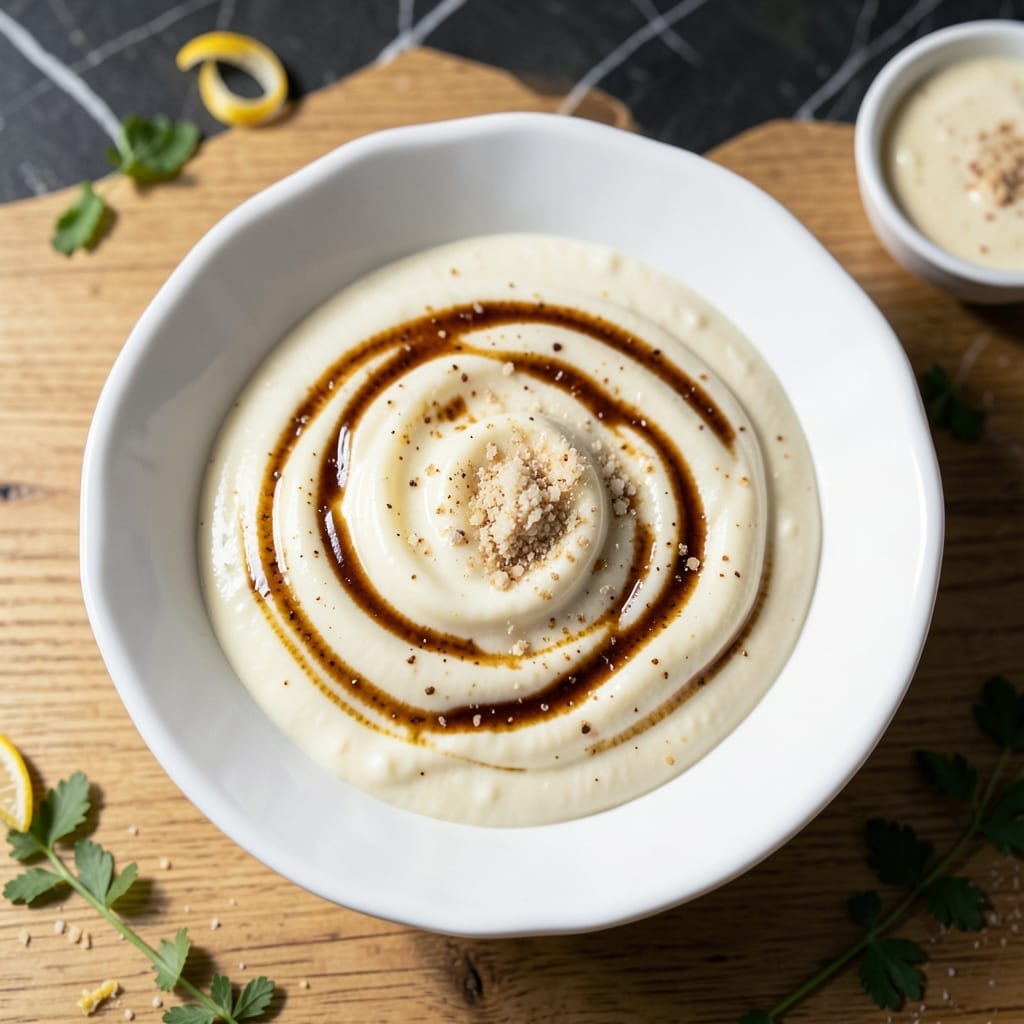
Alabama’s white BBQ tradition brings a tangy twist to grilling that’s impossible to ignore. This sauce delivers a bold, mayonnaise-based flavor that elevates chicken, pork, or even vegetables with its signature zip.
I developed this version after testing multiple ratios to achieve the perfect balance of vinegar, horseradish, and spices. The result is a creamy, tangy condiment that clings beautifully to whatever it touches.
Unlike traditional red sauces, this white variation offers a refreshing change—bright, zesty, and slightly spicy without overpowering the main dish. It’s the kind of sauce that keeps people coming back for more.
Make a batch and store it in the fridge for up to a week. The flavors deepen with time, making it even better the next day.
Ingredients for Zip Sauce
Nine ingredients blend into that iconic Alabama tang everyone craves on the grill.
| Ingredient | Amount | Notes |
|---|---|---|
| Mayonnaise 🥄 | 2 cups | Full-fat for creaminess |
| Apple Cider Vinegar 🍏 | ½ cup | Adjust for tang preference |
| Prepared Horseradish 🌿 | 2 tbsp | For signature zip |
| Granulated Sugar 🍚 | 2 tbsp | Balances acidity |
| Dijon Mustard 🟡 | 1 tbsp | Smooth variety preferred |
| Garlic Powder 🧄 | 1 tsp | Not garlic salt |
| Onion Powder 🧅 | 1 tsp | Fresh ground preferred |
| Paprika 🌶️ | 1 tsp | Sweet or smoked variety |
| Salt 🧂 | 1 tsp | Kosher or sea salt |
| Black Pepper 🌶️ | ½ tsp | Freshly ground preferred |
[recipe_ingredient_scaler]
The mayonnaise is the base here—Duke’s or Hellmann’s give the right thickness and richness. I grab mine at Publix or any standard grocery store. The horseradish is key for that signature zip, so don’t skimp. Look for prepared horseradish in the refrigerated section (not the shelf-stable kind), which packs more punch. Apple cider vinegar brightens everything up—Bragg is my go-to brand.
No horseradish? Extra Dijon mustard at double the amount gets you close on the heat. Out of apple cider vinegar? White vinegar in a pinch, but add a teaspoon of sugar to balance the sharpness. Paprika can be swapped for cayenne if you want more heat. The sugar can be honey or maple syrup if you’re avoiding refined sugar.
This keeps 1 week in the fridge—flavors meld and deepen over time. Store in a sealed jar, and give it a good stir before using since it separates a bit. Not freezer-friendly, so make what you’ll use within the week.
Why You’ll Love This Recipe
- 5-Minute Mix: I just dump everything in a bowl—mayo, vinegar, horseradish, sugar, mustard—and stir. No cooking, no fuss.
- Tangy Kick: That horseradish gives it a bold bite, while the apple cider vinegar keeps it bright and fresh.
- Dips & Drizzles: I slather it on sandwiches, dunk fries in it, even use it as a salad dressing. Honestly, it works everywhere.
- Fridge Staple: Makes more than I need, but it keeps for a week. Between us, I always find an excuse to use the leftovers.
Step-by-Step Instructions for Zip Sauce
Follow this simple method and you’ll nail Alabama’s signature white sauce with perfect tang and creaminess.
Step 1: Combine Mayonnaise and Vinegar Base
In a medium mixing bowl, add the 2 cups Mayonnaise and 0.5 cup Apple Cider Vinegar. This is your foundation—the vinegar will thin the mayonnaise slightly while adding that essential sharpness Alabama zip sauce is known for.
Whisk the mixture vigorously for 30-45 seconds until it becomes smooth and homogeneous. You’ll notice the color lightens slightly as the vinegar incorporates. At this stage, the sauce will seem thin, but the remaining ingredients will thicken it up.
Step 2: Add Sweet and Spicy Elements
Stir in the 2 tbsp Granulated Sugar and 2 tbsp Prepared Horseradish. The sugar balances the vinegar’s acidity while the horseradish delivers that signature zip—this is where the sauce gets its name.
I use a silicone spatula here to ensure I scrape every bit of horseradish from the measuring spoon. Continue stirring until the sugar completely dissolves and the horseradish is evenly distributed. You should see tiny specks of horseradish throughout the mixture.
Step 3: Incorporate Mustard and Seasonings
Add the 1 tbsp Dijon Mustard, 1 tsp Garlic Powder, 1 tsp Onion Powder, 1 tsp Paprika, 1 tsp Salt, and 0.5 tsp Black Pepper. These ingredients build depth of flavor.
The Dijon mustard adds complexity without overpowering, while the garlic and onion powders provide savory notes. The paprika contributes a subtle earthiness and a hint of color. Stir thoroughly for another 30 seconds until all the seasonings are fully integrated and no streaks remain.
Step 4: Adjust Consistency and Rest
Let the sauce rest at room temperature for 10-15 minutes. This allows the flavors to meld together and the sauce to thicken slightly. The vinegar will mellow, and the horseradish’s heat will distribute evenly throughout the mixture.
Give it a final stir and taste. The sauce should be creamy with a perfect balance of tangy, sweet, and slightly spicy notes. If it’s too thick, you can thin it with a splash of water or additional vinegar to reach your desired consistency.
Pro Tips For Making Zip Sauce
- Whisk Vigorously: Beat the mayonnaise and vinegar together for at least 30 seconds until fully emulsified—I learned this the hard way after my first batch separated.
- Use Fresh Horseradish: Skip the old jar in the fridge; prepared horseradish loses its kick after a few months, and this sauce needs that sharp bite.
- Balance the Sugar: Start with half the sugar the recipe calls for, taste, then add more—sounds weird, but it works: too much sweetness overpowers the tang.
- Let It Rest: Give the sauce 10 minutes in the fridge before serving—my grandmother swore by this, and she was right: the flavors meld better.
Best Sauces and Condiments for These Flavors
Classic Pairings
This creation shines on smoked chicken—brush it on during the last 10 minutes of cooking for maximum flavor penetration. I also love it as a dipping sauce for crispy chicken tenders or onion rings. The tang cuts through the richness perfectly. 🔥
Seafood Applications
Try it with grilled shrimp skewers or as a topping for blackened catfish. The bright acidity complements seafood beautifully without overpowering it. I discovered this combo at a Gulf Coast cookout and it changed my approach to fish.
Vegetable Uses
Drizzle over roasted cauliflower or use as a dip for raw veggie platters. The creamy texture clings to florets and carrots, making it more exciting than ranch. My Irish-Italian family even uses it on steamed broccoli at Sunday dinner.
Sandwich Enhancer
Spread it on pulled pork sandwiches or fried chicken biscuits for extra moisture and zing. In my Boston kitchen, I’ve tested it on everything from grilled cheese to Reuben sandwiches—it adds a delightful twist every time. 💡
Salad Dressing
Thin it with 2-3 tbsp milk or buttermilk to create a creamy salad dressing. Toss with iceberg lettuce, cherry tomatoes, and crumbled bacon for a Southern-inspired salad that’s anything but boring.
Nutrition Facts
Frequently Asked Questions
Can I make this ahead of time?
Yes! The flavors actually improve after 24 hours in the fridge. Store in an airtight container for up to 1 week. Stir before using as it may separate slightly.
What can I use instead of horseradish?
Substitute with 1 tbsp extra Dijon mustard plus 1 tsp cayenne pepper for similar heat. The flavor won’t be identical but it’ll still deliver a nice kick.
Why did my sauce turn out too thin?
This usually happens if the vinegar wasn’t fully incorporated. Let it rest for 15 minutes—it thickens as it sits. If still thin, add 1-2 tbsp more mayonnaise.
Is this sauce suitable for vegetarians?
All ingredients are vegetarian-friendly. Just check your horseradish label if strict vegetarianism is a concern.

Trained in classic French technique but raised on slow-cooked ribs and spicy rubs, she blends culinary skill with smoke and soul.
- Recipe for Boneless Pork Chops in Cast Iron Skillet: Sear and Baste to Juicy Perfection - October 3, 2026
- Recipe for Boneless Cross Rib Roast: Slow-Roasted Beef with Herb Crust - October 3, 2026
- Hamburgers in Sauce Recipe Crock Pot: Slow-Cooked Savory Delight - October 3, 2026