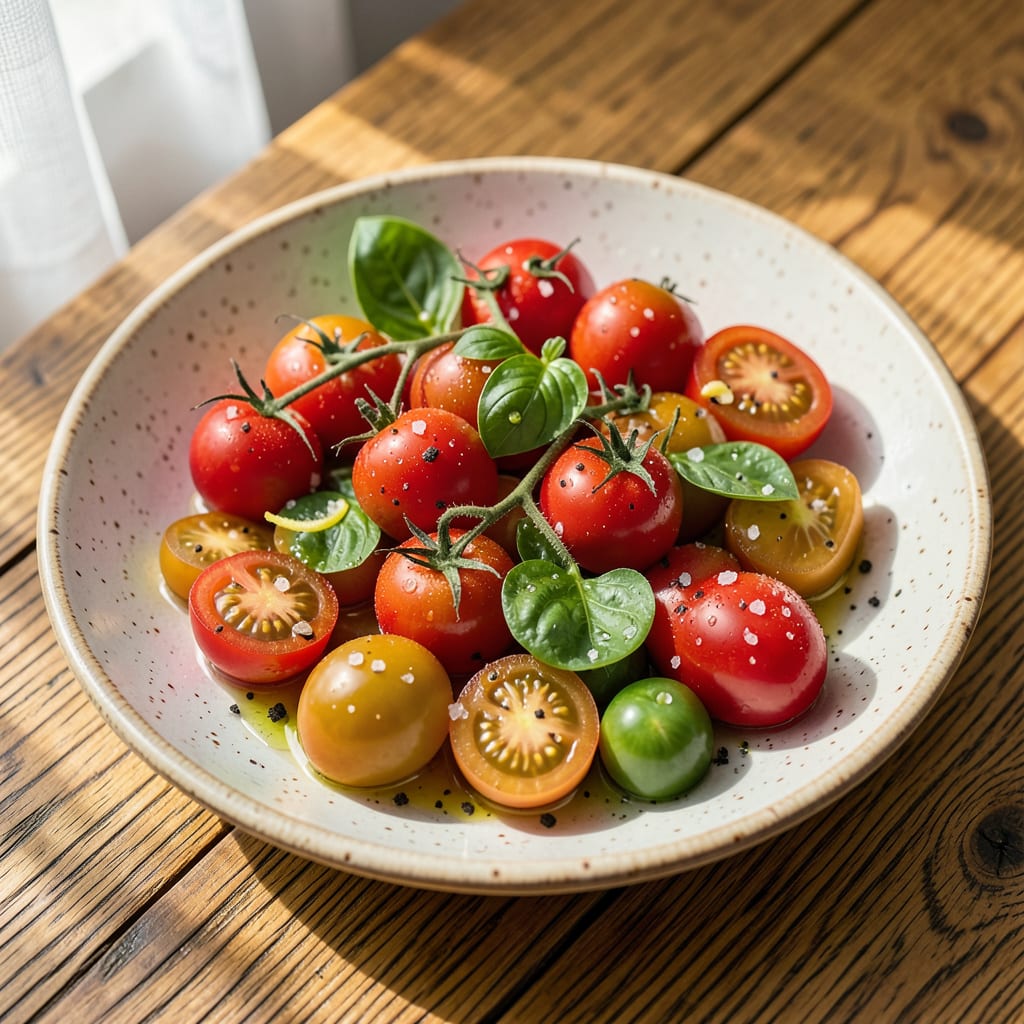
Two pints of cherry tomatoes equal approximately 4 cups when whole, or about 2 to 2.5 cups when chopped. This measurement works for most recipes, though slight variations may occur based on tomato size and packing density.
I’ve found this conversion particularly useful when working with farm-fresh cherry tomatoes, which often vary more in size than store-bought varieties. The difference between whole and chopped volumes comes down to how tightly the tomatoes pack together—chopping releases their juices, reducing the overall volume. For precise recipes like sauces or confits, I always measure after chopping to ensure accurate flavor balance. 💫
What’s fascinating is how this measurement translates across different cooking methods. When roasting, you’ll notice the volume shrinks further as moisture evaporates, concentrating the sweetness. This makes 2 pints the perfect starting point for everything from quick salads to slow-simmered sauces. ✨
💡 In This Article
- Converting Cherry Tomato Measurements for Recipes
- Top 5 Recipes Using 2 Pints of Cherry Tomatoes
Converting Cherry Tomato Measurements for Recipes
The volume difference between whole and chopped cherry tomatoes comes down to basic geometry and moisture release. Whole tomatoes pack with air gaps between them, while chopping breaks cell walls and releases juices—reducing volume by about 30-40%.
A standard 1-pint container holds roughly 2 cups of whole cherry tomatoes, but once halved or quartered, that same quantity fills only about 1 to 1.25 cups due to the collapsed structure. 💫
Size variation plays a huge role in these conversions. Smaller varieties like Sweet 100s (about 1-inch diameter) pack more densely than larger Sun Golds (1.5-inch diameter), which means you might get 20% more tomatoes by count in the same pint container.
I always weigh them when precision matters—2 pints typically equals 1.5 to 2 pounds, depending on variety and ripeness. The juicier the tomato, the more volume loss you’ll see after cutting. ✨
Moisture content dramatically affects post-chopping volume. Heirloom varieties with thinner skins release more liquid when cut, while commercial hybrids bred for shipping retain structure better.
For recipes where texture matters (like bruschetta), I recommend salting chopped tomatoes and draining them in a colander for 10-15 minutes to remove excess liquid—this prevents soggy results while maintaining flavor concentration. 🔥
Here’s a pro tip from my kitchen: When substituting canned tomatoes, remember that 2 pints fresh ≈ 1 (28oz) can of diced tomatoes, but you’ll need to adjust cooking times. Fresh tomatoes release more liquid initially but reduce faster than canned.
For sauces, I often start with fresh tomatoes but add a splash of tomato paste to compensate for the lower pectin content compared to cooked canned varieties. ⚡
Consider these practical equivalencies for recipe scaling:
- 1 pint whole = 2 cups whole = 1 to 1.25 cups chopped
- 2 pints whole = 4 cups whole = 2 to 2.5 cups chopped
- 1 pound = Approximately 1.5 pints (varies by variety)
The packing method at purchase affects your starting volume too. Loosely packed farmers market pints may contain 10-15% fewer tomatoes by weight than tightly packed commercial containers. I always give the container a gentle shake before buying—if the tomatoes shift easily, you’re getting more air than product.
This small check can make a big difference in recipe outcomes! 🌟

Trained in classic French technique but raised on slow-cooked ribs and spicy rubs, she blends culinary skill with smoke and soul.
- Recipe for Boneless Pork Chops in Cast Iron Skillet: Sear and Baste to Juicy Perfection - October 3, 2026
- Recipe for Boneless Cross Rib Roast: Slow-Roasted Beef with Herb Crust - October 3, 2026
- Hamburgers in Sauce Recipe Crock Pot: Slow-Cooked Savory Delight - October 3, 2026