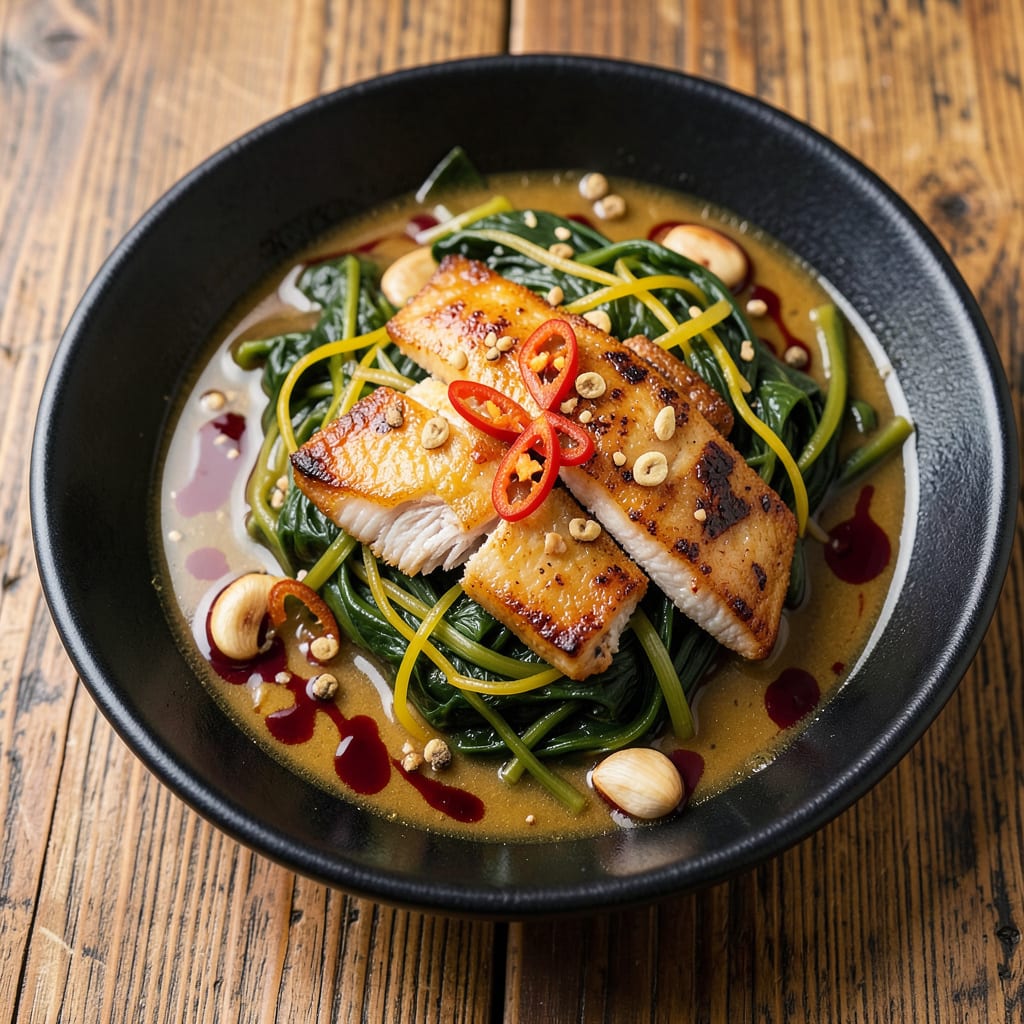
Suan cai yu is a tangy, comforting Chinese fish stew featuring tender white fish simmered with pickled mustard greens (suan cai), ginger, garlic, and chili peppers. The dish balances sour, spicy, and umami flavors in a light broth, often served with rice.
This Northeastern Chinese specialty thrives on contrast—fermented mustard greens deliver a sharp acidity that cuts through the richness of fish, while Sichuan peppercorns add a subtle numbing heat. 🔥 I love how the broth absorbs flavors from both the pickling brine and fresh aromatics like scallions, creating layers of complexity. The dish exemplifies rustic comfort food, where simple ingredients transform into something deeply satisfying through careful balancing of textures and temperatures.
What sets authentic versions apart is the slow-simmering technique—cooking fish just until flaky preserves its delicate texture while allowing the broth to develop depth. ✨ Many home cooks overlook the importance of using bone-in fish pieces, which contribute gelatin and body to the final stew. The result is a harmonious bowl where each spoonful delivers bright, bold flavors without overwhelming the palate.
💡 In This Article
- How Sour Mustard Greens Transform Suan Cai Yu’s Flavor
- Choosing the Best Fish for Suan Cai Yu
How Sour Mustard Greens Transform Suan Cai Yu’s Flavor
The magic of suan cai begins with its fermentation process, where fresh mustard greens undergo lactic acid fermentation for 3-7 days in salt brine. This transforms natural sugars into lactic acid, creating that signature tang while preserving crisp texture.
The fermentation also breaks down cell walls, releasing compounds like glucosinolates that add depth and slight bitterness to balance the sourness. 🔥
When simmered with fish, the pickled greens perform a flavor alchemy. Their acidity gently denatures fish proteins, making the flesh more tender while their salt content helps extract collagen from bones (if using bone-in cuts). The brine’s pH (~3.5-4.0) is ideal for activating aromatic compounds in ginger and garlic, amplifying their presence in the broth.
Northern Chinese versions often use 2-3 times more suan cai than Southern styles, resulting in a sharper, more assertive tang.
Regional pickling methods create distinct flavor profiles. Sichuan-style suan cai includes chili oil in the brine, adding heat that lingers on the palate, while Northeastern versions stay pure with just salt and time. The greens’ fermentation byproducts (like diacetyl) contribute buttery undertones that complement the fish’s natural sweetness.
This is why authentic recipes call for 1:1 ratio of suan cai to fish by volume – the balance is everything.
The interaction between suan cai and fish proteins creates what chefs call “umami synergy.” As the stew simmers, free amino acids from the fish (like glutamate) combine with organic acids from the greens, forming new flavor compounds. This is why the broth tastes richer than its ingredients suggest.
💫 Pro tip: Adding the suan cai 10 minutes before serving preserves its crispness while maximizing flavor infusion.
Temperature control matters too. The greens release optimal flavor at 180-190°F, where their cell structures soften just enough to impart flavor without turning mushy. Below this, the broth stays flat; above it, the greens lose their signature crunch.
The best versions achieve a perfect balance where the suan cai retains slight resistance against the melt-in-mouth fish. ✨
What most home cooks miss is the importance of using the pickling liquid. That golden brine contains concentrated flavor compounds that act as a natural seasoning. When added to the stew, it provides 30% more umami perception than using just the greens.
The liquid’s salt content also helps regulate the broth’s final seasoning, reducing the need for additional salt by about 50%.
For maximum impact, seek out suan cai with visible white bloom on the surface – this indicates proper fermentation. The bloom contains beneficial microbes that continue enhancing flavor during cooking. When stored properly in brine, quality suan cai can develop even more complexity over 6-12 months, making older batches prized for this dish. 🌟

Trained in classic French technique but raised on slow-cooked ribs and spicy rubs, she blends culinary skill with smoke and soul.
- Recipe for Boneless Pork Chops in Cast Iron Skillet: Sear and Baste to Juicy Perfection - October 3, 2026
- Recipe for Boneless Cross Rib Roast: Slow-Roasted Beef with Herb Crust - October 3, 2026
- Hamburgers in Sauce Recipe Crock Pot: Slow-Cooked Savory Delight - October 3, 2026