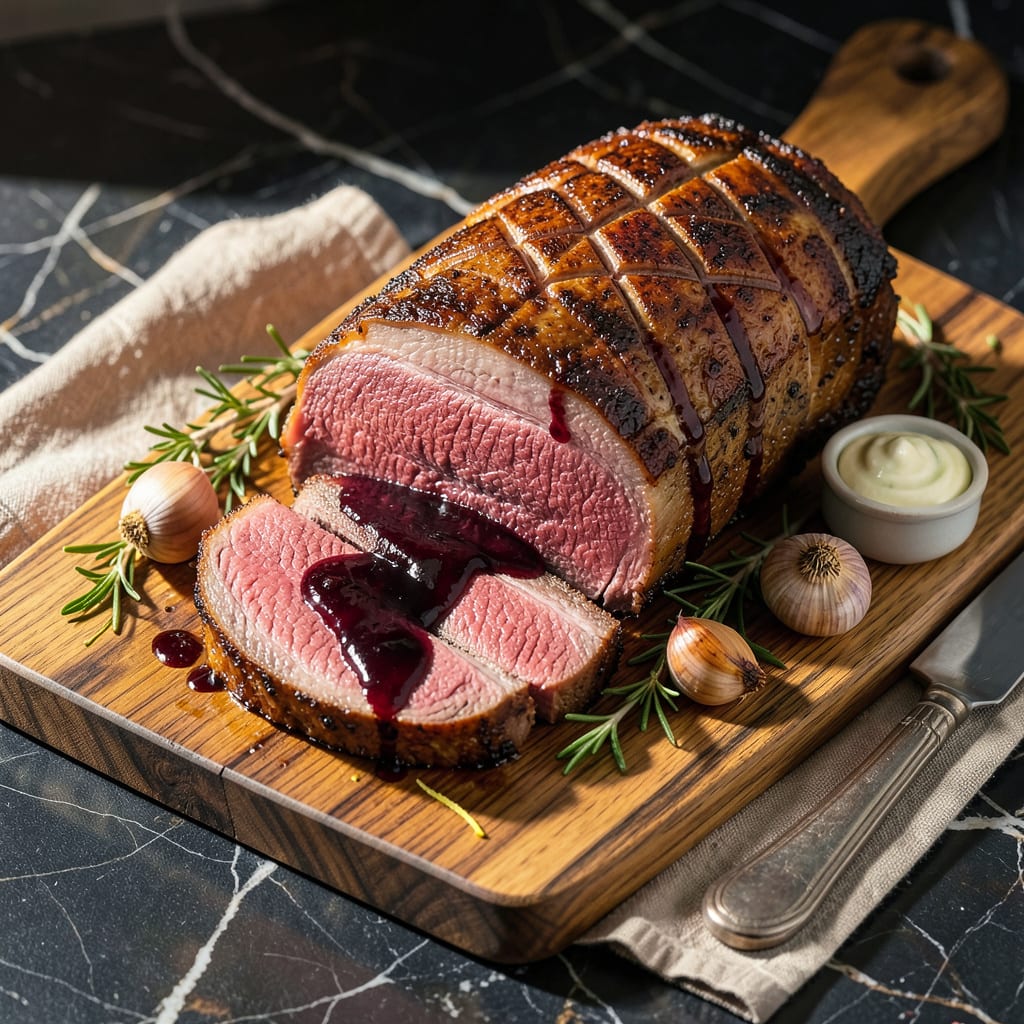
A 3-pound bone-in prime rib serves about 3–4 people with standard portions (8–10 oz per serving), while boneless yields 4–5 servings. For hearty appetites or leftovers, plan for 2–3 servings max.
I always remind my guests that prime rib shrinks during cooking—bone-in cuts lose about 25–30% of their weight, while boneless trims down less dramatically. 🔥 This means that 3-pound starting weight translates to roughly 2.1–2.25 pounds of edible meat after roasting. The bone itself adds flavor but reduces usable portions, which is why I prefer boneless for smaller gatherings where every ounce counts.
What many don’t realize is how side dishes impact portioning. If you’re serving heavy sides like loaded mashed potatoes or creamy risotto, you can comfortably stretch those servings by 20%—your guests will naturally balance their plates. For holiday feasts, I carve slightly thinner slices (½-inch thick) to maximize servings without sacrificing presentation.
💡 In This Article
- How Prime Rib Weight Translates to Servings
- Prime Rib Serving Tips for Holidays and Gatherings
How Prime Rib Weight Translates to Servings
Prime rib loses 25–30% of its weight during cooking due to moisture evaporation and fat rendering. A 3-pound bone-in cut typically yields only 2.1–2.25 pounds of edible meat after roasting.
The bone itself weighs about 12–16 oz, while the fat cap (which can be ¼-inch thick) melts away, leaving you with less usable protein than you started with. This shrinkage explains why butchers often recommend 1 pound per person for bone-in cuts—it accounts for the waste. 🔥
The fat cap plays a crucial role in both flavor and yield. A well-marbled prime rib with a ½-inch fat cap will shrink more than a leaner cut, but it delivers richer taste and juicier texture. I’ve found that boneless roasts retain about 5–10% more weight post-cooking because they lack the bone’s moisture-wicking effect.
For comparison, a 3-pound boneless prime rib might yield 2.4–2.5 pounds of servable meat—enough for an extra serving or two. ✨
Visualizing portions helps avoid overestimating. One rib bone (about 1.5–2 inches wide) typically serves 2 people when sliced ½-inch thick. For a 3-rib roast, that’s 6 servings—but remember, the end ribs are smaller. I always carve the center ribs first for uniform portions, then adjust the end slices slightly thicker to compensate.
This method ensures everyone gets a fair share without awkwardly small pieces. 💫
Temperature and resting time also impact yield. A roast cooked to medium-rare (130°F) retains more moisture than one pushed to medium (140°F), which can lose an additional 5–8% in weight. Letting the meat rest for 20–30 minutes before carving allows juices to redistribute, reducing the “drip loss” that occurs when you slice too soon.
I’ve seen impatient carvers lose nearly ½ cup of precious au jus by rushing this step! ⚡
For holiday meals, I factor in side dish competition. If you’re serving rich sides like Yorkshire pudding or scalloped potatoes, guests naturally take smaller portions—about 6–8 oz per person instead of the standard 8–10 oz. This means your 3-pound roast could stretch to 5–6 servings in a multi-course meal.
Conversely, for a protein-focused dinner (think prime rib with just a salad), plan for heavier 10–12 oz portions and fewer total servings. 🌟
The fat cap’s thickness changes everything. A ¼-inch cap renders out almost completely, while a ½-inch cap leaves some chewy bits that some guests love and others avoid. I trim mine to ⅓-inch for balance—enough flavor without excessive waste. Pro tip: Save those trimmings!
Rendered prime rib fat makes the most decadent roasted potatoes or Yorkshire pudding you’ve ever tasted. 💛
Here’s my quick mental math for portioning: For bone-in, subtract 30% for waste, then divide by 8 oz (½ lb) per serving. For boneless, subtract 20% and divide by 6 oz if serving heavy sides. This formula has saved me from countless awkward “will there be enough?” moments at dinner parties.
When in doubt, add an extra ½ pound—leftovers make legendary sandwiches! 🔥

Trained in classic French technique but raised on slow-cooked ribs and spicy rubs, she blends culinary skill with smoke and soul.
- Recipe for Boneless Pork Chops in Cast Iron Skillet: Sear and Baste to Juicy Perfection - October 3, 2026
- Recipe for Boneless Cross Rib Roast: Slow-Roasted Beef with Herb Crust - October 3, 2026
- Hamburgers in Sauce Recipe Crock Pot: Slow-Cooked Savory Delight - October 3, 2026