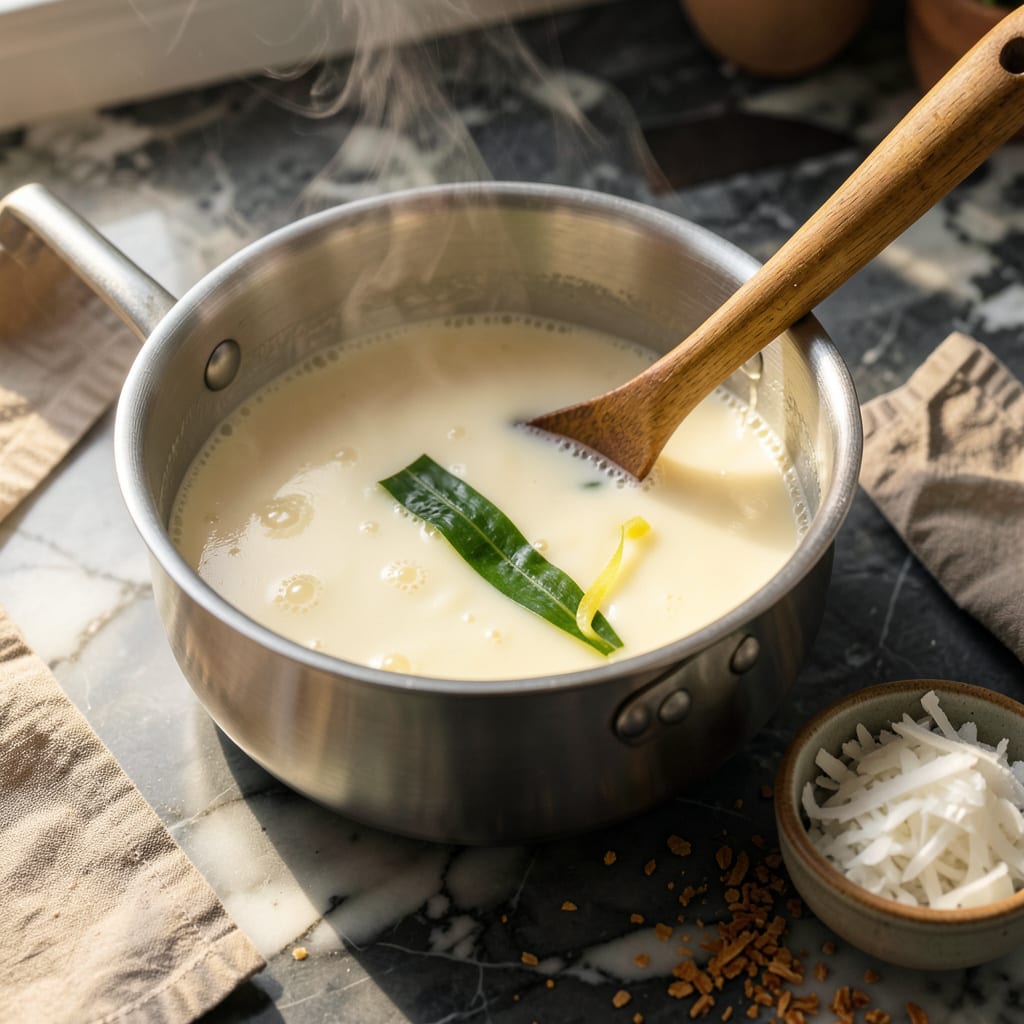
Yes, you can boil coconut milk, but avoid high heat for too long as it may separate or curdle. Simmer gently and stir frequently for best results in soups, curries, or sauces.
I’ve worked with coconut milk in countless recipes, and the key is understanding its delicate nature. The natural fats and water in coconut milk form an emulsion that breaks under aggressive heat, which is why low-and-slow simmering works best. 🔥 For dishes like Thai curries or creamy soups, I add it toward the end of cooking—just enough to heat through without reaching a rolling boil. This preserves the rich, velvety texture that makes coconut milk so special in cooking.
💡 In This Article
- Why Coconut Milk Reacts to High Heat
- Best Ways to Heat Coconut Milk Without Ruining It
Why Coconut Milk Reacts to High Heat
Coconut milk is a natural emulsion—tiny fat globules suspended in water, held together by plant proteins and stabilizers. When exposed to high heat (especially above 180°F), these bonds weaken and the fat separates from the liquid, creating that unappetizing curdled appearance.
The science here is similar to how cream separates when boiled too vigorously, but coconut milk is even more sensitive because its fat content (around 24-30%) is higher than dairy cream.
What’s fascinating is how the stabilizers behave under heat. Commercial coconut milk often contains guar gum or carrageenan, which help maintain the emulsion. But these stabilizers have temperature limits—guar gum starts breaking down at 160°F, while carrageenan loses effectiveness above 140°F. That’s why you’ll notice separation happening even before the liquid reaches a full boil.
The fat rises to the top as golden oil, while the remaining liquid becomes watery and pale.
Heat also transforms coconut milk’s flavor profile. Gentle warming enhances its natural sweetness and nutty aroma, but aggressive boiling can make it taste bitter or “burnt.” This happens because the Maillard reaction (the same process that browns meat) occurs at lower temperatures in plant-based fats.
I’ve found that coconut milk heated above 190°F for more than 5 minutes develops an unpleasant, almost metallic aftertaste.
The texture changes are dramatic too. Properly heated coconut milk should coat the back of a spoon like heavy cream. But if you push it too far, it turns grainy or even forms small curds—similar to what happens when you overheat almond milk.
The difference is that coconut milk’s higher fat content makes these curds more pronounced and harder to re-incorporate, even with vigorous whisking.
Here’s what’s actually happening at the molecular level: The heat causes the coconut proteins to denature and clump together, squeezing out the water content. This is why you’ll sometimes see tiny white specks in overheated coconut milk—those are the coagulated proteins.
The process is irreversible, which is why prevention through temperature control is so important in cooking with coconut milk.
Interestingly, full-fat coconut milk handles heat better than light versions. The extra fat (up to 60% in some brands) acts as a buffer, protecting the emulsion. That’s why I always recommend using full-fat for cooking applications where heat is involved.
The tradeoff is that you’ll need to be more vigilant about stirring to prevent the thicker fat layer from burning at the bottom of your pot.
What most people don’t realize is that acidity accelerates this separation. Adding lime juice or tomatoes to your coconut milk dish? The acid breaks down the emulsion even faster when heated.
That’s why Thai cooks add their lime leaves and galangal first, then the coconut milk later in the cooking process—it’s all about controlling when and how the emulsion gets stressed. ✨

Trained in classic French technique but raised on slow-cooked ribs and spicy rubs, she blends culinary skill with smoke and soul.
- Recipe for Boneless Pork Chops in Cast Iron Skillet: Sear and Baste to Juicy Perfection - October 3, 2026
- Recipe for Boneless Cross Rib Roast: Slow-Roasted Beef with Herb Crust - October 3, 2026
- Hamburgers in Sauce Recipe Crock Pot: Slow-Cooked Savory Delight - October 3, 2026