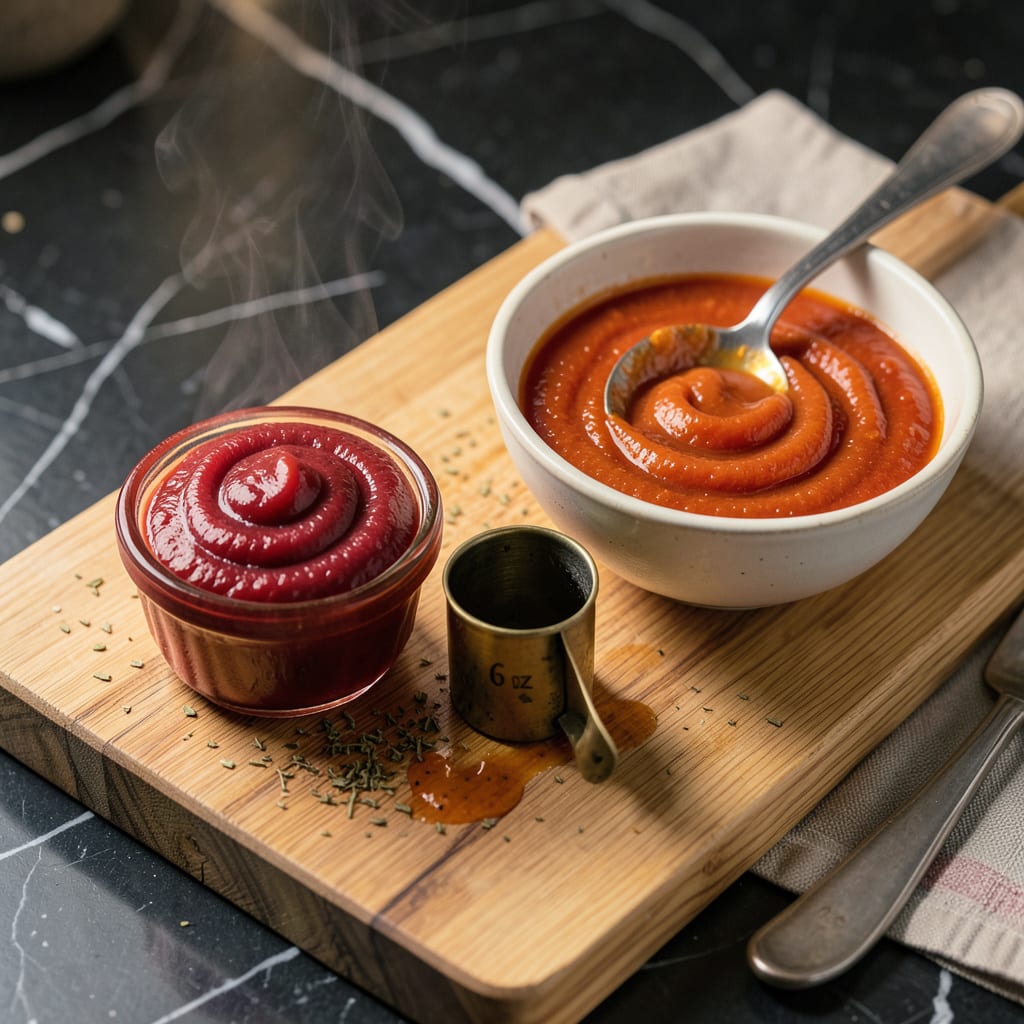
6 ounces of tomato paste equals about 12 ounces (1.5 cups) of tomato sauce. Simply mix it with 6 ounces of water or broth to achieve the right consistency for recipes.
This ratio works because tomato paste is essentially concentrated sauce—it’s cooked down to remove excess moisture, leaving behind intense flavor. 🔥 In my kitchen, I always keep this conversion handy when I need to adjust recipes on the fly. The key is matching the liquid volume to the paste’s thickness, which is why a 1:1 ratio of paste to water works perfectly for most dishes. For richer flavor, I often swap water for vegetable broth or even a splash of red wine.
💡 In This Article
- How Tomato Paste and Sauce Ratios Work in Cooking
- Practical Uses for Tomato Paste and Sauce Substitutions
How Tomato Paste and Sauce Ratios Work in Cooking
Tomato paste is essentially tomato sauce with most of the water removed—typically about 80% of the moisture content. During production, tomatoes are cooked for 4-6 hours at 180-200°F to reduce them to a thick concentrate. This process intensifies flavors while preserving natural pectin, which acts as a thickening agent.
The result is a product that’s 5-6 times more concentrated than standard tomato sauce.
In professional kitchens, we use a standard 1:1 dilution ratio—meaning for every ounce of paste, you add an equal ounce of liquid. This works because tomato paste contains about 24-30% solids compared to sauce’s 5-7% solids. When you add water back, you’re essentially reversing the reduction process.
The key is using room temperature liquid (about 70°F) to prevent clumping and ensure even rehydration.
What most home cooks don’t realize is that the type of liquid dramatically affects the final product. Water gives you a neutral base, while broth adds depth. I often use 1/4 cup red wine per 6 oz paste for pasta sauces—it enhances the natural umami while cutting through the acidity.
For Mexican dishes, I’ll mix in 2 tablespoons lime juice to brighten the flavor profile.
The science behind this transformation involves osmosis and pectin activation. When you add liquid to paste, the water molecules get absorbed by the concentrated tomato solids, while the pectin fibers relax and redistribute. This creates that familiar sauce consistency. The process takes about 5-7 minutes of gentle stirring at medium-low heat to fully incorporate.
Temperature control is crucial during rehydration. Too hot (above 160°F) and you’ll break down the pectin too quickly, resulting in a watery sauce. Too cold (below 60°F) and the paste won’t fully dissolve, leaving you with unpleasant lumps. I always aim for 120-140°F—warm enough to blend smoothly but gentle enough to preserve texture.
Consider these professional ratios for different applications:
- Basic sauce: 1:1 paste to water (standard conversion)
- Rich sauce: 1:0.75 paste to broth (more intense flavor)
- Wine sauce: 1:0.5 paste to wine + 0.25 water (balanced acidity)
- Quick pizza sauce: 1:0.6 paste to water + 1 tsp olive oil per 6 oz paste
Remember that commercial tomato paste often contains added salt (about 120-150mg per tablespoon), so you may need to adjust seasoning when converting to sauce. I always taste before adding extra salt—especially when using broth as my dilution liquid. ✨

Trained in classic French technique but raised on slow-cooked ribs and spicy rubs, she blends culinary skill with smoke and soul.
- Recipe for Boneless Pork Chops in Cast Iron Skillet: Sear and Baste to Juicy Perfection - October 3, 2026
- Recipe for Boneless Cross Rib Roast: Slow-Roasted Beef with Herb Crust - October 3, 2026
- Hamburgers in Sauce Recipe Crock Pot: Slow-Cooked Savory Delight - October 3, 2026