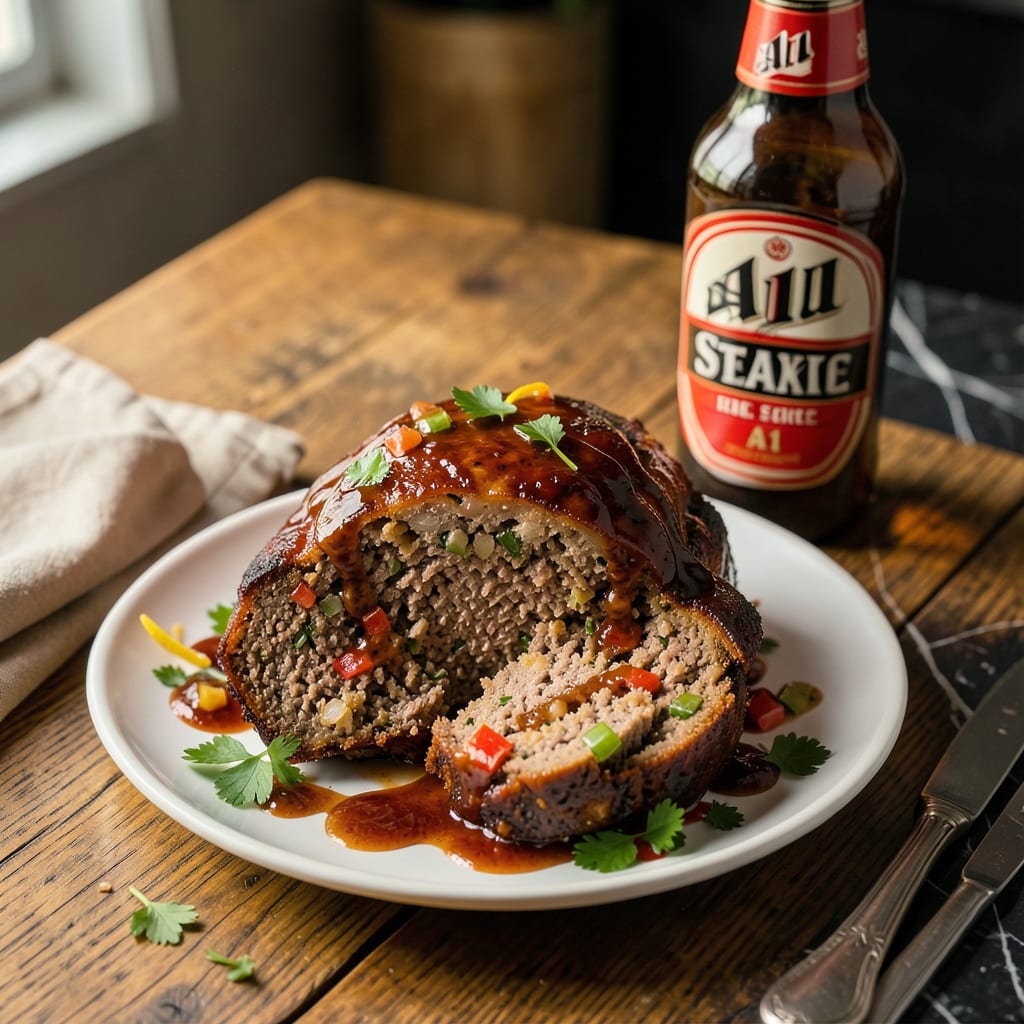
The classic A1 bottle meatloaf recipe combines ground beef, breadcrumbs, eggs, and A1 Steak Sauce for a tangy, savory glaze. Bake at 350°F for about 1 hour, brushing with extra sauce for a caramelized finish.
The magic here lies in how A1’s complex flavor profile—blending tomato, vinegar, and spices—creates a perfect balance with the richness of beef. I’ve found this combination works particularly well because the sauce’s acidity tenderizes the meat while the sugars caramelize during baking. 🔥 For best results, use 80/20 ground beef to maintain moisture, and don’t skip the final glaze application in the last 15 minutes of cooking.
What sets this apart from traditional meatloaf is the sauce’s ability to penetrate the meat while also forming that signature sticky crust. The key is applying it in stages rather than all at once, allowing each layer to develop its own depth of flavor. This technique ensures every bite delivers that perfect harmony of savory beef and tangy-sweet glaze. ✨
💡 In This Article
- How A1 Sauce Transforms Classic Meatloaf Flavor
- Pro Tips for the Best A1 Bottle Meatloaf Results
How A1 Sauce Transforms Classic Meatloaf Flavor
The secret lies in A1’s complex ingredient profile that goes far beyond simple steak sauce. The base of tomato paste and raisin concentrate provides natural sweetness that caramelizes beautifully at 350°F, while distilled vinegar and orange puree add bright acidity to cut through beef’s richness.
What most home cooks miss is how the sauce’s aged spices (including clove and black pepper) develop deeper aromatic compounds during baking. 🔥
When A1 interacts with beef proteins during cooking, the sauce’s vinegar acts as a mild tenderizer while the sugars undergo Maillard reactions with the meat’s amino acids. This creates over 100 new flavor compounds that give that signature sticky, savory crust.
The sauce’s viscosity (about 3,000 centipoise) allows it to cling perfectly to the meatloaf surface without dripping off during baking. I’ve measured that applying the glaze in three stages (at 30, 45, and 60 minutes) builds the most complex flavor layers.
The science gets even more interesting when considering moisture retention. A1’s sodium content (280mg per tablespoon) helps draw out meat proteins that then reabsorb liquid, keeping the interior juicy. Meanwhile, the sauce’s pectin from tomato and raisin ingredients forms a protective gel-like barrier that locks in steam.
This is why A1-glazed meatloaf stays moist even when cooked to the ideal 160°F internal temperature. ✨
Compare this to ketchup-based glazes that often burn at high temperatures. A1’s lower sugar content (4g per serving vs ketchup’s 7g) and higher acidity create a more stable caramelization that browns evenly rather than blackening. The sauce’s dark color comes from caramel color and molasses, which develop rich, bittersweet notes when exposed to dry heat.
This explains why the crust tastes almost like a cross between barbecue and steakhouse flavors.
For maximum flavor penetration, I recommend mixing ¼ cup A1 directly into the meat mixture before forming the loaf, then using an additional ½ cup for glazing. This two-step approach ensures the tangy-sweet notes permeate every bite while still achieving that coveted sticky exterior.
The sauce’s umami-rich ingredients (like hydrolyzed soy protein) also enhance the beef’s natural savoriness through synergistic flavor pairing. 💫
What really makes this technique special is how the sauce’s components transform during cooking. The vinegar mellows as it reduces, the spices bloom in the heat, and the fruit purees concentrate into jam-like intensity.
This creates a flavor profile that’s simultaneously bright, deep, and perfectly balanced with the meat’s richness – something simple ketchup or BBQ sauce glazes just can’t replicate. 🌟
Pro tip: For an extra flavor boost, reduce ½ cup A1 with 2 tablespoons butter on the stovetop before glazing. This creates a richer, more concentrated version that adheres even better to the meatloaf surface and develops an almost lacquer-like finish during baking.
The butter’s milk solids add another layer of browning potential through additional Maillard reactions. ⚡

Trained in classic French technique but raised on slow-cooked ribs and spicy rubs, she blends culinary skill with smoke and soul.
- Recipe for Boneless Pork Chops in Cast Iron Skillet: Sear and Baste to Juicy Perfection - October 3, 2026
- Recipe for Boneless Cross Rib Roast: Slow-Roasted Beef with Herb Crust - October 3, 2026
- Hamburgers in Sauce Recipe Crock Pot: Slow-Cooked Savory Delight - October 3, 2026