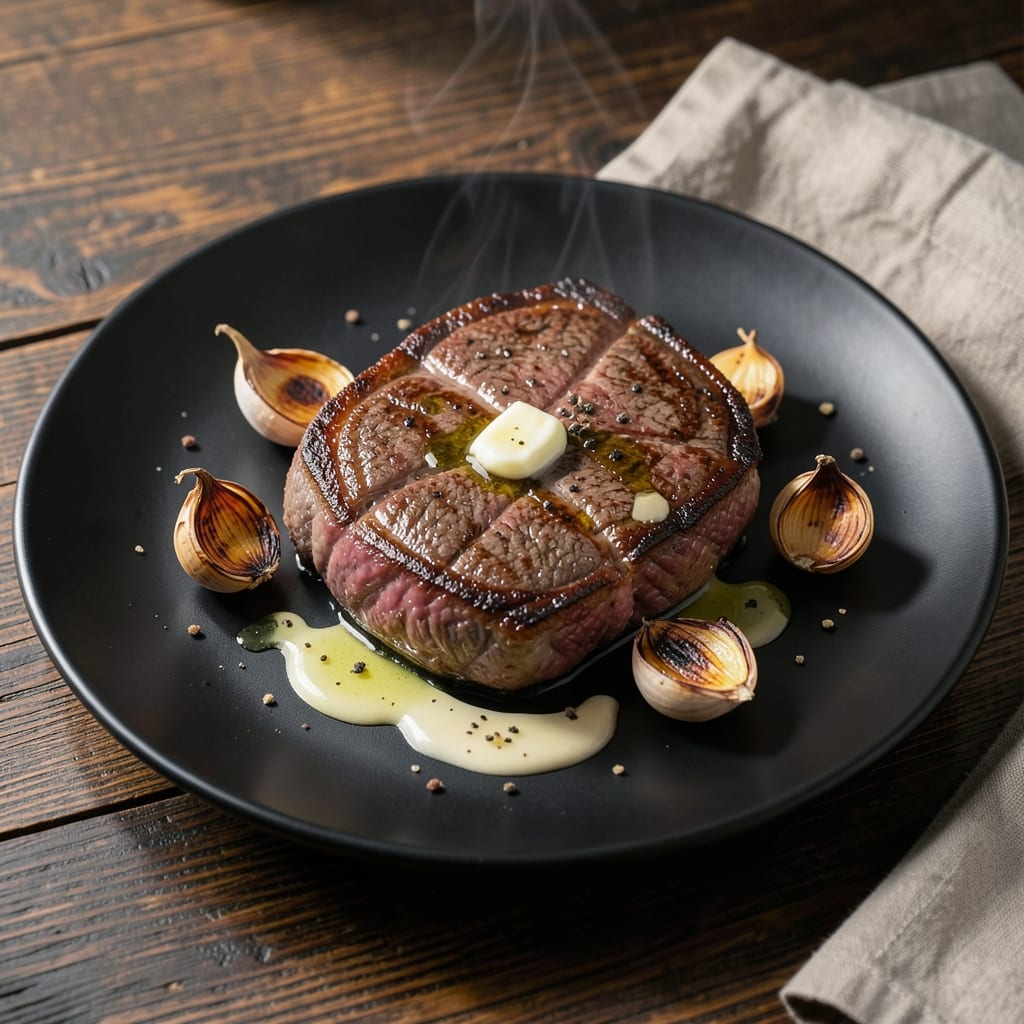
Few cuts of beef command the same reverence as A5 wagyu, where intense marbling creates a buttery texture that melts at room temperature. This premium steak requires minimal intervention to showcase its natural richness and delicate flavor.
The key to proper preparation lies in gentle heat and precise timing. Unlike traditional steaks, A5 wagyu benefits from lower temperatures that render the fat without overcooking the meat. A simple sear or sous vide method preserves its luxurious qualities.
What emerges is a steak with a caramelized crust and an interior so tender it cuts with a spoon. The fat marbling creates a buttery finish that defines this Japanese delicacy.
Serve immediately to experience its peak texture and flavor. This is steak at its most decadent.
Ingredients for A5 Wagyu Steak
Premium beef meets minimal ingredients for an extraordinary dining experience with rich, buttery depth.
| Ingredient | Amount | Notes |
|---|---|---|
| A5 Wagyu Steak 🥩 | ¾ lb | Thick-cut, heavily marbled |
| Kosher Salt 🧂 | 1 tsp | Diamond Crystal preferred |
| Black Pepper 🌶️ | ½ tsp | Freshly cracked |
| Neutral Oil 🫒 | 1 tbsp | High smoke point, like avocado |
| Unsalted Butter 🧈 | 2 tbsp | For basting |
| Garlic Cloves 🧄 | 2 cloves | Lightly crushed, peeled |
| Fresh Thyme Sprigs 🌿 | 2 whole | Optional for aroma |
| Fresh Rosemary Sprigs 🌿 | 1 whole | Optional for aroma |
| Flaky Sea Salt 🧂 | ½ tsp | For finishing |
| Soy Sauce 🥢 | 1 tbsp | For serving, optional |
| Wasabi Paste 🌿 | 1 tsp | For serving, optional |
| Pickled Ginger 🌱 | 2 tbsp | For serving, optional |
[recipe_ingredient_scaler]
A5 wagyu is non-negotiable here. Costco and Snake River Farms offer reliable online ordering if local butchers don’t stock it. Look for vibrant red color with abundant white marbling—this fat content defines the cut. The steak should be at least 1.5 inches thick to prevent overcooking. Japanese A5 is the gold standard, but domestic wagyu works in a pinch.
No wagyu? This technique fails with leaner cuts—stick to ribeye if you must substitute. Avocado oil is ideal for searing, but grapeseed works too. Skip the garlic and herbs if you prefer pure beef flavor. For basting, ghee can replace butter for a nuttier finish. The soy sauce and wasabi are traditional accompaniments, but a simple flaky salt finish is equally valid.
Serve immediately—this cut loses its magic as it cools. Leftovers (if any exist) keep in the fridge for 2-3 days, but reheating ruins the texture. Best enjoyed fresh off the pan or grill. Store raw steak in its original vacuum-sealed packaging until ready to cook.
Why You’ll Love This Recipe
- 5-Minute Luxury: I sear it in a screaming-hot pan with just oil, butter, salt, and pepper—no fuss, no complicated steps.
- Buttery Perfection: That first bite of marbled A5 with a crisp butter crust? Ridiculously good.
- Special Occasion Ready: I pull this out for date night or when I want to feel fancy without a restaurant bill.
- No Leftovers Needed: Honestly, it’s so rich and satisfying that one steak splits perfectly between two people.
Step-by-Step Instructions for A5 Wagyu Steak
Here’s the method I use to achieve a perfect sear while preserving the steak’s luxurious marbling.
Step 1: Season and Rest the Steak Properly
Pat the 0.75 lb A5 Wagyu Steak completely dry with paper towels. This is crucial—excess moisture prevents proper browning. Season both sides evenly with the 1 tsp Kosher Salt and 0.5 tsp Black Pepper, pressing gently so the seasoning adheres.
Let the steak rest at room temperature for 30-45 minutes. This allows the salt to penetrate and the meat to cook more evenly. Don’t skip this step with Wagyu—the fat needs to soften slightly for optimal rendering.
Step 2: Preheat and Sear in Neutral Oil
Place a heavy skillet (cast iron preferred) over medium-high heat until very hot. Add the 1 tbsp Neutral Oil and swirl to coat. The oil should shimmer but not smoke—if it smokes, your heat is too high.
Lay the steak in the pan gently, away from you to avoid splatters. Sear undisturbed for 2-3 minutes until a deep, golden-brown crust forms. Flip once and sear the other side for another 2-3 minutes. The high marbling means this will cook faster than other steaks.
Step 3: Baste with Butter and Aromatics
Reduce heat to medium. Add the 2 tbsp Unsalted Butter, 2 cloves Garlic Cloves, 2 whole Fresh Thyme Sprigs, and 1 whole Fresh Rosemary Sprigs to the pan. Tilt the skillet slightly and spoon the foaming butter over the steak continuously for 1-2 minutes.
This basting technique adds layers of flavor while ensuring the steak cooks evenly. Watch for the butter to turn a light brown and smell nutty—that’s when it’s working perfectly. Remove the pan from heat if the butter starts to darken too quickly.
Step 4: Rest and Finish with Flaky Salt
Transfer the steak to a cutting board or warm plate. It should reach an internal temperature of 125-130°F for medium-rare. Let it rest for 5-10 minutes—this allows the juices to redistribute, which is especially important for Wagyu’s high fat content.
Slice against the grain into ½-inch thick pieces. Sprinkle with the 0.5 tsp Flaky Sea Salt just before serving. The resting period ensures every bite is juicy and flavorful, with the fat evenly distributed.
Step 5: Serve with Traditional Accompaniments
Arrange the slices on a warm platter. Serve immediately with 1 tbsp Soy Sauce, 1 tsp Wasabi Paste, and 2 tbsp Pickled Ginger on the side for a traditional Japanese steakhouse experience. These accompaniments cut through the richness beautifully.
The steak should be tender enough to cut with a fork, with a buttery texture that melts in your mouth. The crust should be deeply caramelized, while the interior remains rosy and succulent.
Pro Tips For Making A5 Wagyu Steak
- Low and Slow Heat: I learned this the hard way—high heat ruins the marbling. Use medium-low to render the fat without charring the outside.
- Salt Just Before Cooking: A5 Wagyu’s fat is delicate; salt it right before searing to avoid drawing out moisture and drying the surface.
- Skip the Pepper Early: Black pepper can burn at low temps. Add it after the first flip to keep the flavor clean and avoid bitterness.
- Butter Last: Add the butter in the final 30 seconds and baste like crazy—it’s the easiest way to get that glossy, rich finish.
Health Benefits of This Recipe
Rich in Healthy Fats
This steak is packed with monounsaturated fats, the same heart-healthy fats found in olive oil. A 3.5-ounce serving provides about 12 grams of these beneficial fats, which support cardiovascular health and help lower bad cholesterol levels. 💪
High-Quality Protein
You’ll get approximately 20 grams of protein per 3.5-ounce serving, complete with all essential amino acids. This protein is easily digestible and supports muscle maintenance and repair, making it ideal for active lifestyles.
Iron and Zinc Boost
A serving delivers about 15% of your daily iron needs and 30% of zinc requirements. These minerals are crucial for immune function, energy production, and maintaining healthy blood cells. I notice I feel more energized after enjoying this dish.
B Vitamin Complex
This creation is rich in vitamin B12, riboflavin, and niacin, which play vital roles in metabolism and nervous system health. The high fat content actually helps your body absorb these fat-soluble vitamins more effectively.
Conjugated Linoleic Acid
Wagyu beef contains higher levels of CLA than regular beef—about 30% more. This compound has been linked to reduced body fat and improved immune function. The marbling you see is working for your health. ✨
Low in Saturated Fat
Despite its rich marbling, most of the fat in this steak is monounsaturated. It contains less saturated fat than many other premium cuts, making it a smarter indulgence for those watching their fat intake.
Nutrition Facts
Frequently Asked Questions
Should I cook it straight from the fridge?
Always let it sit at room temperature for 30-45 minutes first. This ensures even cooking and proper fat rendering. Cold meat seizes up, preventing the marbling from melting beautifully.
What’s the ideal internal temperature?
Aim for 125-130°F for medium-rare. Use a meat thermometer—overcooking wastes the buttery texture. The steak will continue rising 5°F while resting.
Can I use a grill instead of a pan?
Yes, but use indirect heat to prevent flare-ups from the fat. Sear over direct high heat for 2 minutes per side, then move to cooler zone to finish.
Why skip seasoning until the end?
Salt draws out moisture, which can interfere with the crust. Finish with flaky sea salt just before serving to preserve texture and enhance the natural beef flavor.

Trained in classic French technique but raised on slow-cooked ribs and spicy rubs, she blends culinary skill with smoke and soul.
- Recipe for Boneless Pork Chops in Cast Iron Skillet: Sear and Baste to Juicy Perfection - October 3, 2026
- Recipe for Boneless Cross Rib Roast: Slow-Roasted Beef with Herb Crust - October 3, 2026
- Hamburgers in Sauce Recipe Crock Pot: Slow-Cooked Savory Delight - October 3, 2026