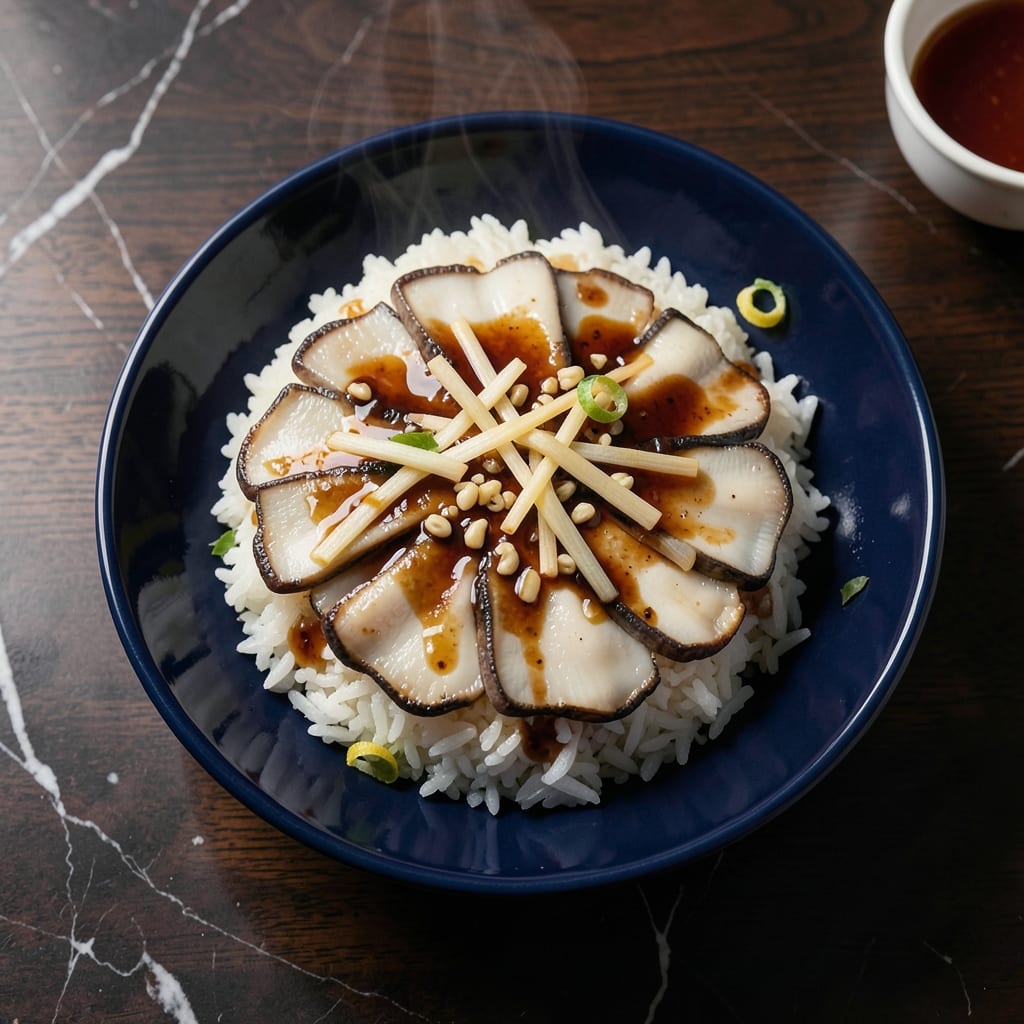
This traditional Cantonese preparation elevates abalone to its rightful place as a delicacy. The wok-stirred method ensures tender texture while preserving natural sweetness.
I’ve refined this technique to maintain authenticity without sacrificing accessibility. The key lies in proper abalone preparation and precise heat control during stir-frying.
What emerges is a dish with silky abalone slices, perfectly absorbing the savory sauce. Each bite delivers the ocean’s essence with restaurant-quality finesse.
Serve with steamed jasmine rice to honor this traditional masterpiece. The result speaks for itself.
Ingredients for Abalone Recipe Chinese
Traditional Cantonese ingredients create this silky, restaurant-quality abalone dish with authentic flavor.
| Ingredient | Amount | Notes |
|---|---|---|
| Abalone 🐚 | 1 lb | Fresh or frozen, sliced thin |
| Jasmine Rice 🍚 | 2 cups | Uncooked, for serving |
| Shaoxing Wine 🍶 | 2 tbsp | Chinese cooking wine |
| Light Soy Sauce 🫒 | 2 tbsp | For seasoning and depth |
| Oyster Sauce 🫒 | 1 tbsp | Thick, savory sauce |
| Ginger Root 🌿 | 1 whole | Peeled, julienned |
| Garlic Cloves 🧄 | 3 cloves | Minced finely |
| Green Onions 🧅 | 2 whole | Sliced thin, for garnish |
| Sugar 🍚 | 1 tsp | To balance flavors |
| Cornstarch 🌾 | 1 tsp | For velveting abalone |
| Water 💧 | ¼ cup | For velveting mixture |
| Sesame Oil 🫒 | 1 tsp | For finishing aroma |
| Vegetable Oil 🫒 | 2 tbsp | High smoke point for stir-frying |
| White Pepper 🌶️ | ¼ tsp | Ground, for subtle heat |
[recipe_ingredient_scaler]
The abalone quality is paramount. Asian seafood markets often carry fresh or frozen options—look for live abalone if available, or high-grade frozen from Whole Foods. Slicing thin ensures even cooking and maximum sauce absorption. The jasmine rice should be Thai jasmine for the authentic fragrance and texture. Proper velveting with cornstarch and water transforms the abalone into that signature tender texture.
No Shaoxing wine? Dry sherry works as a substitute. For gluten-free, use tamari instead of soy sauce. Oyster sauce can be replaced with vegetarian oyster sauce (mushroom-based) if needed. Fresh ginger and garlic are essential—avoid powdered versions. The green onions can be swapped with chives in a pinch, though the flavor profile differs slightly.
Prepped abalone can be refrigerated for up to 1 day in the velveting mixture. Cooked dish keeps for 2-3 days in the fridge, though best served fresh. Reheat gently to avoid toughening the abalone. Always use a well-seasoned wok or heavy skillet for optimal heat distribution.
Why You’ll Love This Recipe
- One Pot Wonder: The abalone and rice cook together, soaking up all that Shaoxing wine and soy goodness with zero extra pans.
- Umami Bomb: That first bite of tender abalone with oyster sauce and light soy? Honestly, it’s like a flavor party in my mouth.
- Special Occasion Ready: I serve this for Lunar New Year and birthdays—it feels luxurious but takes less effort than you’d think.
- Leftovers Gold: Even better the next day. The rice absorbs all the sauce overnight, making it taste even richer for lunch.
Step-by-Step Instructions for Chinese Abalone Stir-Fry
Master the traditional Cantonese technique for tender abalone with a rich, savory wok sauce.
Step 1: Velvet the Abalone for Maximum Tenderness
Begin by slicing the 1 lb Abalone into thin, even pieces. In a bowl, combine the abalone with 1 tsp Cornstarch and 0.25 cup Water. Stir gently to coat each piece evenly—the mixture should look slightly milky.
This velveting process creates a protective barrier that locks in moisture during cooking. Let it marinate for 10 minutes while you prepare the remaining ingredients. The abalone should feel slightly tacky to the touch when ready.
Step 2: Prepare the Aromatics and Sauce Base
Julienne the 1 whole Ginger Root into fine matchsticks. Mince the 3 cloves Garlic Cloves and slice the 2 whole Green Onions thinly, separating the white and green parts. Keep the green portions for garnish.
In a small bowl, combine the 2 tbsp Light Soy Sauce, 1 tbsp Oyster Sauce, 2 tbsp Shaoxing Wine, 1 tsp Sugar, and 0.25 tsp White Pepper. Stir until the sugar fully dissolves—this creates the balanced, umami-rich sauce that defines the dish.
Step 3: Stir-Fry the Abalone with Precision
Heat a wok over high heat until a bead of water sizzles and evaporates immediately. Add 2 tbsp Vegetable Oil and swirl to coat. When the oil begins to shimmer, add the ginger and garlic, stirring constantly for 15-20 seconds until fragrant but not browned.
Add the velveted abalone in a single layer. Let it sear undisturbed for 30 seconds before stirring. Cook for 2-3 minutes until the abalone turns opaque and the edges begin to curl slightly. The cornstarch coating should create a light, glossy sheen on each piece.
Step 4: Finish with Sauce and Garnish
Pour the prepared sauce mixture over the abalone. Stir well to coat each piece evenly, cooking for an additional 1-2 minutes until the sauce thickens to a glossy consistency that clings to the abalone.
Remove from heat and drizzle with 1 tsp Sesame Oil. Garnish with the reserved green onion slices. The sesame oil should add a nutty aroma that complements the deep, savory flavors of the dish.
Step 5: Serve Immediately with Steamed Jasmine Rice
Spoon the abalone and sauce over steamed 2 cups Jasmine Rice. The rice should be hot and fluffy, ready to soak up the rich sauce. Serve immediately—the abalone is best when tender and the sauce is at its most fragrant.
Each bite should deliver the abalone’s natural sweetness, balanced by the complex, savory notes of the sauce. The dish should have a glossy appearance with the abalone pieces evenly coated and glistening.
Pro Tips For Making Abalone Recipe Chinese
- Pound the Abalone: I learned this the hard way—tenderizing the abalone with the flat side of a cleaver for 2-3 minutes before cooking breaks down the tough fibers. Without this, even a long braise leaves it chewy.
- Bloom the Sauces: Heat the oyster sauce and light soy in the pan for 30 seconds before adding the abalone—this deepens the flavor and prevents a raw, harsh taste.
- Skip the Overcrowding: Resist the urge to cook all the abalone at once; sear in batches or they’ll steam instead of caramelize, and you’ll lose that glossy, concentrated sauce.
- Use Day-Old Rice: Sounds weird, but it works: left-over jasmine rice soaks up the abalone braising liquid better than fresh, giving you that perfect sticky texture without turning mushy.
Essential Equipment for This Recipe
Wok Selection
Invest in a carbon steel wok—I use a 14-inch Joyce Chen for even heat distribution. The rounded bottom works best on gas stoves. A flat-bottom wok can work on electric ranges but won’t get as hot. 🔥
High Heat Source
This recipe demands high heat, so a gas burner with at least 15,000 BTUs is ideal. I upgraded to a Weilai Professional burner specifically for wok cooking. The intense heat is non-negotiable for that restaurant-quality sear.
Velveting Tools
A mixing bowl and whisk are essential for the cornstarch slurry. I prefer Pyrex bowls because they’re heatproof and easy to clean. The velveting mixture should be smooth, not lumpy, to properly coat the abalone.
Cutting Equipment
Use a sharp chef’s knife (I recommend Wüsthof) for slicing abalone thinly. A mandoline can help achieve uniform slices if you’re unsure. The abalone should be ⅛-inch thick for even cooking.
Serving Essentials
A rice cooker ensures perfect jasmine rice every time—I’ve used a Zojirushi for years. For serving, small ceramic bowls showcase the dish beautifully. The rice should be steaming hot when the abalone is ready.
Safety Gear
Don’t forget heat-resistant gloves and a splatter screen. Stir-frying at high heat can get messy. I keep a fire extinguisher nearby just in case. Safety first when working with such intense heat.
Nutrition Facts
Frequently Asked Questions
What’s the best way to tenderize abalone?
Pounding with a meat mallet helps, but the velveting technique with cornstarch and water is most effective. Soak sliced abalone in the mixture for 10 minutes before cooking.
Can I use canned abalone instead of fresh?
Yes, but drain and rinse it first to remove excess brine. Canned abalone is pre-cooked, so reduce stir-frying time to 1-2 minutes to avoid toughness.
Why does the sauce need Shaoxing wine?
It adds depth and balances flavors, cutting through the richness. For a non-alcoholic version, use 1 tsp rice vinegar plus 1 tbsp water.
How do I prevent the abalone from sticking to the wok?
Ensure the wok is very hot before adding oil, and don’t overcrowd the pan. The velveting coating also creates a natural barrier against sticking.

Trained in classic French technique but raised on slow-cooked ribs and spicy rubs, she blends culinary skill with smoke and soul.
- Recipe for Boneless Pork Chops in Cast Iron Skillet: Sear and Baste to Juicy Perfection - October 3, 2026
- Recipe for Boneless Cross Rib Roast: Slow-Roasted Beef with Herb Crust - October 3, 2026
- Hamburgers in Sauce Recipe Crock Pot: Slow-Cooked Savory Delight - October 3, 2026