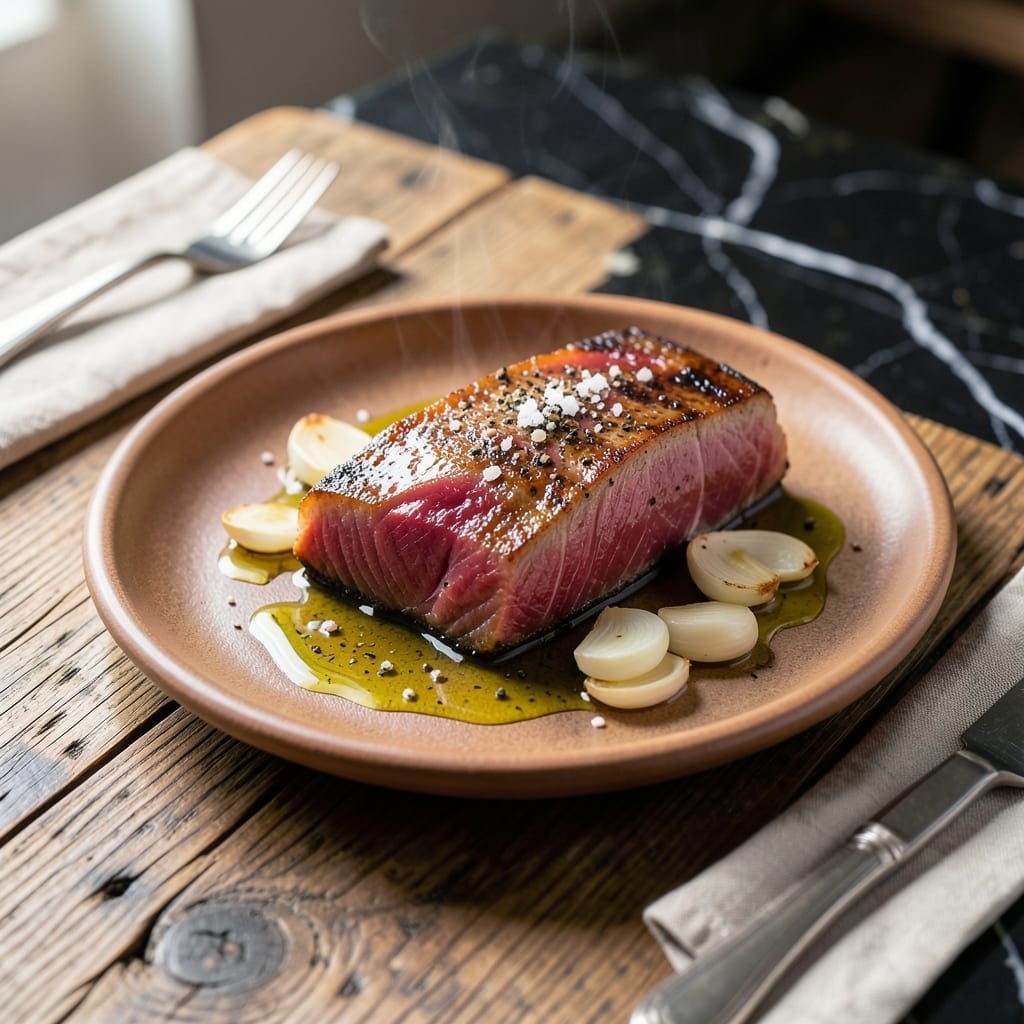
There’s a reason chefs prize albacore tuna loin for its buttery texture and clean, mild flavor. This recipe highlights that natural richness with a simple sear that locks in moisture while creating a golden crust.
With just a few ingredients and a hot pan, you can achieve restaurant-quality results at home. The key is precision—timing the sear to leave the center perfectly pink and tender.
What emerges is a dish that feels special but comes together in minutes. The tuna’s natural sweetness shines through, balanced by a crisp exterior that gives way to silky flesh.
Serve it sliced over greens or with a light citrus sauce to complement its delicate flavor. This is seafood at its finest.
Ingredients for Albacore Tuna Loin
Sushi-grade albacore and a handful of aromatics create restaurant-quality seared tuna at home.
| Ingredient | Amount | Notes |
|---|---|---|
| Albacore Tuna Loin 🐟 | 1 ½ lb | Sushi-grade, skin off, even thickness |
| Kosher Salt 🧂 | 1 tsp | Diamond Crystal preferred for even seasoning |
| Freshly Ground Black Pepper 🌶️ | ½ tsp | Coarse grind for texture |
| Olive Oil 🫒 | 3 tbsp | High smoke point, neutral flavor |
| Unsalted Butter 🧈 | 2 tbsp | For basting during sear |
| Garlic Cloves 🧄 | 2 cloves | Lightly crushed, peeled |
| Fresh Thyme Sprigs 🌿 | 3 sprigs | For aromatic basting |
| Lemon 🍋 | 1 whole | Zested and juiced for brightness |
| Shallot 🧅 | 1 whole | Finely minced for garnish |
| Extra-Virgin Olive Oil 🫒 | 2 tbsp | For finishing drizzle |
| Flaky Sea Salt 🧂 | ½ tsp | Maldon or Jacobsen for finish |
| Fresh Dill 🌿 | 2 tbsp | Chopped, for garnish |
[recipe_ingredient_scaler]
The tuna must be sushi-grade—look for deep red, glossy flesh with no fishy odor. Whole Foods and high-end seafood markets are reliable sources. Ask for the loin to be cut into even steaks (about 1.5 inches thick) for consistent cooking. The butter and oil combo creates that golden crust while the garlic and thyme infuse during basting. Never skip the pat-dry step; moisture prevents proper searing.
No fresh thyme? Dried thyme at one-third the amount works in a pinch. Out of shallots? Red onion is an acceptable substitute, though milder. For a citrus variation, swap lemon for lime or add a splash of orange zest. The key is high heat—use a heavy pan like cast iron or stainless steel. Avoid nonstick for this application as it won’t develop the same crust.
Serve immediately for optimal texture. Leftovers keep in the fridge for 1 day only—albacore dries out quickly. For best results, bring the tuna to room temperature before searing (20-30 minutes on the counter). This ensures even cooking and that perfect pink center.
Why You’ll Love This Recipe
- Five Ingredient Magic: I love that this only needs tuna loin, salt, pepper, olive oil, and butter—no complicated shopping list.
- Buttery Richness: The combination of olive oil and butter creates this ridiculous depth of flavor that makes the tuna taste luxurious.
- Fancy Enough for Guests: I serve this when I want to impress without stressing—looks gourmet but takes minutes.
- Leftovers? No Chance: Honestly, it disappears so fast I’ve never had any to store.
Step-by-Step Instructions for Albacore Tuna Loin
This method ensures a perfect sear and tender, buttery interior every time.
Step 1: Prep and Season the Albacore Tuna Loin
Pat the 1.5 lb Albacore Tuna Loin completely dry with paper towels—this is essential for achieving a proper sear. Check that the loin is of even thickness throughout to ensure consistent cooking.
Season all sides generously with the 1 tsp Kosher Salt and 0.5 tsp Freshly Ground Black Pepper. Press the seasoning into the flesh gently so it adheres well. Let the seasoned loin sit at room temperature for 10-15 minutes before cooking.
Step 2: Sear the Tuna Loin to Crusty Perfection
Heat 3 tbsp Olive Oil in a heavy skillet over medium-high heat until it shimmers but doesn’t smoke. Add the albacore tuna loin and sear for 2-3 minutes per side until a deep golden crust forms. The loin should release easily from the pan when it’s ready to flip.
During the last 30 seconds of searing, add the 2 tbsp Unsalted Butter, 2 cloves Garlic Cloves, and 3 sprigs Fresh Thyme Sprigs to the pan. Tilt the pan slightly and spoon the melted butter, garlic, and thyme over the loin continuously to baste it.
Step 3: Rest and Slice the Tuna Loin
Transfer the seared albacore tuna loin to a cutting board and let it rest for 5 minutes. This allows the juices to redistribute, ensuring each slice remains moist and tender. Slice the loin against the grain into ½-inch thick portions.
Arrange the slices on a serving platter. This resting period is critical—skipping it will result in dry, unevenly cooked pieces.
Step 4: Garnish and Serve Immediately
Finely mince the 1 whole Shallot and chop the 2 tbsp Fresh Dill. In a small bowl, combine the minced shallot, chopped dill, and the zest of the 1 whole Lemon.
Drizzle the slices with the 2 tbsp Extra-Virgin Olive Oil and sprinkle with the shallot-dill mixture. Finish with a pinch of 0.5 tsp Flaky Sea Salt for a delicate crunch and brightness. Serve immediately while warm.
Pro Tips For Making Albacore Tuna Loin
- Sear Fast, Rest Long: Crank the heat to high for a 60-90 second sear per side—albacore dries out fast. Then let it rest on a warm plate for at least 5 minutes to redistribute the juices.
- Pat It Bone-Dry: I learned this the hard way—blot the tuna loin with paper towels before seasoning, or the salt and pepper won’t stick, and the sear will steam instead of crisp.
- Skip the Overcook: Albacore turns tough if it hits medium—pull it at 120°F internal temp for perfect medium-rare. It’ll keep cooking off the heat, I promise.
- Butter Last Minute: Add the unsalted butter only in the last 30 seconds of searing, then baste it over the tuna. Sounds fussy, but it browns the butter without burning it.
Wine and Beer Pairings for These Flavors
White Wine Pairings
A crisp Sauvignon Blanc from New Zealand (I love Kim Crawford) cuts through the richness with its bright acidity and citrus notes. The grapefruit and lime flavors complement the lemon garnish perfectly. Serve chilled to 45-50°F for best results. 🍷
Rich White Options
For a creamier pairing, try a buttery Chardonnay from California—Rombauer is my go-to. Its oak-influenced vanilla notes enhance the tuna’s natural sweetness, while the acidity balances the dish’s richness. Decant for 10 minutes before serving.
Rosé Selections
A dry Provence rosé like Whispering Angel offers red fruit flavors with a crisp finish. The delicate strawberry and watermelon notes won’t overpower the tuna’s mild flavor. I find rosé works especially well with the dill garnish.
Light Beer Pairings
A pilsner such as Stella Artois provides a clean, crisp contrast to the tuna’s buttery texture. The light maltiness and subtle hop bitterness refresh your palate between bites. Serve at 40-45°F in a chilled glass. 🍺
Wheat Beer Twist
For something different, a Belgian witbier like Hoegaarden adds citrus and coriander notes that echo the lemon in the dish. The creamy texture of the beer mirrors the tuna’s richness, while the spice keeps it lively.
Sparkling Option
A brut Champagne or Prosecco cuts through the dish’s richness with its effervescence. I recommend La Marca Prosecco for its balance of apple and pear flavors with a crisp finish. The bubbles cleanse your palate beautifully.
Nutrition Facts
Frequently Asked Questions
How do I know when the tuna is done?
Look for a deep golden crust and use a meat thermometer to check the internal temperature. It should read 125-130°F for medium-rare, which keeps the center perfectly pink and tender. Overcooking will dry it out.
Why is sushi-grade required?
Sushi-grade means the fish has been handled with care to prevent parasites and spoilage. Since this recipe leaves the center rare, using anything less than sushi-grade could pose health risks. Always verify freshness with your fishmonger.
Can I use a different pan?
Stick with cast iron or stainless steel for best results. Nonstick pans won’t get hot enough for a proper sear, while copper or aluminum may heat unevenly. The pan must be very hot before adding the tuna.
What if my loin is uneven in thickness?
Fold the thinner end under to create an even thickness before searing. This ensures consistent cooking throughout. Alternatively, ask your fishmonger to trim it evenly for you.

Trained in classic French technique but raised on slow-cooked ribs and spicy rubs, she blends culinary skill with smoke and soul.
- Recipe For Fried Pork Chops In An Iron Skillet: Crispy Crust With Juicy Centers - October 3, 2026
- Recipe for Fully Cooked Spiral Ham: Sweet Glaze and Effortless Elegance - October 3, 2026
- Recipe for Cream of Rice: Silky Smooth Breakfast Comfort - October 3, 2026